

Transform Your Landscape: Following This Guideline Avoids Costly Planting Mistakes

Trees are more than just a part of the landscape in New England. They’re an integral part of a region’s identity. They can also be long-term investments that boost a landscape’s beauty, deliver environmental benefits, and increase property value, while planting a tree in the wrong place can create a costly nightmare. That’s where the 30–30 rule comes in. It’s a simple but powerful guideline within the “Right Tree, Right Place” philosophy.

The 30–30 rule is simple and practical. It’s designed to help homeowners avoid future conflicts between trees and overhead utility lines. It has two key components:

  • Planting trees that will grow less than 30 feet within 30 feet of overhead power lines.

This rule simplifies decision-making by focusing on mature tree size rather than a tree’s aesthetics. Many tree-related issues arise because homeowners select small, young trees without realizing how large they will eventually become.
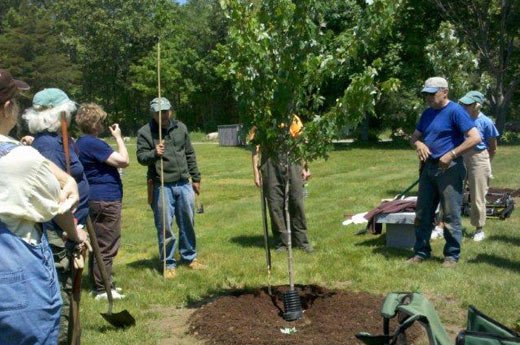
Why the 30-30 Guideline Matters

Planting a tree near a power line may not seem like a big deal at first. But over time, as that tree grows, it can interfere with the property’s infrastructure, including its power lines. This mistake often leads to a range of problems, such as:

  1. Costly maintenance
  2. Power outages
  3. Safety risks
  4. Reduced tree Health
  5. Shorter tree lifespan

The 30–30 rule helps prevent these issues before they start.

Applying the 30-30 Guideline

Applying this guideline is straightforward. But it requires homeowners to plan carefully to do it correctly. Below is a four-step process homeowners can use to implement the 30-30 guideline:

Step 1: Identify Overhead Utility Lines: Take a walk on your property. Note where power lines run. Remember that some lines may be less obvious than others, especially in wooded areas or homeowner properties.

Step 2: Determine the right distance: Measure a 30-foot radius from the power lines. Any tree you plant within this zone should meet the “under 30 feet tall at maturity” requirement.

Step 3: Choose the Right Tree: Select species that naturally grow to less than 30 feet. Many ornamental and native trees fit this category, offering beauty without the risk of interference.

Step 4: Think Long-Term: Plant based on mature size. Always check the tree’s mature height and spread. A small sapling can quickly grow into a major problem if it exceeds the safe height limit.
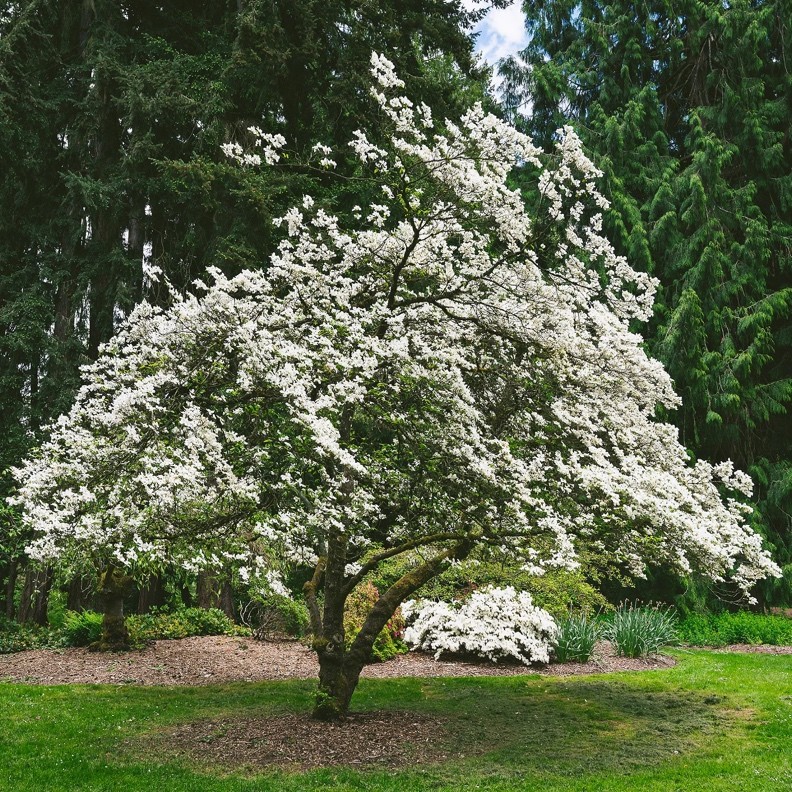
Flowering White Dogwood

Trees Fitting the 30-30 Guideline

In New England, many excellent tree options align with the 30–30 rule. Some popular choices include:

  • Flowering dogwood
  • Eastern redbud
  • Serviceberry
  • American hornbeam
  • Witch hazel
  • Japanese tree lilac
  • Crabapple varieties

These trees typically stay within the 15–30 guidelines. Planting a tree using the 30–30 rule isn’t just about where you dig—it’s about making smart decisions before, during, and after planting so your tree thrives without creating future conflicts.

Beyond Power Lines

While the 30–30 guideline primarily covers utility line problems, it reflects a broader mindset that prioritizes planting trees with the future in mind. “Right Tree, Right Place” considers all relevant aspects of a tree’s growth, including:

  • Proximity to buildings and foundations
  • Root systems and underground utilities
  • Sunlight and soil conditions
  • Space for canopy spread

When these factors are accounted for, trees will thrive with minimal maintenance on your part. 

Common Mistakes to Avoid

Even with a simple rule like 30–30, you can still make missteps. Here are a few common pitfalls to avoid:
• Ignoring mature size—Among the biggest mistakes is choosing trees based on how they look at the nursery. Always read labels or consult experts about mature dimensions.
• Planting too close—It can be tempting to plant a favorite tree in a convenient spot, even if it’s too close to power lines. Unfortunately, this often leads to problems down the road.
• Overlooking utility rights-of-way—In some areas, utility companies have the right to prune or remove trees that interfere with power lines. Planting in the wrong place can result in unexpected and sometimes aggressive trimming.

The Long-Term Payoff

Following the 30–30 rule may seem like a small step, but it has significant long-term benefits. Properly placed trees require less maintenance, experience fewer health issues, and provide uninterrupted benefits for decades.

They also reduce the risk of outages and improve community safety. For homeowners, this means fewer headaches and lower costs. For communities, it means more reliable power and healthier urban forests..

They also reduce the risk of outages and improve community safety. For homeowners, this means fewer headaches and lower costs. For communities, it means more reliable power and healthier urban forests.

Trending Pests and Weather Conditions Impacting Plants

The following is an excerpt of the lecture presented by RI Tree Council’s Technical Advisor, John T Campanini, Jr at the RI Federation of Garden Clubs Annual Education Day Program- Roger Williams Park Casino, November 4, 2019. The lecture’s title was “Trending Pests and Weather Conditions Impacting Plants.” In this article, I abridge my earlier lecture to examine specific pests which loom as future threats to woody ornamentals.

PLANT PESTS- There are five plant pests that should be on the radar of all plant stewards in 2020. Four are insects while the last is a disease causing fungus. They are itemized below:

  • Asian Long-horned Beetle (ALB- Anoplophora glabripennis)
  • Spotted Lanternfly (SLF- Lycorma delicatula)
  • Emerald Ash Borer (EAB- Agrilus plannipennis)
  • Bagworm (Thyridopteryx ephemeraeformis)
  • Boxwood Blight Disease

The ALB is by the #1 pest threat of hardwood trees including maple, birch, willow and elm in the Northeast according to the US-Forest Service. ALB kills trees by tunneling through the wood. Once the tree is infested it must be destroyed. The bittersweet news is while this pest has yet to be found in Rhode Island it is everywhere around us. It was discovered attacking trees in Worcester, MA in 2008 and in Boston in 2016. By imposing a quarantine on moving wood products and by inspecting vulnerable species, the Commonwealth has done a super job of containing the spread of this destructive pest into other New England States. Early detection is paramount to its management. In winter, the most obvious sign of this pest infesting host plants is the presence of numerous dime-sized, round holes on the trunk and on branches. For more information about ALB, visit http://www.na.fs.fed.us/spfo/alb.

Photo 1: The Asian Lon-horned Beetle adult is about ¾ to 1 ¼” long with mottled spots on the back. Note the dime-sized exit hole made by adult beetles as they emerge from the tree.

The Emerald Ash Borer is an exotic beetle from Asia discovered in 2002 feeding on ash trees in Michigan. Since then this small, bright green beetle has been responsible for the loss of millions of ash trees in North America. In July 2017, adult beetles were discovered in bait traps set out by RIDEM plant health inspectors in Westerly, Providence, Lincoln and Woonsocket, RI. These findings show the EAB is here, and that ash species are at risk. Plant damage and death is caused by the worm-like larval stage of EAB. The larva feed on the inner bark and phloem, creating “S” –shaped galleries. The feeding activity destroys the plant’s ability to transport water and nutrients to other parts of the tree, killing it. Unlike the ALB, there are options for protecting ash trees from EAB damage. But these options require comprehensive planning and should be directed with the assistance of a certified arborist. Learn about these options and more on EAB at www.emeraldashborer.info.

Photo 2: EAB adult beetles are smaller than a penny. They emerge in July to feed on ash leaves before laying their eggs between layers of bark and in bark crevices.

The Spotted Lanternfly is the latest exotic pest discovered in the United States with the potential to become a major plant problem. This sap-feeding plant-hopper was discovered attacking fruit trees, woody ornamentals and timber crops in Pennsylvania in 2014. New York and Connecticut authorities have also reported finding adults feeding on nursery stock in the past two years. SLF nymphs and adults are very colorful making them easy to detect. Young nymphs are “tick-like” with black and white spots. As they age, the nymphs develop red patches and grow to ½” long. The adults have two sets of wings. The forewing is gray with black spots. The hindwings are bright red at the base. Both nymphs and adults cause damage by feeding in huge populations (swarming) on the tissues under the bark of the trunk and branches. Plants literally starve to death from nutrient depletion from this type of voracious feeding. To learn more on the SLF, visit: www.uri.edu/biocontrol/spotted-lanternfly.

Photo 3: The important life stages of the Spotted Lantern-fly: eggs, wingless nymphs and the adult with wings for flight.

The bagworm is a native insect that, until recently, was mostly found in Pennsylvania and south. In the past decade, however, it has migrated to Northern areas through infested nursery stock. For years the bagworm was considered just a nuisance in RI with scattered outbreaks here and there. But, as the winters have gotten milder, this pest has learned to adapt and thrive and is today much more common. The bagworm prefers attacking evergreens. They include Arborvitae, Juniper, Leyland Cypress, Spruce and Pine. Certain deciduous species such as Black locust, Honeylocust and American Sycamore are also known host plants. The pest damage is done by the worm-like larvae. They feed on needles and leaves from late May through July. This causes the plant foliage to discolor yellow, turn brown before eventually dying. Plant injury can be very severe and entire plants can be killed in a single season. Bagworm infestations generally go undetected until damage is complete, and the large bags constructed by this pest is conspicuous. The bags provide over-wintering shelter to the egg-laying female adults inside. A simple control measure is to remove and destroy these bags as they appear. The other is to apply Captain Jack’s Dead-bug Spray (i.e., Spinosad) to the plant from early to mid-June while the larvae are small. For more bagworm details, visit www.info.psu.edu/extension/factsheets/bagworm.

Photo 4: The tell-tale sign of bagworm infestation is the dangling of inch long, oval-shaped bags from the twigs of plants.

The last pest problem we will discuss is one that is causing great harm to the nursery industry as well as public and private landscapes and gardens where boxwood (Buxus sp.) is grown. The culprit is the fungus, Calonectria pseudonavicilata. It causes the fungal disease called Boxwood Blight. Boxwood Blight was confirmed for the first time in North America in 2011 on samples collected in North Carolina and Connecticut. Today, this disease is found in more than 25 states, including Rhode Island. Hosts of the fungus include plants in the Buxaceae family. American, English and Korean boxwoods are all susceptible. Disease symptoms begin as dark leaf spots that coalesce to form brown blotches. Rapid defoliation usually follows, starting on the lower branches and moving upward in the canopy. As the disease progresses, black cankers girdle the stems, killing them. There is no easy way to control this disease. Fungicides are effective at protecting plants from boxwood blight infection, but do not cure plants with the disease. For now, the best advice to help prevent introducing the boxwood blight fungus is to avoid introducing new boxwood plants to landscapes that already have established boxwoods. Find out more about boxwood blight at www.ext.vt.edu/agriculture/commercial-horticulture/boxwood-blight.html.

Photo 5: Boxwood blight has become a serious threat to nursery production and to boxwoods in the landscape.

Finally, the RI Tree Council has staff available to present lectures or workshops on many topics from plant selection to plant health care. The Tree Council also publishes a monthly newsletter, ROOT TIPS, during the annual plant growing season (April to October) providing invaluable information on the weather, pest alerts and tree and shrubbery management. To avail yourself of these or other offerings such as the Tree Council’s signature Tree Stewards Education Course, contact us by phone 401-764-5885 by e-mail ritree@ritree.org, or visit the website www.ritree.org.