
Transform Your Landscape: Following This Guideline Avoids Costly Planting Mistakes
Featured Articles


Trees are more than just a part of the landscape in New England. They’re an integral part of a region’s identity. They can also be long-term investments that boost a landscape’s beauty, deliver environmental benefits, and increase property value, while planting a tree in the wrong place can create a costly nightmare. That’s where the 30–30 rule comes in. It’s a simple but powerful guideline within the “Right Tree, Right Place” philosophy.
The 30–30 rule is simple and practical. It’s designed to help homeowners avoid future conflicts between trees and overhead utility lines. It has two key components:
- Planting trees that will grow less than 30 feet within 30 feet of overhead power lines.
This rule simplifies decision-making by focusing on mature tree size rather than a tree’s aesthetics. Many tree-related issues arise because homeowners select small, young trees without realizing how large they will eventually become.
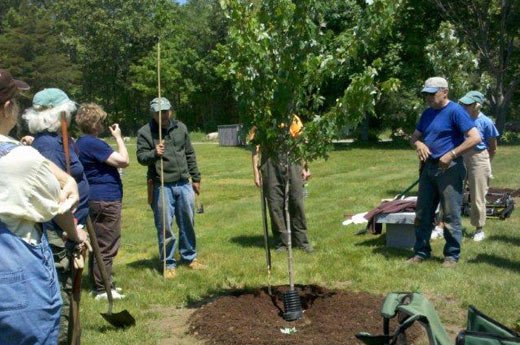
Why the 30-30 Guideline Matters
Planting a tree near a power line may not seem like a big deal at first. But over time, as that tree grows, it can interfere with the property’s infrastructure, including its power lines. This mistake often leads to a range of problems, such as:
- Costly maintenance
- Power outages
- Safety risks
- Reduced tree Health
- Shorter tree lifespan
The 30–30 rule helps prevent these issues before they start.
Applying the 30-30 Guideline
Applying this guideline is straightforward. But it requires homeowners to plan carefully to do it correctly. Below is a four-step process homeowners can use to implement the 30-30 guideline:
Step 1: Identify Overhead Utility Lines: Take a walk on your property. Note where power lines run. Remember that some lines may be less obvious than others, especially in wooded areas or homeowner properties.
Step 2: Determine the right distance: Measure a 30-foot radius from the power lines. Any tree you plant within this zone should meet the “under 30 feet tall at maturity” requirement.
Step 3: Choose the Right Tree: Select species that naturally grow to less than 30 feet. Many ornamental and native trees fit this category, offering beauty without the risk of interference.
Step 4: Think Long-Term: Plant based on mature size. Always check the tree’s mature height and spread. A small sapling can quickly grow into a major problem if it exceeds the safe height limit.
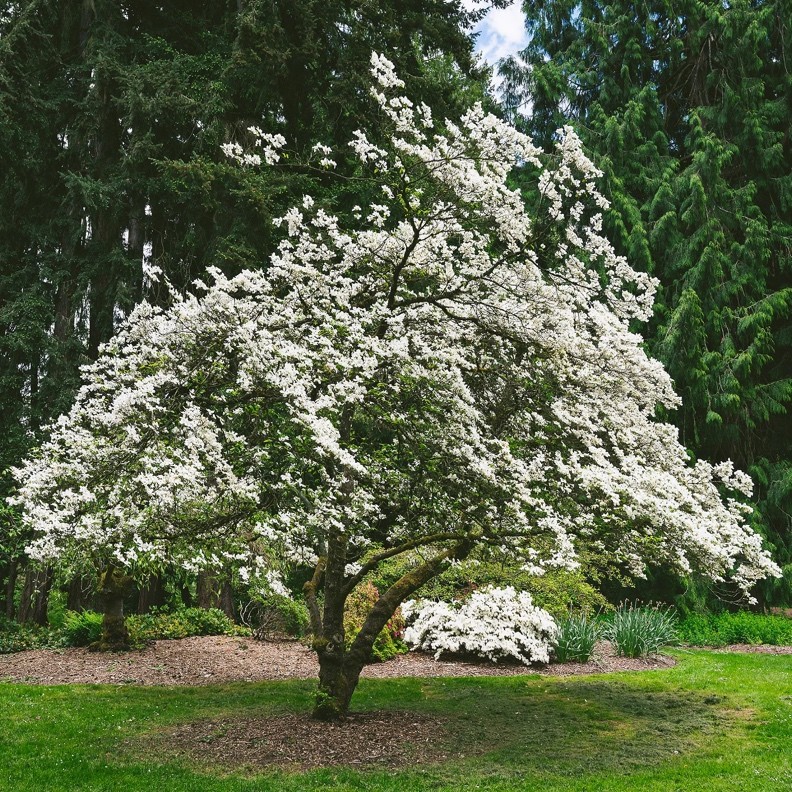
Flowering White Dogwood
Trees Fitting the 30-30 Guideline
In New England, many excellent tree options align with the 30–30 rule. Some popular choices include:
- Flowering dogwood
- Eastern redbud
- Serviceberry
- American hornbeam
- Witch hazel
- Japanese tree lilac
- Crabapple varieties
These trees typically stay within the 15–30 guidelines. Planting a tree using the 30–30 rule isn’t just about where you dig—it’s about making smart decisions before, during, and after planting so your tree thrives without creating future conflicts.
Beyond Power Lines
While the 30–30 guideline primarily covers utility line problems, it reflects a broader mindset that prioritizes planting trees with the future in mind. “Right Tree, Right Place” considers all relevant aspects of a tree’s growth, including:
- Proximity to buildings and foundations
- Root systems and underground utilities
- Sunlight and soil conditions
- Space for canopy spread
When these factors are accounted for, trees will thrive with minimal maintenance on your part.
Common Mistakes to Avoid
Even with a simple rule like 30–30, you can still make missteps. Here are a few common pitfalls to avoid:
• Ignoring mature size—Among the biggest mistakes is choosing trees based on how they look at the nursery. Always read labels or consult experts about mature dimensions.
• Planting too close—It can be tempting to plant a favorite tree in a convenient spot, even if it’s too close to power lines. Unfortunately, this often leads to problems down the road.
• Overlooking utility rights-of-way—In some areas, utility companies have the right to prune or remove trees that interfere with power lines. Planting in the wrong place can result in unexpected and sometimes aggressive trimming.
The Long-Term Payoff
Following the 30–30 rule may seem like a small step, but it has significant long-term benefits. Properly placed trees require less maintenance, experience fewer health issues, and provide uninterrupted benefits for decades.
They also reduce the risk of outages and improve community safety. For homeowners, this means fewer headaches and lower costs. For communities, it means more reliable power and healthier urban forests..
They also reduce the risk of outages and improve community safety. For homeowners, this means fewer headaches and lower costs. For communities, it means more reliable power and healthier urban forests.
