

Right Tree Right Place: The Smart Strategy for Safer and Healthier Landscapes
Featured Articles


Trees are smart investments for homeowners. They provide numerous ecological, environmental and economic benefits. However, many homeowners plant trees without considering their future growth. The result? Increased maintenance, damaged infrastructure, and wasted investment. What’s most disappointing is the fact that these problems are avoidable. All it takes is a bit of planning. Fortunately, there is a very simple, effective strategy for planting for success. It’s called Right Tree Right Place (RTRP).
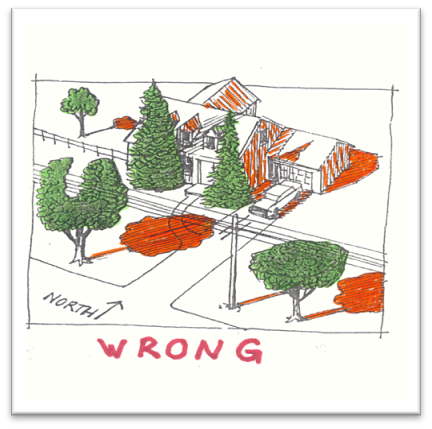
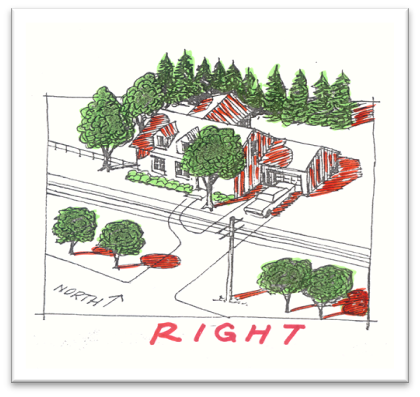
The Right Tree Right Place concept was introduced to the world of arboriculture in the late mid-70’s by the National Arbor Day Foundation in Tree City USA Bulletin #4 entitled “The Right Tree for the Right Place” (www.arborday.org). This bulletin is a simple primer on what to consider before planting. Two of the best illustrations are found on the bulletin’s front cover. They appear side by side and show how tree choice and tree location are inextricably linked. Breaking their connection causes problems. The key is to learn and follow the RTRP approach. The result will be a lifetime of satisfaction for you and your trees.
Source: Arbor Day Foundation. Bulletin #4. www.arborday.org.
WHY TREE PLACEMENT MATTERS
The Right Tree Right Place is a two-step process. The first step evaluates the planting location (i.e., tree placement); the second the choice of tree species. In Step 1 the goal is to screen the site for its suitability. A checklist of factors to consider are:
- Soil: Is it wet or dry, acidic or alkaline? Does it drain well or poorly? A soil test will answer these questions. Also, how much soil area (100sf, 500sf, 1,000sf) will be available for plant root growth?
- Exposure: Is the planting site mostly sunny, partially shaded, or mostly shaded? Many trees have specific daylight requirements to thrive.
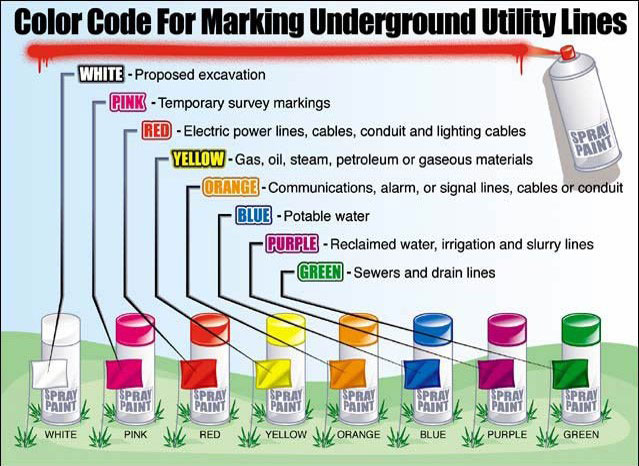
- Underground Utilities: Are there any sewer, water, natural gas, fiber optic or other utility lines within the planting area? Contact DIG SAFE for these answers.
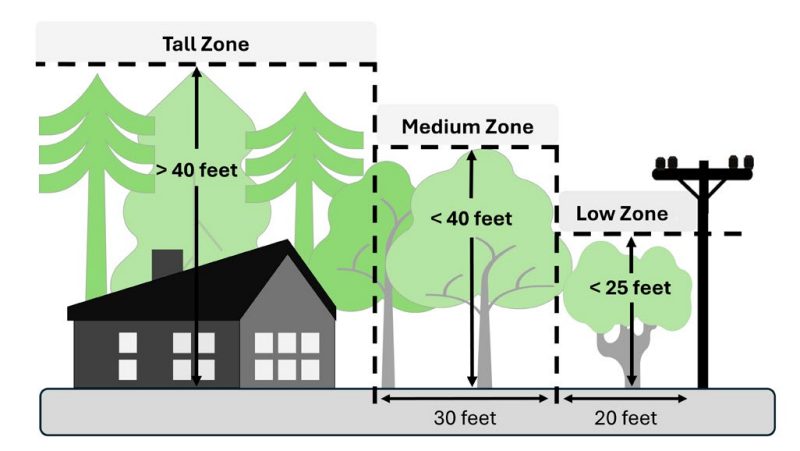
- Overhead Utilities: Are there electricity, telephone or cable power lines to contend with? What is their height above the ground?
- Built Structures: What is the distance from the planting area to the home, garage, shed, children’s play area, etc.? Consider driveways and walkways as well.
This exercise is invaluable for what it reveals about the planting location. All are not equal. Few are found perfect. But most have one or more issues to overcome. They are red flags that often lead to poor tree placement. The most common of these are:
- Power line conflicts: Trees planted under or near power lines require extensive trimming, often leading to misshapen growth and increased maintenance costs.
- Property damage: Tree branches and root systems can damage foundations, driveways, and underground pipe systems.
- Blocked sunlight: Planting trees too close to a dwelling can reduce natural light and encourage moisture problems.
- Reduced benefits: Improper tree placement may require intensive measures to correct which often lead to failing tree health, life expectancy and benefits.
Avoiding these issues and others are critical. There are several options. One may be as simple as picking a better location. Another has to do with the choice of trees. That’s the focus of Step 2.
MATCHING TREES TO SITE CONDITIONS
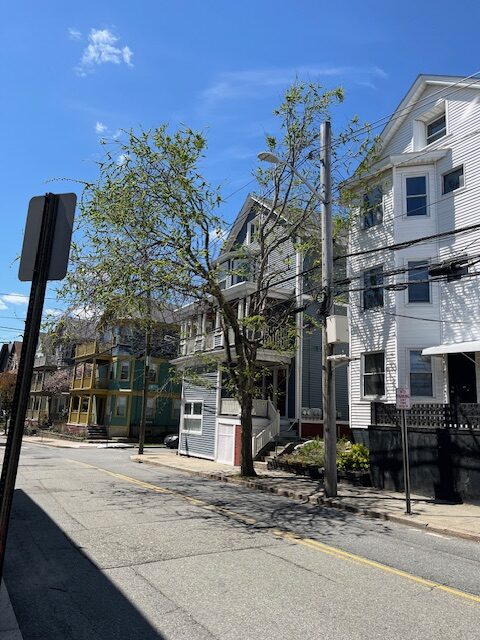
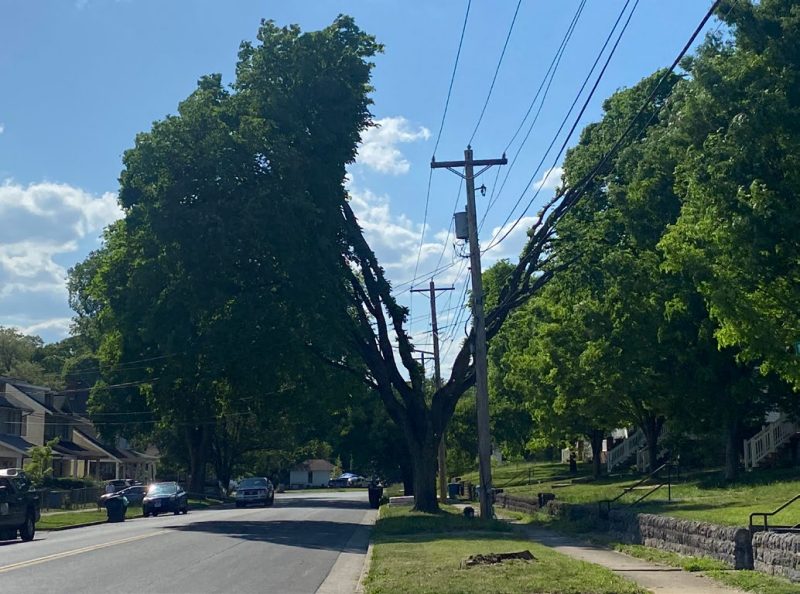
While there are literally thousands of tree species to choose from, only a handful may be a good match for the planting location. In step 2, the goal is to winnow down these choices. This is not as difficult as it seems. But it does require general knowledge of trees, namely, their major characteristics. For example, all trees have common features such as roots, stems and leaves. However, not all are sun-loving, fast growing or adapted to a wide range of soil conditions. The key is to find the tree species whose characteristics or traits best align with the planting location, keeping in mind the latter’s limitations and/or restrictions. Just as with step 1 there is a checklist of traits to consider:
- What is the mature size (width and height) of the tree?
- What is the general shape of the tree; upright, wide-spreading, or rounded?
- Does the tree prefer sun, partial shade, or full shade for its best growth?
- Will the tree tolerate the existing soil moisture conditions?
There are many fine reference books to assist with species’ research. The RI Tree Council recommends the following:
- Manual of Woody Landscape Plants. Michael A. Dirr.
- Dirr’s Encyclopedia of Trees and Shrubs. Michael A. Dirr. 2011. Timber Press. Portland, OR.
- Trees of the Northern United States and Canada. 1995. John Laird Farrar. International Society of Arboriculture. Champaign, IL.
Once this exercise is completed, the link between the tree location and tree choice should become obvious. Both steps in this process worked to prevent mistakes. For example, the prospective planting location may be dry, have all-day sun, and within 25’ of the home or overhead power line. Red oak and linden perform well in sunny exposures and are adaptable to a wide range of soil moisture conditions. But they are large growing trees—both will easily reach 80’ tall and wide at maturity. They need plenty of room—much more than 25’—to avoid future conflicts with power lines, the home, or other structures. Under these circumstances, Red oak and linden are bad choices. They are wisely ruled out for further consideration. The good news is there is a tree for every niche. In the end, there are 11 species—cherry, magnolia, maples, silverbell, etc.—to choose from. All thrive in full sun, and all are tolerant of low soil moisture. Anyone would be a good match for the planting location.
PLAN BEFORE YOU PLANT
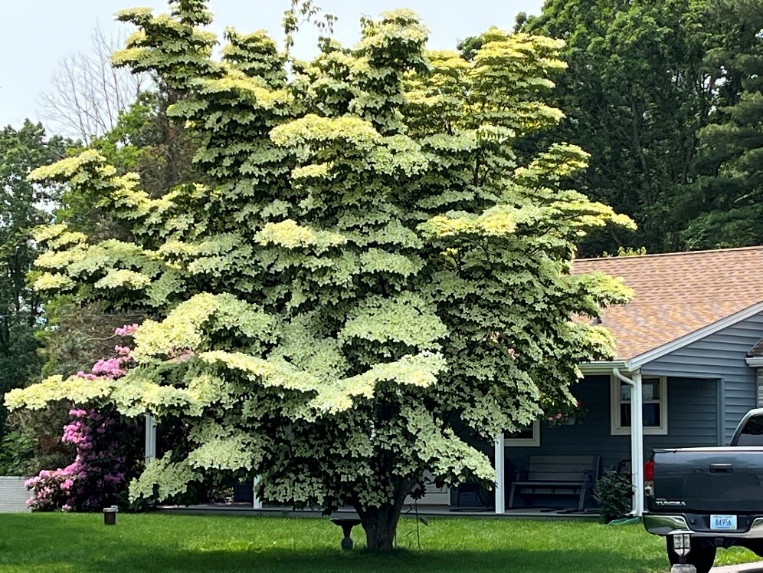
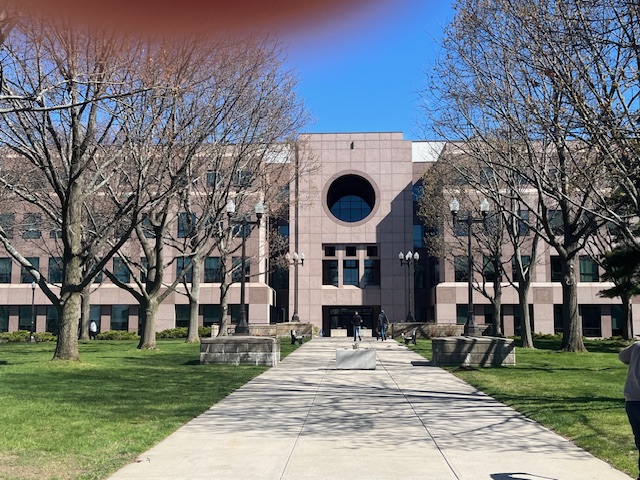
Right Tree Right Place is not only a sensible step but also a cost-conscious choice. This approach matches a tree’s characteristics—mature size, shape and growth habits—to a site’s conditions. It also emphasizes a tree’s long-term compatibility with the planting location. The trees included in this strategy require less pruning, have fewer health problems, and avoid conflicts with structures such as homes, sidewalks, and electric utility power lines.
Tree planting isn’t just about the present. It’s also about the future. Savvy decision-makers think in terms of 10, 20 or even 50 years from now.
Finally, planting a tree should be a rewarding experience, not a source of ongoing problems. By embracing the Right Tree Right Place philosophy, you can make smarter decisions that benefit both your property and the environment. A little planning today can save years of effort tomorrow. Choose wisely, plant carefully and give your trees the space they need to thrive. Hit a home run for trees!
This introduction on the Right Tree Right Place strategy was the first of many articles soon to appear at www.ritree.org.
