

How to Plant a Tree
Featured Articles


Planting a tree is simple when you follow a few key steps — and getting them right makes the difference between a tree that struggles and one that thrives. In southern New England, the best times to plant are early spring, before trees leaf out, or fall, from late September through mid-November, when cooler temperatures allow roots to establish before winter.
Dig the right hole. Make the hole two to three times wider than the root ball but no deeper than the root ball is tall. Planting too deep is one of the most common mistakes and one of the hardest to recover from. The root flare — the spot where the trunk widens at the base — should sit at or slightly above grade.
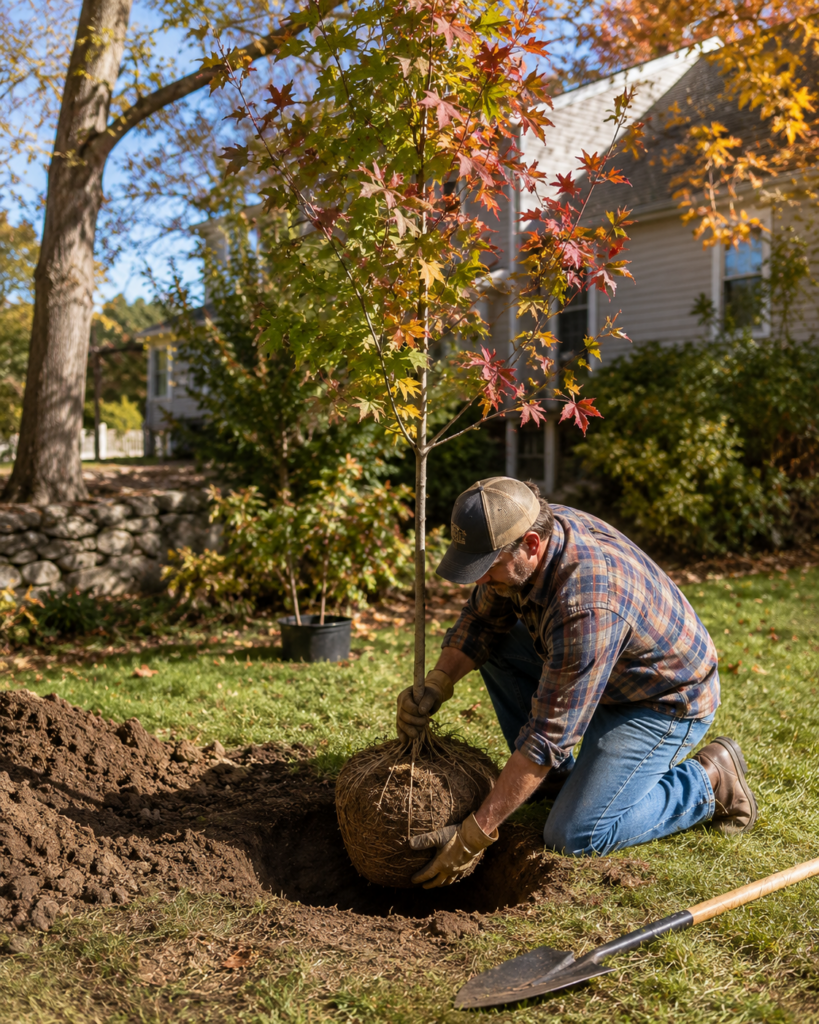
Skip the amendments. Research consistently shows that backfilling with native soil, rather than enriched mixes, encourages roots to spread outward into the surrounding ground. Save the compost for the surface.
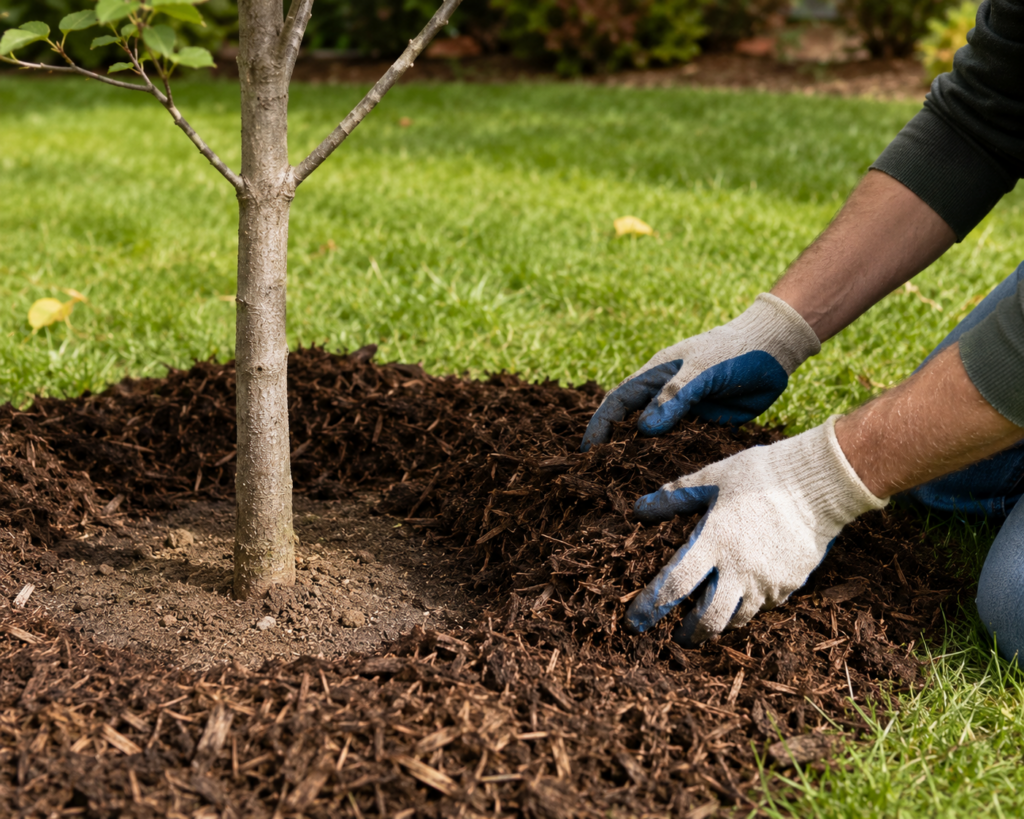
Water thoroughly and mulch well. Give the tree a deep soak right after planting, and plan to water weekly during dry spells throughout the first growing season. Apply two to four inches of wood chip mulch in a wide ring around the tree, keeping it away from the trunk. Mulch conserves moisture, moderates soil temperature, and suppresses competing grass.
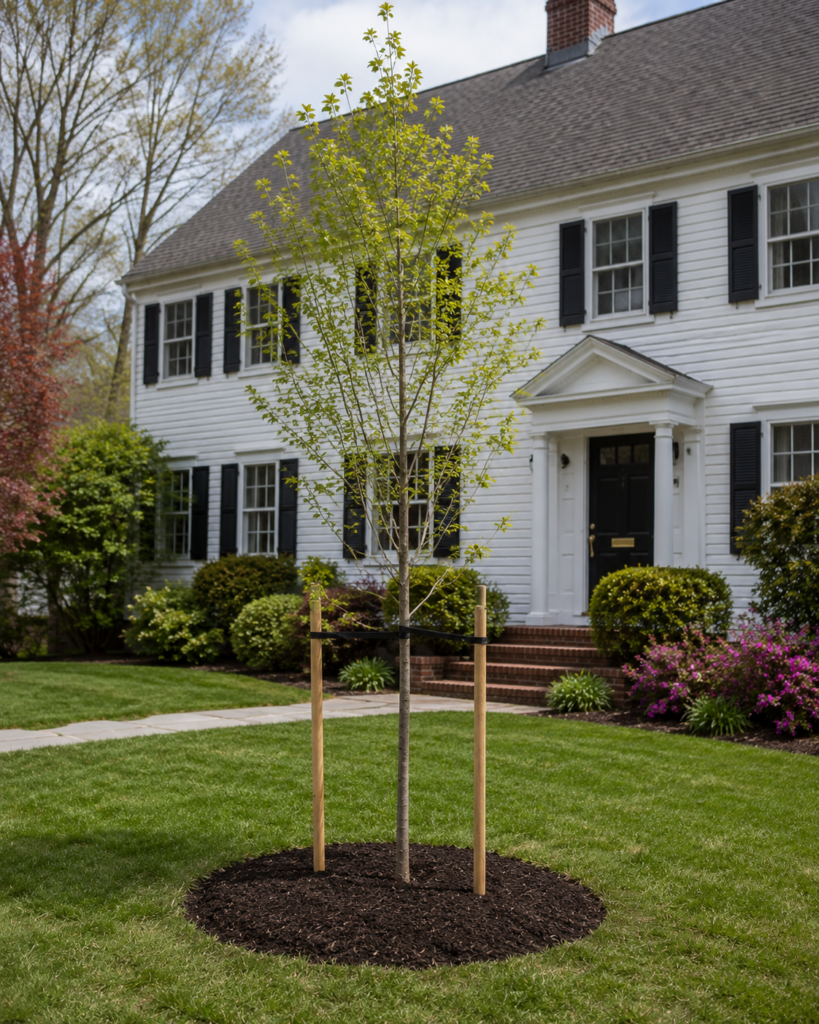
Stake only if necessary. Most trees don’t need staking. If the tree can’t stand on its own, use two flexible stakes and soft ties, and remove them after one year.
A little patience goes a long way. The first year a tree sleeps, the second it creeps, the third it leaps — and the investment pays off for decades to come.
