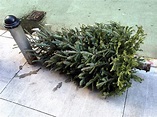
Christmas is a great time of the year. But once it’s over, you have to do something with your tree. You can always put it out on the curb for trash pickup if your municipality provides that service. But if that option doesn’t appeal to you, you can make better use of the tree by giving it another role.
Here are five options that involve giving your Christmas tree a new role:
Use it as firewood — If you want to cut it up and use it as firewood, you can. But the wood is still wet, so use it only in an outdoor fire pit. And use it only when the wood is dry. Using it indoors otherwise is a fire hazard.
Recycle it as winter mulch — Leave the tree in your yard for the winter. It can provide much-needed shelter for small animals and birds. You can chop it up in the spring and use it for mulch.
Make it a bird feeder — Place it in its stand outdoors. Then, fill some bird feeders and hang them from the tree’s boughs. You can also drape the tree with a swag of pinecones coated with peanut butter.
Protect plants with it — The winter is hard on tender plants. Cut a few branches or boughs from the tree and cover your tender plants for the winter. The branches will protect them from the season’s harshness.
Add Christmas freshness to your home — Strip the tree’s pine needles and make a sachet of them. Then, hide them around the bathroom and kitchen for some cheerful fragrance.
These options highlight the idea that your tree’s needles, boughs, and trunk can do more than hold ornaments. Each option has advantages. Choose one that works best for you. No matter which options you choose, however, they all let you dispose of your tree safely and responsibly. Never throw trees Christmas trees in garbage or landfills.
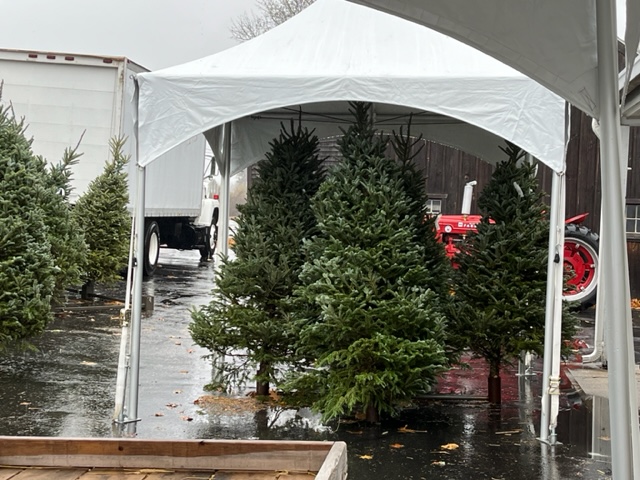
Holiday trees are now on sale. Our sources tell us there are plenty to go around. However, finding that perfect tree may be harder than usual. The problem: fungal diseases sparked by wet springs in the past few years have caused tree quality issues, especially with large-sized trees. Our recommendation is to make your holiday tree purchase sooner than later in the season when there are more to choose from.
Here are a few tips to help you find the right tree.
Match the tree to room dimensions by measuring ceiling height and clearance width in the room the tree will be placed.
Select a fresh tree. Shake or stomp the tree against the ground.
If too many needles fall off, pick another tree.
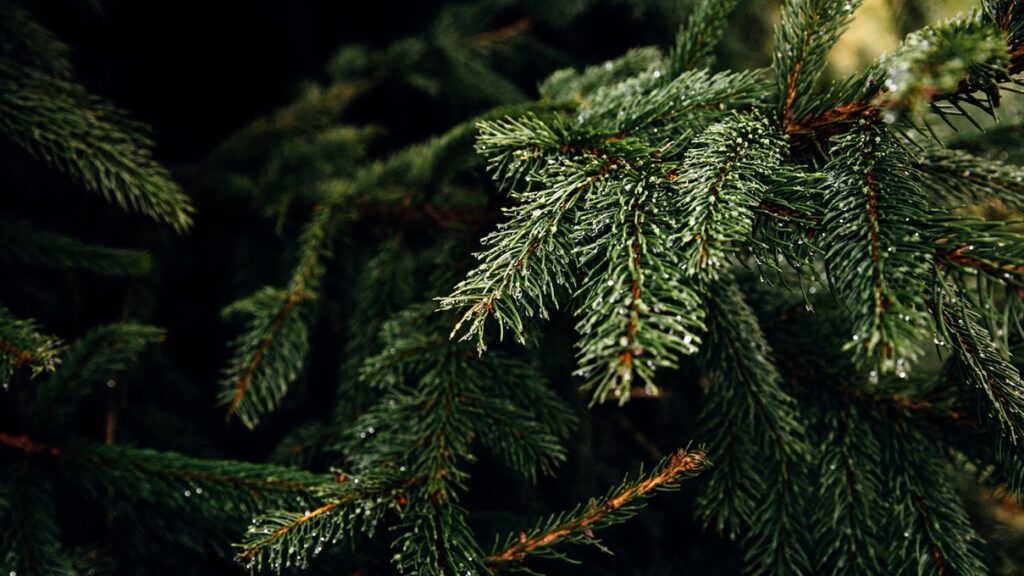
Best tree selections include the Balsam Fir, White Fir, Colorado Blue Spruce, and Douglas fir. They have sturdy branching and long needle retention.
Keep the tree away from space heaters, stoves, fireplaces, etc.,
Cut a 1/2” wood chip from the bottom of the tree trunk to help the uptake of water by the tree.
Fill the water stand with water daily to maintain tree freshness and needle retention.
Are your young trees all set for winter? Winter in New England is hard on trees—especially young ones. So, late fall is the perfect time to start preparing young trees for the harshness of winter. This process includes protecting the bark of young trees. It often splits in the winter and can leave young trees vulnerable. Splitting is typically more severe on young trees’ south and west sides than on the north and east sides.
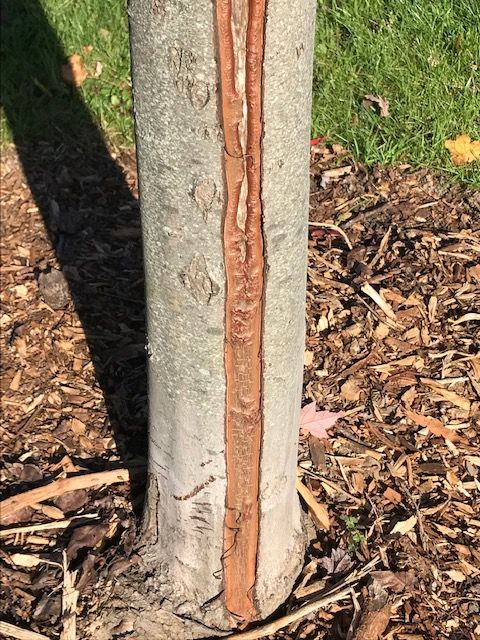
This splitting process is called sunscald. It occurs when the sun’s heat damages tree bark. That creates a temperature difference between internal sapwood under the bark (hot) and the external environment (cold). That, in turn, causes the sapwood to desiccate, shrink, and die. The bark eventually cracks along the dead sapwood’s fault line. Young, thin-barked ornamental and fruit trees. like birch, stewartia, red maple, London planetree, and beech are especially susceptible to sunscald.
This red maple is showing signs of sunscald, which can devastate a young tree in winter.
Sunscald occurs in summer and winter, but it is much more common in the winter. Hence, the need to start protecting young trees in the fall from this winter increases. Symptoms of sunscald include:
Dead or discolored bark
Vertical cracks in the bark
Bleeding from the affected area
Sapwood (the layer of wood just beneath the bark) that is exposed
Young trees can survive sunscald. But even if they survive it, sunscald can weaken young trees, making them more susceptible to other problems, such as pests and diseases.
Young Trees are More Susceptible
Cold weather, snow and ice, drought, salt spray, pests and diseases can severely damage trees. So, can sunscald. It can devastate them. Here are a few reasons why young trees are more vulnerable than older ones to sunscald:
Thinner bark: Young trees have thinner bark than older trees. That’s because the tree bark thickens over time as the tree grows and ages. Thinner bark is more susceptible to damage from the sun’s heat.
Less developed canopy: Young trees have less developed canopies than older trees. That means they have less foliage to shade the bark of the trunk. Less protection increases the chance of sunscald.
Less experience with sunlight: Young trees have less time to adapt to sunlight than older trees. That makes them more susceptible to damage from the sun, especially if they are suddenly exposed to more sunlight than usual.
More exposure to direct sunlight: Young trees are more susceptible to sun scald if planted in an area where they are exposed to direct sunlight for most of the day. That’s especially true in wintertime when the sun is lower in the sky than at other times, and the tree’s bark is more likely to be exposed to direct sunlight.
Protecting Young Trees from Sunscald
Tree owners can do a lot to prevent sun scald from occurring—even in the harshest New England weather. To protect young trees from sun scald, you can:
Wrap the young tree’s trunk with a white tree wrap or plastic tree guard during the winter. The wrap reflects the sun and keeps the bark at a more constant temperature.
Plant young trees where the elements protect them from the winter sun. The site could be in the shade of a building or another tree, or on your property’s north or northeast side.
Water young trees regularly, especially during the first few years after planting. Watering helps them to develop a robust root system and withstand winter stresses.
Mulch around the base of young trees. This step insulates the roots and protects them from the cold.
Prune your trees in the late fall or early winter. This action will help to remove any dead or diseased branches that could be more susceptible to sunscald.
Plant young trees in a location that protects them from the sun and wind, in the shade of a building or another tree, or on your property’s north or northeast side.
Look out for pests and diseases. If you see signs of them, contact a certified arborist or RI Tree for advice.
Following these tips on combating sun scald can help protect your young trees from this sunscald and ensure they thrive for many years.
For more information on sunscald or tree care contact RITree by e-mail at ritree@ritree.org.
Fall is incredible in New England. The leaves change from green to rich rusts, ruby reds, and glittering golds as summer gives way to fall. Many trees look their best at this time. The fall is a great time to prepare your trees for the ravages of winter. Giving your trees some TLC now before winter protects them from harsh winter weather and helps boost spring growth. Below are seven things you should do before winter sets in to help your trees continue to grow and thrive.
1. Soil care
Chances are good that the soil in your yard isn’t as rich as that in the forest. That’s because the forest’s fallen leaves and organic matter enhance the soil, enriching it with nutrients. But you can boost your soil’s richness by doing three things. Apply a slow-release fertilizer in the fall. Freshen up the mulch before the ground freezes. And reduce irrigation to avoid flooding the soil. Trees get a lot of moisture in the winter.
2. Prune your trees
Pruning is a wise annual practice. Prune dead, diseased, and unsafe branches from your trees. This strategy not only protects you and your home. It also influences a tree’s structure and shape. Trim lifeless branches. Cut cracked, loose, and diseased-looking trees near the trunk. And call an arborist for help with trimming large branches. Trim branches without leaving stubs and leave wounds exposed so they can heal.
3. Prepare for winter
Winter takes a toll on trees. So, you must prepare them in the fall for the winter’s snow, frost, ice, and cold temperatures. Start by Inspecting your trees for weak branches that may need added TLC to survive the winter. Cable and brace these limbs. Cabling and bracing trees support poor or weak branch unions and reduce the strain and stress damage from high winds, heavy ice, and snow build-up.
4. Water your evergreens
Give your evergreens a healthy gulp of water before winter. They’ll be well-hydrated throughout the cold winter. Harsh winter weather can cause water loss in an evergreen’s needles and freeze its roots. Water regularly throughout the fall. You want to moisten the soil, not saturate it. Weekly deep root watering with slow soaking is an ideal tree care strategy. It’s an efficient way to get your tree the right amount of water.
5. Inspect trees and shrubs
The fall is a good time to inspect your trees and shrubs. Look for pests and diseases that might have settled in. You don’t want them getting out of control. Conspicuous damage, early fall color, and other signs of stress could indicate a deeper underlying problem.
Start by identifying the disease or pest. Then, determine how to treat the pest or disease.
Identifying a pest or disease can be a challenge. So, if you’re unsure what the pest or disease is, consult a local arborist for help. Or, contact the Rhode Island Tree Council for help. They can provide a trained eye to help you identify the problem and suggest the best way of eliminating it. Consulting an expert saves you time and money.
6. Look out for Root Decay
Pay attention to the mushrooms growing at the base of your trees. They may appear for only a few days at a time. Some mushrooms can eat at and decay a tree’s roots, creating an unstable tree. Prevention is the best way to eliminate root decay.
So, don’t over water your trees, encourage healthy mycorrhizal fungi by enhancing soil organic matter and avoiding soil compaction, and protect trees from damage by mowers, trimmers, and construction, which can kill roots and weaken trees.
Fall is an excellent time of year in New England. The change in color of the leaves is something to look forward to every year. Some think it’s the best season of all. Fall is also a time to prepare your trees for winter.
The cold, snow, and ice can damage them beyond repair, so you should have a plan to protect your trees before winter comes. The six steps we suggest you do above are a good place to start. Implementing them will not only protect your trees but also promote greater tree health come next spring.
John Campanini is the technical director of the Rhode Island Tree Council (RITree). A graduate of the University of Rhode Island, he was city forester for Providence for more than twenty years before retiring.
Are you thinking of planting a tree? Fall is the best time to do that. It gives the tree plenty of time to root itself. A tree starts growing the second it’s planted. It will continue to grow as long as the soil temperature stays above 40°F (4°C). By the time spring comes, the tree will be established and growing.
Another reason to plant in the Fall is the soil. It’s a better fit for digging plant holes than in the Spring. Plus, the summer’s warmth still lingers in the soil. That keeps the soil moist enough for digging, making it perfect for planting.
Some people worry that winter will kill a tree planted in the Fall. No so. Trees go dormant in the winter so they can withstand the cold. In other words, they “hibernate,” like animals do in the winter. So, if you plant a sapling early enough in the Fall, it will have plenty of time to establish itself before the winter.
The tree will also have two growing seasons before the summer heat arrives and a healthy enough perception to survive. Ideally, you want to plant a tree at least six weeks before freezing temperatures arrive. Use October as a deadline for planting a tree.
Spring is also a Good Time to Plant
Spring is also a good time to plant a tree. But doing so then is risky. It might be too rainy for the soil to become stable enough for the tree to grow. That could prevent the tree from establishing itself enough before the summer heat arrives. Intense summer heat can kill a tree.
Spring, however, has one significant advantage over the Fall when planting a tree. Many local nurseries stock up on inventory in the Spring. So, you have more trees to choose from in the Spring than in the Fall. You may also have a better-quality tree to choose from in the Spring.
The time of the year you plant your tree, however, will only matter if you plant it in the right spot. Location is as critical as the time you plant it. Make sure you don’t plant the tree too close to existing structures. You’ll also want to research how much sun, wind, and water the tree prefers.
Knowing that information means you’re better able to pick a spot compatible with those conditions. And remember to call the free 811 Service to ensure there aren’t any underground utilities where you plant the tree. The tree’s roots could become a real problem for the utilities in time.
Finally, give your tree plenty of water—roughly one gallon of water per inch of diameter on the trunk. Mulch will help keep the tree moist and happy. Use up to 4″ and keep space between the trunk and the mulch.
Crabapples: A Good Choice to Plant
Plenty of beautiful flowering trees are available when planting a tree. The Crabapple (Botanical name: Malus spp.) is an excellent choice if you are looking for a compact tree that brings year-round interest. Gorgeous spring buds, handsome summer foliage, and excellent fall color are among the Crabapple’s main draws. The Crabapple’s growth rate is moderate. It grows to about 15-20’, with a spread of about 15-20’.
The Crabapple blooms in mid-to-late Spring and features fragrant white, pink, magenta, or red blooms that typically last 1-2 weeks. Crabapple fruit ripens from late summer to mid-fall. Most cultivars have red fruit, but you can find yellow, maroon, and orange. Crabapples come in all shapes and sizes, including spreading, weeping, dwarf, vase-shaped, and columnar.
The tree’s flowers bloom at slightly different times depending on the cultivar. One design consideration with Crabapples is whether to plant multiple types of Crabapples that bloom for a more extended period or plant the same type that provides an explosion of fragrance and color simultaneously.
A Crabapples’ fruit, however, is more than just ornamental. It also provides much-needed wildlife value, but its fruit is too sour to enjoy. The fruit comes in various sizes and colors depending on the cultivar. Some cultivars, such as the Malus ‘Guinevere,’ shown below, provide winter interest with the fruit.
If you’re thinking of planting a tree in the Fall, visit the RI Tree website at www.ritree.orgto view small and medium-sized tree selections for residential landscapes. Or talk with a member of RITree’s staff.
Spring is a great time of the year. With life emerging from its long winter sleep, it’s among nature’s most active seasons. But spring is also a time when plant pests emerge. These pests can ravage your trees and kill them. Basically, you can divide tree pests into three broad categories—sap-sucking insects, wood borers, and defoliators.
Pests invade trees when they’re under great stress. Pests introduced from outside their native range can severely impact crops and natural tree populations, generating billions of dollars of economic and ecological damage. However, what insects you’ll need to watch out for this summer depends on your location.
Tree pests cause tremendous to natural and managed land annually. Most tree damage is caused by 20-22 common insect pests. These pests can devastate a tree if left untreated and cause extensive economic damage by destroying landscape trees that has to be removed and replaced. The impacts of pests are often made worse by climate change, which may allow additional pest life cycles per annum.
Not all pests are deadly, however. Some play critical roles in natural and managed systems, contributing to carbon cycling and forest regeneration. They may even contribute to shaping patterns of global tree diversity. Below are five pests to look out for and descriptions of telltale signs that they have invaded your trees:
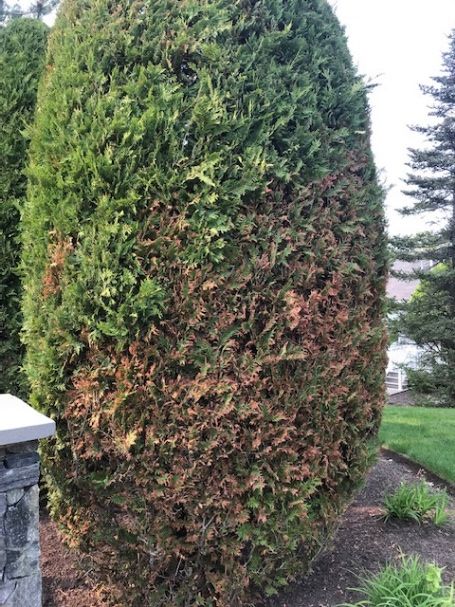
1. Arborvitae leafminer
If you see brown foliage now on your “Green Giant” and “Emerald Green” cultivars, it’s a sign that these pests are feeding on your plant’s leaves. This leafminer pest is a small caterpillar, green or brownish, with a dark head and a spot just behind its head. Mature caterpillars generally appear between April and June. While this pest likes all arborvitae varieties, they prefer American pyramidal, globe, and golden arborvitae.
2. Cedar Rust
Cedar apple “rust” can affect the health and vigor of your apple trees by causing early defoliation and reducing fruit quality. They present as orange gelatinous spheres and indicate the presence of fungal spores from the Gymnosporangium family, which can later infect Malus species. Cedar rust is especially harmful to Junipers. Severe infections of this disease, which first appear on leaves as small greenish spots and then gradually enlarge and change color, can kill a tree.
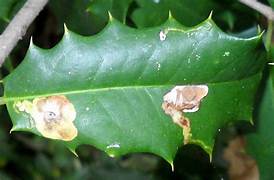
3. Holly Leafminer
As the name suggests, it feeds on English, American, and Japanese hollies. If you see tiny green blisters on a lower leaf’s surface, chances are good the female of this pest has laid eggs there. The Holly leafminer “causes the presence of yellow, brown, or reddish mines on the leaves. In the beginning, the mines are narrow and winding. But they then become large blotches as the larvae overwinter in the leaf. The upper and lower surfaces of leaves remain after feeding and are easily separated. Larvae are yellowish and about 1/16″ long. The adult is a small black fly.
4. Boxwood Leafminer/Blight
These pests are among the most destructive—and deadly— of the boxwood insect pests. The larvae feed on the tissue between the leaves’ outer surfaces, producing blotch-shaped mines in the boxwood leaves. Circular leaf lesions are a crucial symptom of boxwood blight, as are leaf yellowing and leafminer injury blistering. Infested leaves appear blistered from late summer through the following spring. New leaves, however, don’t show signs of mining until deep into summer, when the larvae are larger. Premature leaf drops may result from heavy infestation by fall or early spring.
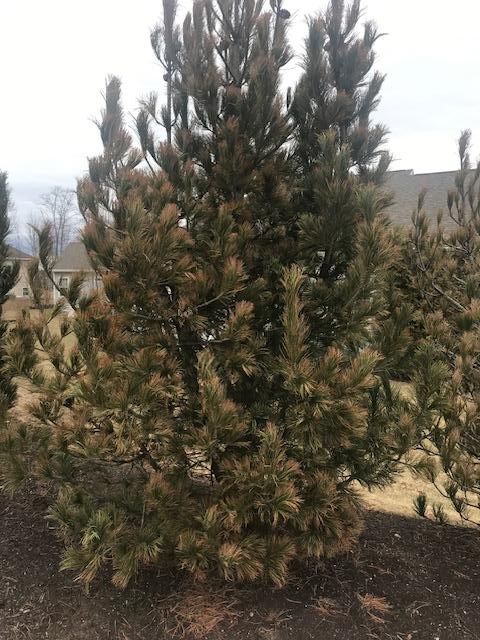
5. Pine Needle Blight
A common fungal disease among pines, especially mugho and Japanese white pines, pine needle blight attacks pine needles, causing spots, blights, and premature defoliation. Initially, spots emerge in summer or late fall. It’s a group of diseases. Cyclaneusma needle cast symptoms appear as light green to yellow spots on infected 2-year-old or older pine needles. Dothistroma needle blight causes yellow to tan spots in the fall. Lophodermium needle cast appears in late fall to early spring. It presents as brown spots with yellow margins on young needles. Brown bands form later.
These five pests are common in the Northeast. But don’t panic if you see one or more of them on a tree’s leaves or something foreign on its bark. Instead, get to work diagnosing the problem and deciding on the best treatment for the pest. Treatment for these pests, however, varies. So, if you need help treating them, contact the RI Tree Council as soon as possible. We’ll help you eliminate these pests and boost your tree’s health.
John Campanini is technical director of the Rhode Island Tree Council (RITree). A graduate of the University of Rhode Island, he was city forester for Providence for more than twenty years before retiring.
Buying the perfect Christmas tree is a challenge—no doubt about it. Keeping your tree fresh during Christmas is just as challenging, if not more so. But thanks to this summer’s increased dryness, keeping this year’s tree fresh will be more challenging. The dryness affected the quality and life span of this year’s Christmas trees. So, you’ll have to go to greater lengths this year to keep your tree fresh than you did last year:
Ideally, you’ll want to buy a suitable stand for the tree you buy. Look for a stand that holds at least a gallon of plain water. You’ll spend less time filling up the stand and more time enjoying your tree. If you have a tall, wide room, pick a stand that fits the tree’s size. If you’re putting your tree on a table, choose a small stand with a good-sized reservoir. Also, get an adjustable stand. It makes leveling the tree easier.
Tips on Keeping Your Tree Fresh
Here are nine tips on keeping your Christmas tree fresh:
Cut about half an inch more off the tree’s trunk. That exposes the tree’s vessel, enabling the tree to absorb water easier.
Avoid cutting the trunk at an angle or into a V-shape. That makes it harder to keep the tree in the stand and reduces the amount of water available to the tree. Also, avoid bruising the cut surface or getting it dirty.
Keep the outer layers of wood on the tree. That speeds up the intake of water after you cut the tree.
Put your tree in a stand with water immediately after cutting the tree. Keep the stand filled with water throughout the season. Check on water levels twice daily for the first week and then daily.
Use a stand with a traditional reservoir type. It’s among the most effective ways to maintain freshness and minimize needle loss problems.
Check out the devices available to help you maintain a constant water level in the stand. They work. Use them if you can.
Checking the temperature of the water isn’t necessary. The temperature doesn’t affect water uptake or the tree’s freshness. Use plain water.
Avoid putting the tree near heat sources like air vents, fireplaces, wood stoves, and sunny windows. That dries out the tree quickly.
Using lights that emit low heat, such as miniature lights, reduces drying and keeps the tree fresh.
Consider acclimating your tree before bringing it into your home. Going from a cold outdoor environment to a heated indoor can stress out a tree. So, you can store the tree in an unheated area, like your garage or basement, for a day or two before bringing it inside. Also, avoid using preservatives and other additives in the water. They won’t extend the life of your Christmas tree.
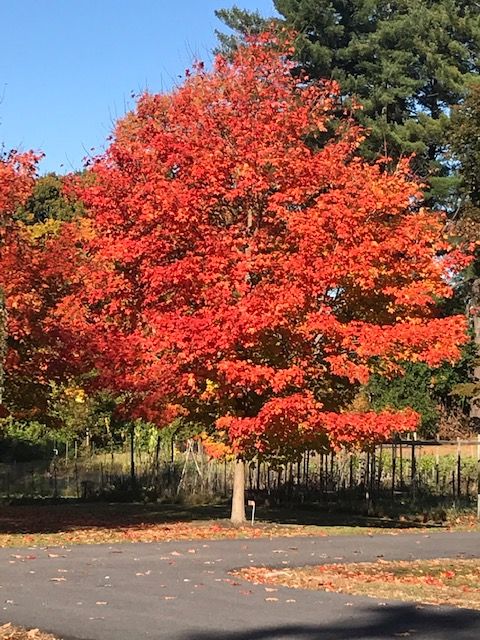
After a slow start, the fall foliage is finally turning colorful adding much splendor and beauty to the Rhode Island landscape. Trees leading the charge include the maples, birches, and dogwoods. Of this group, the Red maple is by far and away the star with its brilliant hues ranging from golden yellow to deep red-purple. Many shrubs are also getting into the act. So far the Winged euonymus, viburnums and sumacs are the showiest. Rainfall in late-September early-October helped to “activate” the pigments found in the leaves that are responsible for their recent color change. But the leafy delight won’t last long as the leaves are already beginning to fall. So enjoy nature’s wondrous beauty now before its too late. Do you have a fall foliage favorite plant? We’d like to see it. Send us a photo at ritree@ritree.org.
Sugar maple clothed in red leaf finery is among the ‘best of breed’ plants for fall color.
Spring comes but once a year. For many, it’s the best time of the seasons. These people like it because the long wait through the snow and bad weather of the winter, with bare trees sleeping through the season, is over. Plus, there’s the promise of a new beginning and the start of great weather. Doing something outside in your yard or garden is a great way to get over your COVID-19 blues.
Planting a spring-flowering tree is a great outside project. What better way to introduce the new season than with a magnificent display of spring-flowering trees. These trees offer numerous benefits. They reduce carbon dioxide levels, lower energy cost, prevent storm runoff, hide unattractive views, and raise a home’s resale value. A description of spring flowering species and their cultivars suitable for planting in Rhode Island is presented below.
· Flowering Cherry
These trees come in a wide variety of shapes and sizes. Many varieties bloom in springtime and last for several weeks. Cherry trees work well in residential gardens because they require minimal care. All are beautiful. Distinguishing characteristics include the sheer number of petals and the color of the blossoms, as well as their fragrances, leaves, and blooming season. Flowering cherry trees perform best in full sun in moist, relatively well-drained soils. RITree’s Best of Breed selections are:
‘Kwanzan’ Japanese Flowering Cherry (P. serrulata ‘Kwanzan’)
· Magnolias
The magnolia tree, like the cherry tree, is best known for its flowers. Among the first trees to bloom in the spring, magnolia trees have large flowers and a sweet, heady fragrance. Their tulip- or star-shaped flowers are often as large as saucers when fully opened. The tree’s foliage and fruit are also attractive. Magnolia trees come in several varieties, are long-lived, and easy to plant. These hardy trees prefer full sun with soils that are well-drained and slightly acidic. Best of Breed selections are:
Saucer Magnolia (Magnolia x soulangeana)
Star Magnolia (M. stellata)
· Dogwood
These woodland trees appear in various forms around the U.S., giving us a beautiful and elegant spring spectacle. Dogwoods have wide graceful branches growing horizontally into layers, with each branch featuring colorful flowers from April to June. Dogwoods are shallow-rooted and may require supplemental irrigation during summer to meet their water needs. Dogwoods prefer partial shade to full sun and moist, acidic soils. Best of Breed selections are:
White Flowering Dogwood (C. florida ‘Cherokee Maiden’)
Pink Flowering Dogwood (C. florida var. rubra ‘Cherokee Chief’)
Milky Way Chinese Dogwood (C. kousa var. chinensis ‘Milky Way’)
· Crabapple
The flowering crabapple tree is among the most prized of all spring-flowering trees. They’re a staple of landscape gardening. Known for their spectacular display of magnificent blossoms in the spring and colorful fruit in the fall, these trees bloom for a four-to five-week period in mid-spring. Crabapples are extremely cold-hardy, air pollution tolerant and adaptable to a wide range of soils. Best of Breed selections include:
‘Donald Wyman’ Crabapple (Malus x ‘Donald Wyman’) –White flower, Bright red fruit
‘Prairifire’ Crabapple (M. x ‘Prairiefire’) – Red flower, Red-purple fruit
Japanese Crabapple (M. floribunda) – Red fading to white flowers, yellow and red fruit
Choosing among these trees for your outside project may be challenging. Contact RITree for help in selecting the right spring flowering tree for your project or for more advice on how to plant them.
Longitudinal splitting of bark along the trunk of young trees is a common problem during winter. The problem is more severe on the south and west side of saplings and is caused by the sun-beams striking the tender bark. It sets up a huge temperature difference between internal sapwood under the bark (hot) and the external environment (cold).
The big change causes the sapwood to desiccate, shrink and die. The outer bark eventually cracks along the fault line of the dead sapwood. As the picture shows, the best way to prevent winter bark splitting or sun-scald is to place light-colored tubing around the trunk of the trees. The white tubing will prevent the heat build-up by reflecting the rays of the sun away from the tree. You can also use white latex paint as an alternative prevention.