
RITree to Hold Fall Tree Steward Course in Barrington, RI

John Campanini

Technical Director, RI Tree Council

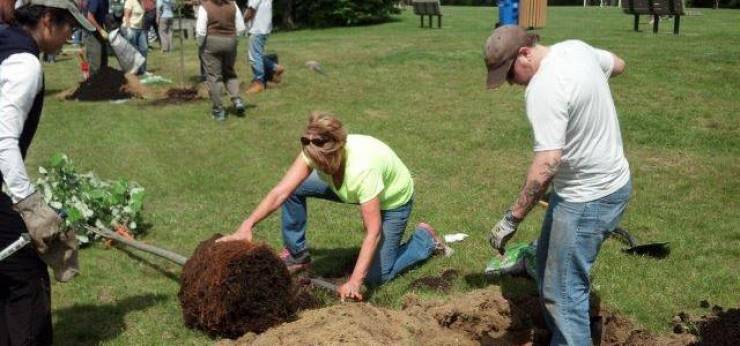
RI Tree recently announced that registration is now open for its fall Tree Stewards course, which will be held at the Barrington Public Library, 281 County Road, Barrington, RI 02806. The course’s lecture sessions will be held on September 7, 14, 21, and 28 from 6:30 p.m. to 8:00 p.m. The course’s planting session will be held on October 7th from 10:00 a.m. to 12:00 a.m. Seating for the course is limited.

“The Tree Stewards course provides an in-depth look at the basics of tree care and growth and covers various tree-related topics,” says John Campanini, RITree’s technical director. “It’s always been our most popular course, so seating fills up quickly. It’s only one of RI Tree’s many activities in its efforts to educate the public about trees and their benefits.”

The Tree Stewards Course is held in the fall and the spring at locations throughout Rhode Island. The course reviews the basics of tree care and tree growth, including the following topics:

  • Tree Biology
  • Tree Identification
  • Tree Health
  • Planting & Pruning
  • Urban Forestry
  • Soil

The course also reviews insect and disease diagnosis, common invasives, and plant stressors. Attendees should bring a lunch to the Saturday workshops.

For more information about the courses or to register, call Robin Enos at RI Tree at 401-764-5885 or visit its website: www.ritree.org. People also can register by emailing the organization at ritree@ritree.org.

Stop Girdling from Squeezing the Life Out of Your Trees

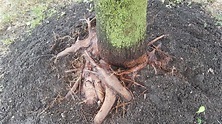
Girdling roots is a more serious tree care problem than many think. Girdling is like wearing a belt about your waist that keeps getting tighter and tighter and tighter. It can strangle the life of a tree. Girdling occurs when a tree’s lateral roots at or just below the soil’s surface encircle or cut into a tree’s trunk, restricting the flow of water and nutrients and weakening the tree dramatically.

Girdling is as bad a problem in tree care as volcano mulching and poor pruning. It needs to be addressed as soon as possible. What causes it? The USDA-FS recently published a list of the major causes of girdling root problems.

At the top of the list is container-grown plants. When a tree stays in its container too long, its roots can become problematic. With nowhere else to go, they encircle the tree’s ball. If they aren’t loosened during planting, they can become girdling roots.

Below are additional causes for girdling:

  • Soil obstructions (i.e., hard-pan)
  • Improper root cutting (either during nursery harvesting or construction activities)
  • Burial (too deep planting)
  • Volcano mulching
  • Berms and saucers (built too high or too low during plant installation)
  • Multi-stem plants (too little room between stems for roots to grow)
  • Nearby trees (competition from other roots and stems)

Leaving pieces of the planting container in the planting hole can lead to girdling roots. So, can planting a tree in heavily compacted soil and proximity to foundations, curbs, and other obstructions.

Fortunately, griddling is easy to spot. The most obvious sign is abnormal trunk flare. Instead of the tree trunk flaring where it meets the ground, it appears straight or narrower. Additional signs of girdling include roots circling the tree above the soil line and early leaf drop, as well as small leaves and canopy dieback.

Treating and Preventing Girdling

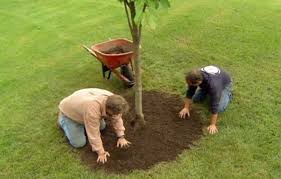
Digging the right-size planting hole is the best way to prevent girdling. Contrary to what many people think, digging the hole deeper isn’t necessarily better. In fact, it’s one of the worst things you can do when planting a tree. Digging a planting hole with a width of about twice the size of the root ball—no deeper than the root ball is ideal.

Additional steps you can take to prevent girdling include keeping the soil you put back below the root flare and mulch away from the tree’s trunk. Also, break up any roots encircling the root ball before planting the tree. Water the plant consistently initially and inspect the roots for defects occasionally.

Removing the girdling roots is an option. But talk with a certified arborist first before doing so. He or she can help you avoid cutting the tree’s main stem. In the severest cases, you may have to remove the tree. If you need help with what to do, RI Tree can help you find a certified arborist.
RI Tree to Host Free Summer Tree Workshops

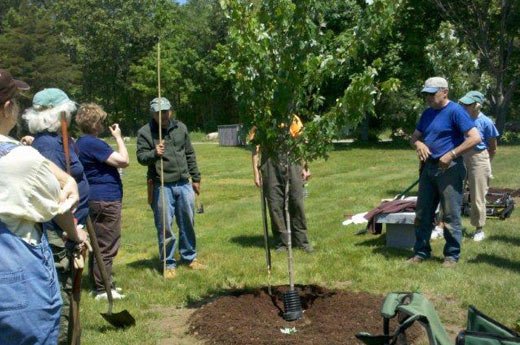
RI Tree is again hosting its free tree workshops—one of the organization’s most popular education sessions. We started these workshops a few years ago, and they have caught on with people. The two-hour workshops review the knowledge, skills, and equipment you need to conduct safe and rewarding interactions with trees, landscapes, and community forests. 

These workshops generate increased awareness and a better understanding of the beauty, benefits, and concerns associated with trees and a healthy canopy. The workshops also offer a chance to explore local trees and discuss critical tree issues. RI Tree staff conduct the sessions, which run from 1:00 pm to 3:00 pm. The locations and topics of information, explanation, and discussion are below. 

  • Champion Tour (Westerly @ Wilcox Park) July 18th

Visiting some Champion Tree specimens, we will present the program’s history and the process of nominating, scoring, and calculating a Champion tree’s score. The Helen Walker Raleigh Tree Care Trust, managed by the Rhode Island Foundation, generously supports the Walker Raleigh Champion Tree Program with a special grant.

These visits to the urban fringe forest will discuss preservation strategies and forest health issues. 

  • Reading the Landscape (Newport @ Morton Park) August 8th

This visit to Morton Park will focus on the efforts of sustaining canopy in an urban park. These discussions will also focus on how correct planting, large tree maintenance, and physical infrastructure plays a role in providing well-canopied recreational spaces.

  • Preserving Elder Trees (E. Greenwich @ Goddard Park) August 15th

A park stroll looks at tree structure and its relationship to health, maintenance, and performance. How a tree is treated in its formative years determines the capacity and need for future maintenance. If you have developing or established landscapes, this session can help determine appropriate care.

This session focuses on pruning practices and strategies for fruit trees and young nursery stock.

You can register for these workshops at the RI Tree website, which features some of the other events, programs, and workshops we offer, as well as our tree care videos and blog.

Proper Planting Techniques Boost a Tree’s Survival Chances

Thinning crowns. Stunted leaves. Dying branches. These signs indicate a tree’s slow and steady decline over the years. But even dead trees have stories to tell. A closer look at a dead tree’s trunk often tells you what caused the tree’s demise.  Healthy tree trunks have solid, continuous bark. Ding tree’s tree’s bark, on the other hand, is broken or has sections missing. it’s a sign that something is wrong.

Bark defects are instructive if you know how to interpret them. They tell you that the tree’s sapwood—its “plumbing”— has died. Sapwood contains millions of rectangular tube-like cells stacked one on top of the other. They feed nutrients and water to the tree. That, in turn, supplies the leaves, stems, and roots with the nourishment they need to survive.

When a plant’s sapwood fails, however, the channeling of these vital plant elements slows. Eventually, it stops. That isn’t good for the tree. Bark defects suggest the tree has suffered from malnutrition and water loss for years. While that information is helpful, it doesn’t explain the tree’s ultimate demise. So, what caused that?

The tree’s trunk or root flare tells you what happened. If there’s no flute-like shape at the flare, someone may have planted the tree too deeply, damaging the tree’s root system and stopping vital nutrients from getting to the tree. That, in turn, set in motion a series of events that weakened the tree’s primary functions and internal structure. Eventually, it leads to its death.

If whoever planted the tree had used the proper planting techniques, the tree might have lived a long time. In other words, the tree’s death was avoidable. Unfortunately, losing a tree because of improper planting techniques isn’t uncommon. That’s why you need to plant a tree using the correct techniques. That boosts its survival chances and ensures the tree gets all the nutrients it needs to survive and thrive.

See our section on tree care tips to learn how to plant a tree correctly and how to ensure it survives during the early stages of growth.

Five Pests You Need to Watch this Summer

Spring is a great time of the year. With life emerging from its long winter sleep, it’s among nature’s most active seasons. But spring is also a time when plant pests emerge. These pests can ravage your trees and kill them. Basically, you can divide tree pests into three broad categories—sap-sucking insects, wood borers, and defoliators.

Pests invade trees when they’re under great stress. Pests introduced from outside their native range can severely impact crops and natural tree populations, generating billions of dollars of economic and ecological damage. However, what insects you’ll need to watch out for this summer depends on your location.

Tree pests cause tremendous to natural and managed land annually. Most tree damage is caused by 20-22 common insect pests. These pests can devastate a tree if left untreated and cause extensive economic damage by destroying landscape trees that has to be removed and replaced. The impacts of pests are often made worse by climate change, which may allow additional pest life cycles per annum.  

Not all pests are deadly, however. Some play critical roles in natural and managed systems, contributing to carbon cycling and forest regeneration. They may even contribute to shaping patterns of global tree diversity. Below are five pests to look out for and descriptions of telltale signs that they have invaded your trees:

1.      Arborvitae leafminer

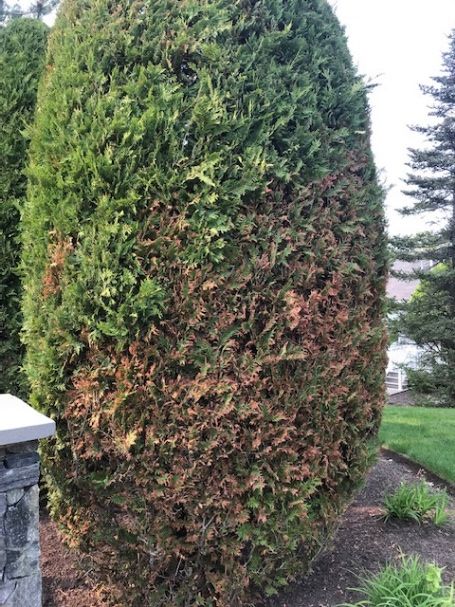
If you see brown foliage now on your “Green Giant” and “Emerald Green” cultivars, it’s a sign that these pests are feeding on your plant’s leaves. This leafminer pest is a small caterpillar, green or brownish, with a dark head and a spot just behind its head. Mature caterpillars generally appear between April and June. While this pest likes all arborvitae varieties, they prefer American pyramidal, globe, and golden arborvitae.

2.      Cedar Rust

Cedar apple “rust” can affect the health and vigor of your apple trees by causing early defoliation and reducing fruit quality. They present as orange gelatinous spheres and indicate the presence of fungal spores from the Gymnosporangium family, which can later infect Malus species. Cedar rust is especially harmful to Junipers. Severe infections of this disease, which first appear on leaves as small greenish spots and then gradually enlarge and change color, can kill a tree.

3.      Holly Leafminer

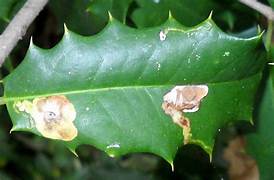
As the name suggests, it feeds on English, American, and Japanese hollies. If you see tiny green blisters on a lower leaf’s surface, chances are good the female of this pest has laid eggs there. The Holly leafminer “causes the presence of yellow, brown, or reddish mines on the leaves. In the beginning, the mines are narrow and winding. But they then become large blotches as the larvae overwinter in the leaf. The upper and lower surfaces of leaves remain after feeding and are easily separated. Larvae are yellowish and about 1/16″ long. The adult is a small black fly.

4.      Boxwood Leafminer/Blight

These pests are among the most destructive—and deadly— of the boxwood insect pests. The larvae feed on the tissue between the leaves’ outer surfaces, producing blotch-shaped mines in the boxwood leaves. Circular leaf lesions are a crucial symptom of boxwood blight, as are leaf yellowing and leafminer injury blistering. Infested leaves appear blistered from late summer through the following spring. New leaves, however, don’t show signs of mining until deep into summer, when the larvae are larger. Premature leaf drops may result from heavy infestation by fall or early spring.

5.      Pine Needle Blight

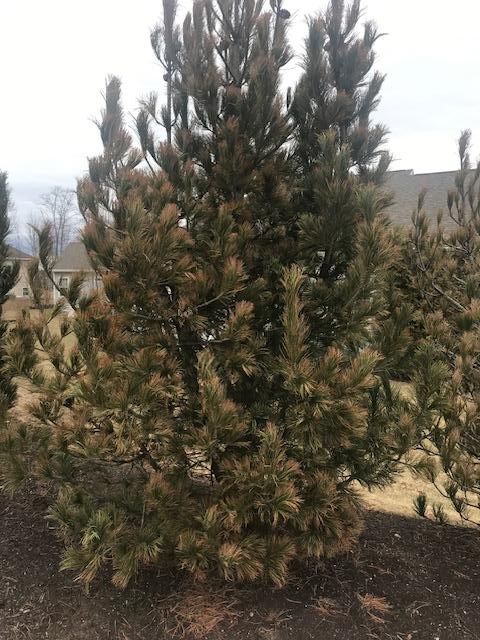
A common fungal disease among pines, especially mugho and Japanese white pines, pine needle blight attacks pine needles, causing spots, blights, and premature defoliation. Initially, spots emerge in summer or late fall. It’s a group of diseases. Cyclaneusma needle cast symptoms appear as light green to yellow spots on infected 2-year-old or older pine needles. Dothistroma needle blight causes yellow to tan spots in the fall. Lophodermium needle cast appears in late fall to early spring. It presents as brown spots with yellow margins on young needles. Brown bands form later.  

These five pests are common in the Northeast. But don’t panic if you see one or more of them on a tree’s leaves or something foreign on its bark. Instead, get to work diagnosing the problem and deciding on the best treatment for the pest. Treatment for these pests, however, varies. So, if you need help treating them, contact the RI Tree Council as soon as possible. We’ll help you eliminate these pests and boost your tree’s health.

John Campanini is technical director of the Rhode Island Tree Council (RITree). A graduate of the University of Rhode Island, he was city forester for Providence for more than twenty years before retiring.

Proven Tips on Caring for Older Trees

by John Campanini

Technical Director, RI Tree Council

Mature trees provide numerous benefits for both you and your property. But caring for them is critical to ensuring they remain healthy enough to provide these benefits. You have even more incentive to maintain the tree’s health of the tree if the tree is historical. Generally speaking, mature trees require the same care as younger trees.

But older trees are much less tolerant of sudden changes—even positive ones. So, if you think an older tree is in trouble, don’t hesitate to call an arborist or the Rhode Island Tree Council for help. They can provide strategies that can help you save an older tree. In the meantime, this article provides proven tips on caring for and preserving mature trees.

Common Diseases Affecting Mature Trees

Mature trees can suffer from a variety of disease problems. Anthracnose, for instance, which causes unsightly dark, sunken lesions on leaves, stems, and flowers is common among mature deciduous trees, especially sycamore, ash, and oak. Tree diseases weaken trees and make them more vulnerable to severe storms. Common diseases affecting mature trees include root rot, fungal infections, and bark beetles.  

  • Root rot is a deadly disease that can ravage trees. It can weaken a tree so much that it leans or breaks near the soil line. Wilting and discoloration, and dropping of a plant’s lower leaves are all signs your tree has this disease. Root rot types include phytophthora, armillaria, black, and cotton. All types of root rot are fatal. So, your best bet to preserve an older tree is to prevent this disease from occurring.
  •  Tree fungus is common among trees. Once fungus spores contact a tree, they grow, enter, and feed on it. But not all tree fungi are bad. Some even benefit trees. If you see mushrooms or other fungi growing around or on a tree, chances are good your tree has a fungus. Other fungi, however, are hidden below ground. Then there are those funguses that look different than expected. The loss of vigor or the discoloration of leaves is a sure sign that your tree has a fungus.
  • Bark beetles breed between the bark and wood of a tree. Some species attack living trees. But most feed on weakened, dying, or dead trees. Bark beetles tend to attack one part of a tree. Some species of bark beetles speed the decomposition of wood and forest renewal. Other species can invade and kill a tree. Trees attack bark beetles by releasing their pitch or sap, which appears as reddish-brown or white blobs on the tree. If the blob is white, the tree has successfully defended itself.

If you think your older tree has any of these common problems, you need to eliminate the threats as quickly as possible. Letting them linger can kill an older tree.

Pruning Older Trees to Enhance Growth 

Pruning an older tree is essential to maintaining its health. Pruning enhances the tree’s beauty, promotes its growth and development, and improves its shape and structure. Pruning also reduces the risk of disease and pests invading a tree while improving air circulation and supporting its longevity by encouraging new growth. 

But you need to prune wisely and at the right time. If done incorrectly or at the wrong time, pruning can harm older trees or, at the very least, inhibit their growth. So, when is the best time to prune an older tree? The best time to prune older trees is when you see dead branches. Cut them away carefully so you don’t cause a more critical wound. But be careful when pruning branches. You don’t want them to fall and injure someone or harm your property.

 Boosting Soil Health Protects Mature Trees

Enhancing soil health for older trees is another way to protect older trees from pests, insects, and diseases. Using natural fertilizers like compost, manure, and bone meal to enrich the soil with essential nutrients, for example, can boost soil health. Applying the proper soil preparation, irrigation, and fertilization techniques boost your tree’s health and make it robust enough to withstand common insect and pest infestations.

 Watering Older Trees Helps Them Thrive


Watering the appropriate amount for your tree type can also help mature trees thrive. Minus a soaking rain, water regular monthly deep watering is recommended. You may also want to remove competing plants near a tree. Removing built-up soil from around the root crown also helps. It can hide defects, create areas of decay, or trap moisture from around the root crown, creating the perfect environment for fungus.

Mature trees are an essential part of our environment, providing many benefits to people and the environment. They can provide shade, cut air pollution, reduce stormwater runoff, and act as a habitat for wildlife. Older trees can also be treasures with great sentimental value. They often have much history attached to them—especially if you live in a house you were born and raised in. But you must take care of them to keep them healthy and strong. So, don’t hesitate to call an arborist or the Rhode Island Tree Council if your older tree needs help.

John Campanini is technical director of the Rhode Island Tree Council (RITree). A graduate of the University of Rhode Island, he was city forester for Providence for more than twenty years before retiring.

RITree Hosts Arbor Day Celebration in Newport

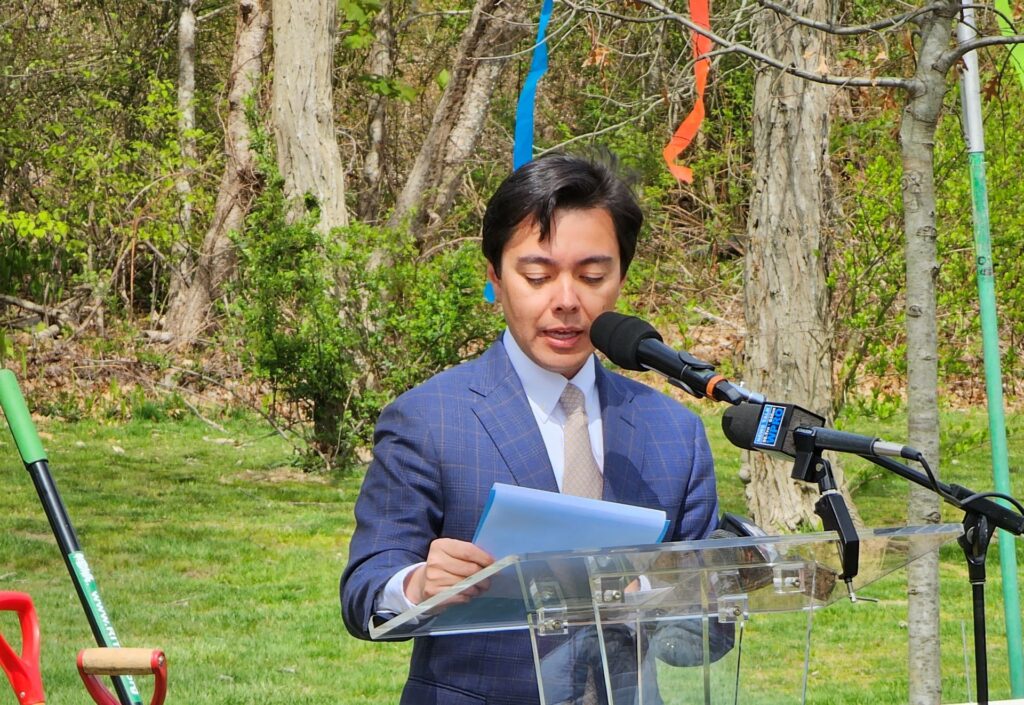
PROVIDENCE, RI, May 19, 2023 — Rhode Island Tree Council (RI Tree) recently held this year’s Arbor Day celebration at Miantonomi Park, Hillside Avenue, Newport, RI. The city of Newport hosted the event, the Newport Tree Conservancy, and the Newport Tree and Open Space Commission. The event’s primary sponsor was the Rhode Island Energy Corporation, PPL. The event’s secondary sponsors were the Rhode Island Tree Council and the Rhode Island Department of Environmental Management.  

As part of the day’s ceremonies, Governor Dan McKee read the official state Arbor Day proclamation, with Newport’s mayor, Xaykham-u’Xay-Khamsyvoravong, in attendance. Doris Alberg, RI Tree chairperson, presented sponsors awards to Rhode Island Energy and hosts awards to the city of Newport Tree and Open Space Commission and Newport Tree Conservancy. Terry Gray, Director of RI DEM, and Lou Allard, Urban, and Community Forestry Program, co-presented the 2022 Tree City USA award to the following cities.

Barrington (5 years), Bristol (22 years), Central Falls (8 years), East Providence (29 years)

Jamestown (21 years), Middletown (5 years), Narraganset (12 years), Newport (32 years), Pawtucket (17 years), Portsmouth (17 years), Warren (21 years), and Warwick (23 years).  Providence (37 years) was the Growth Award Recipient. Johnson & Wales University and Salve Regina University received this year’s R.I Tree Campus Higher Education award.

Students from the first-grade class of the Chairborne Pell Elementary School displayed their tree crafts. RI Tree also planted five Arbor Day trees, including the Arbor Day ceremonial red oak at the park. RI Tree also planted the Scarlet Oak, Greensleeves Dogwood, and Sugar Maple trees at the park.

Rhode Island has had a long history with Arbor Day. According to the RI Department of Education records, the first event held in Rhode Island to honor trees occurred on April 29, 1886. Sponsored by the Barrington Rural Improvement Society, the ceremony took place on public land near the railroad station in West Barrington. 

Assisted by Society members, school children planted an American elm and dedicated it to the memory of the 16th President of the United States, Abraham Lincoln. Many more would follow. In 1892, the RI Department of Education initiated an Arbor Day Program for school children to be held in the spring of each year over the next five decades (ending 1939).

New Tree Planting: 9 Quick Tips

Spring is a great time to plant new trees. The cool weather enables trees to establish roots before the summer heat stimulates new top growth. While you can plant healthy balled and burlapped (or container) trees throughout the growing season, you must provide good care for them to take root and grow. Make sure you have enough water to help them grow and, make that you locate all underground utilities before digging.

How well a new tree grows after planting, however, depends primarily on four things:

  • Type of tree selected
  • Planting location
  • Care provided during planting
  • Follow-up care after planting 

Attending to these factors conscientiously eliminates plant stress. You may need to prune a new tree after planting, however. If you do, prune sparingly. You can do corrective pruning after the tree experiences a full year’s growth.

The International Society of Arboriculture recommends the following nine steps when planting a new tree:

  1. Identify the trunk flare at the bottom of the tree’s base. Make sure it’s visible after planting.
  2. Dig a shallow broad planting hole about two times larger than the root ball.
  3. Remove the containers or cut away the wire basket.
  4. Place the tree at the proper height. Lift the tree by the root ball when placing it in the hole.
  5. Straighten the tree in the hole. Once planted, a tree is difficult to reposition.
  6. Fill the hole gently but firmly. Water periodically by backfilling, and avoid fertilization at this time.
  7. Stake the tree only when planting bare root stock or when planting at windy sites. Remove after a year of growth.
  8. Mulch the tree’s base. Mulch helps holds moisture, moderates soil temperature extremes, and reduces grass and weed competition. Avoid filling in mulch to the tree’s base.
  9. Provide follow-up care. Keep the soil moist but not water-logged. Water once a week, barring rain. Water more frequently during hot, windy weather.

Best Spring Flowering Trees to Plant

Below are four of the best spring-flowering trees to plant in Rhode Island.

·         Flowering Cherry 

These trees come in a wide variety of shapes and sizes. Many varieties bloom in springtime and last for several weeks. Cherry trees work well in residential gardens because they require minimal care. All are beautiful. Distinguishing characteristics include the number of petals, the color of the blossoms, and their fragrances, leaves, and blooming season. Flowering cherry trees perform best in full sun in moist, relatively well-drained soils. Watch for caterpillars, leaf-mining moths, bacterial cancer, and blossom wilt.

·         Magnolias 

Like the cherry tree, the magnolia tree is best known for its flowers. Among the first trees to bloom in the spring, magnolia trees have large flowers and a sweet, heady fragrance. Their tulip- or star-shaped flowers are often as large as saucers when fully opened. The tree’s foliage and fruit are also attractive. Magnolia trees come in several varieties, are long-lived, and are easy to plant. The best time to plant them from seeds is in the spring. These hardy trees need suitable soil, light, water, and feeding to thrive.

·         Dogwood  

These woodland trees appear in various forms around the U.S., giving us a beautiful and elegant spring spectacle. A good choice in New England, where it’s cooler, is the Pagoda Dogwood. These trees have wide graceful branches growing horizontally into layers, each featuring white flowers in late spring. In partially-shaded gardens, the dogwood’s whiteness makes a stunning show. Unfortunately, a severe disease affecting all types of dogwood is anthracnose. A fungus known as Discular Destructiva is also a severe threat.

·         Crabapple

The flowering crabapple tree is among the most prized of all spring-flowering trees. They’re a staple of landscape gardening.  Known for their spectacular display of magnificent blossoms and colorful fruit in the fall, these trees bloom for four-to-five weeks in mid-spring. The combination of rich red buds opening to pure white blossoms pumps up a floral display’s beauty. Unfortunately, crabapple trees in New England are susceptible to four significant diseases—apple scab, fireblight, cedar-apple rust, and powdery mildew.

Buying a new tree and planting it is a good investment. It offers a wide range of benefits, including boosting the value of your property by about 7%. In affluent areas, trees can boost the value of a home by as much as 10-15%. However, how well a tree does depends on the tree selected, where you plant it, the care you provide during planting, and the follow-up care you offer.

Contact RI Tree for more tips on planting a new tree or for a copy of the International Society of Arboriculture’s brochure on New Tree Planting.

John Campanini is the technical director of the Rhode Island Tree Council (RI Tree). A University of Rhode Island graduate, he was City Forester for Providence for over twenty years before retiring.

Eight Tips on Hiring a Certified Arborist to Clear Tree Damage

Well maintained trees increase your property values by as much as 15 percent. They also cut heating and cooling bills, clean the air, add oxygen, and help control noise levels. But storms, natural disasters, and poor tree care can damage trees irreversibly, leaving trees open to disease and damage beyond the point of no return. Often, maintaining a tree is less expensive and time-consuming than replacing the tree.

A certified arborist is the best way to get help with damaged trees. Arborists are trained in the science and art of planting, maintaining, pruning, and caring for trees. They have a high level of knowledge in tree care and passed a comprehensive exam developed by leading tree care experts. Services arborists offer include tree removal, emergency tree care, plant health care, pest mediation, and consulting services. 

Finding the Right Arborist

But all arborists are different. Some have more experience in certain areas than others or specialize in certain aspects of tree care. So, picking an arborist that meets your needs can be a challenge. Below are some tips on hiring an arborist that can help you pick one that’s right for you:

  1. Beware of door knockers. They often emerge after storms and lack the requisite tree care knowledge and experience. So, check the person’s membership in professional organizations, such as:
  • International Society for Arboriculture (ISA)
  • Tree Care Industry Association (TCIA)
  • American Society of Consulting Arborists (ASCA)
  • ISA arborist certification.
  • Ask for certificates and proof of insurance. Make sure the arborist has personal and property insurance as well as workers’ compensation insurance. Phone the insurance company if you have doubts.
  • Check for required permits and licenses and ask for references to find out where the arborist has done work similar to what you want done. If an arborist gives you references, contact them. If possible, visit the arborist’s previous worksites.  
  • Don’t be rushed into a bargain or pay in advance. Instead, get multiple estimates before choosing an arborist. It may cost you some money for the estimates, and it may extend the project’s completion. But it’s the best way to ensure you get the right person for the job.
  • Determine the best choice based on cost, the work to be done, and the arborist’s skill, professionalism, and field experience.
  • Ask if they use climbing spikes. A serious arborist will not use climbing spikes if the tree is to remain in the landscape.
  • Review the services the arborist offers. A conscientious arborist will offer various services, including pruning, fertilizing, cabling, bracing, lightning protection, and pest control. 
  • Beware of an arborist that’s eager to remove a living tree. Good arborists will look at several tree care options before recommending removal. Removing a tree is the last resort.

Trees can increase your property value significantly. So, investing the time and money to find the right arborist is one of the best investments you can make. Tapping an arborist to help you care for a damaged tree makes sense. Educating yourself about the basic principles of tree care is a great way to help you choose a qualified arborist that fits your needs.

For more information on hiring certified arborists, contact the Rhode Island Tree Council at 401-764-5885. Or, consult RI Tree’s website. 

John Campanini is technical director of the Rhode Island Tree Council (RI Tree). A graduate of the University of Rhode Island, he was city forester for Providence for more than twenty years before retiring.

7 Questions to Ask When Deciding to Remove a Tree

Deciding when to remove a tree is challenging for homeowners. Many factors, including the cost of tree work and any emotional ties to the tree, can impact the decision to remove a tree. A dying tree that doesn’t present hazards to people or property can be allowed to die in place without any human intervention.

But hazardous trees with structural weakness that endanger people and property need immediate attention.  Below are seven questions to help you decide if you need to remove a tree. Don Sepe, Sepe Tree Service, a licensed and certified tree removal company, answered the questions.

1.      Does the green stuff growing on my tree mean it’s dying?

No. That’s lichen. Lichen is a slow-growing plant that appears on walls, rocks, and trees. It’s not parasitic. It proliferates when exposed to full sunlight, which explains its profusion on dead trees. That often indicates that the air nearby is relatively pure. Most lichens won’t grow in a smoky or polluted atmosphere.

2.      Do large dead branches indicate that a tree is dying?

Not necessarily. Large dead branches endanger people and property. If less than 25% of the tree’s branches are damaged, the tree can survive. Remove any crossed or rubbing branches. Narrow branch angles—especially those on the main trunk—are prone to splitting. Remove these branches as well. These procedures are best done by an arborist.

3.      Is there trunk damage?

Internal decay in a tree often appears as vertical cracks, seams, dead branch stubs, and large, older wounds. If the tree has less than 25% damage to its trunk, the wounds can gradually heal without permanent injury. If the tree has more than 25% damage to its main trunk, you should remove it.

4.      Is the tree hollow?

Many trees can live for years with hollow trunks. That’s because the connective tissue of the tree—its xylem and phloem—are on the outer edges of the tree. The hollowness, however, compromises the trunk’s strength, making the tree a danger to people and property. So, remove the tree if one-third or more of the tree’s interior is hollow.

5.      Are there large dead branches?

Trees with large dead branches endanger people and property. So, do trees with broken tops. If less than 25% of the tree’s branches are dead, the tree can survive. Remove any crossed or rubbing branches. Narrow branch angles, especially of the main trunk, are also a concern. They’re prone to splitting. If a narrow crotch is too large to remove the two co-dominant leaders, cable them to relieve the strain and prevent them from breaking down. Contact an arborist to perform these procedures.

6.      Our tree is close to our house. Should we remove it?

Trees near a house can present a problem to homeowners, but you don’t always need to remove them. You can “crown raise” a tree to supply about 12-15 ft. of roof and house clearance. That keeps mold from growing on your house and prevents squirrels from jumping to your roof and nesting. You can also use tree growth regulators (TGR), which help control tree and shrub growth. TGRs keep the tree trimmer. Have an arborist come out and look at the tree and help you decide.

7.      Should I call an arborist to do my tree work?

Hiring an arborist to remove a tree is the safest and most cost-effective way to remove a tree. If you use your landscaper to remove the tree, however, make sure that he or she has the proper insurance to do the job. Landscape insurance doesn’t cover staff working at heights over 8 feet in the air. So, if an accident happens, you could be liable for any damage. No one wants that.

Answering these seven questions can help you decide whether to remove a tree. If you’re still not sure, talk with an arborist. He or she can help you make the right decision. If you need to remove a tree, use a professional tree removal service. It’s the best, most cost-effective approach to tree removal.

Sepe Tree Service is a full-service tree care company. Its owner, Don Sepe, Jr., has over 30 years of experience in tree removal and stump grinding. Sepe Tree is available 24 hours a day for emergency service. For more information, call 401-276-2828.

Nine Ways Your Tree Can Live on After Christmas

by

John Campanini

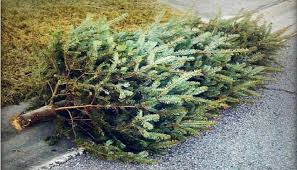
Christmas is a great time of the year. But when all is said and done, you’re often left with a full-sized tree in your living room. If you have a real tree, you can always put it out on the curb. Fortunately, many Rhode Island communities have programs designed to help you dispose of Christmas trees with a minimum of fuss.

But you also have several alternatives to putting your tree on the curb. Many of these are environmentally friendly and make great use of your tree. One little used way, for example, is to replant your tree in your backyard. Doing that is great way of retaining the fond memories of a holiday season.

Replanting Ball and Burlap Trees

You can replant balled and burlap Christmas trees. If this is your goal, consider buying a small live ball and burlap tree. Small live trees survive the transition from outdoors to indoors to outdoors better than large trees. Here are several tips on replanting a Christmas tree:

  • Dig a hole for the tree as soon as you can. That will help the tree’s chances of survival. If you wait until Christmas is over, the ground may be frozen.
  • Indoor conditions put trees at risk. So, keep the tree indoors for no longer than a week or a week and a half. Keeping it longer reduces its chances of surviving outdoors.
  • Keep the tree in a cold sheltered place. The tree has been harvested in the cold, so it’s already gone dormant. You want to keep it in this state before you replant it.
  • Place the tree in a draft-free location and away from heaters and vents. Wrap the root ball in plastic or wet sphagnum moss.
  • Keep the root ball damp in the house. It needs to stay damp as long as it’s in the house. You can use ice cubes or daily watering to keep the ball moist.
  • Take off the burlap bag and other coverings on the root ball first. Then place the Christmas tree in the hole and backfill the hole.

Now you’ve replanted your Christmas tree. It’s a great way of keeping the memories of the holiday season in your backyard if you have the space to do it.

Recycling Your Trunk-Cut Christmas Tree

You can’t replant a trunk-cut Christmas tree. Once the tree is separated from its roots, that’s it. You can replant it but you can do other things with it. Below we give you several alternatives to putting your tree out on the curb when it’s time to dispose of your tree. Make sure you remove all the lights, ornaments, and tinsel beforehand.

  1. Donate to habitat and restoration projects
  2. Create a backyard bird sanctuary
  3. Recycle the tree and for wood chips/mulch
  4. Use it locally for erosion control
  5. Remove branches and use them for pathway edging
  6. Remove plants and use them to protect delicate plants
  7. Take small branches and add to a mulch pile

You can also use the tree for a fish habitat. Small fish can lay eggs in them. Trees last about eight years in water. But get permission from your local authorities before dropping the tree in a lake or pond. Some municipalities create fish-friendly habitats with Christmas trees. Too many submerged trees, however, can cause problems.

Go to the Pick Your Own Christmas Tree website for more ways to recycle Christmas trees in Rhode Island. Or contact RI Tree at ritree@ritree.org. You can also call the office at 401-764-5885.

John Campanini is the technical director of the Rhode Island Tree Council (RI Tree). A graduate of the University of Rhode Island, he was city forester for Providence for more than twenty years before retiring.

Nine tips on keeping your Christmas Tree fresh

Buying the perfect Christmas tree is a challenge—no doubt about it. Keeping your tree fresh during Christmas is just as challenging, if not more so. But thanks to this summer’s increased dryness, keeping this year’s tree fresh will be more challenging. The dryness affected the quality and life span of this year’s Christmas trees. So, you’ll have to go to greater lengths this year to keep your tree fresh than you did last year:

Ideally, you’ll want to buy a suitable stand for the tree you buy. Look for a stand that holds at least a gallon of plain water. You’ll spend less time filling up the stand and more time enjoying your tree. If you have a tall, wide room, pick a stand that fits the tree’s size. If you’re putting your tree on a table, choose a small stand with a good-sized reservoir. Also, get an adjustable stand. It makes leveling the tree easier.

Tips on Keeping Your Tree Fresh

Here are nine tips on keeping your Christmas tree fresh:

  • Cut about half an inch more off the tree’s trunk. That exposes the tree’s vessel, enabling the tree to absorb water easier.
  • Avoid cutting the trunk at an angle or into a V-shape. That makes it harder to keep the tree in the stand and reduces the amount of water available to the tree. Also, avoid bruising the cut surface or getting it dirty.
  • Keep the outer layers of wood on the tree. That speeds up the intake of water after you cut the tree.
  • Put your tree in a stand with water immediately after cutting the tree. Keep the stand filled with water throughout the season. Check on water levels twice daily for the first week and then daily.
  • Use a stand with a traditional reservoir type. It’s among the most effective ways to maintain freshness and minimize needle loss problems.
  • Check out the devices available to help you maintain a constant water level in the stand. They work. Use them if you can.
  • Checking the temperature of the water isn’t necessary. The temperature doesn’t affect water uptake or the tree’s freshness. Use plain water.
  • Avoid putting the tree near heat sources like air vents, fireplaces, wood stoves, and sunny windows. That dries out the tree quickly.
  • Using lights that emit low heat, such as miniature lights, reduces drying and keeps the tree fresh.

Consider acclimating your tree before bringing it into your home. Going from a cold outdoor environment to a heated indoor can stress out a tree. So, you can store the tree in an unheated area, like your garage or basement, for a day or two before bringing it inside. Also, avoid using preservatives and other additives in the water. They won’t extend the life of your Christmas tree.

 
Photo credit: Andre Gorham via Unsplash