

Revitalize Your Trees: Discover the Power of Root Deep Care Today!”
by John Campanini, Technical Director, RI Tree
Urban trees often need fertilization. That’s mainly due to the unique characteristics of city soils.
Signs that urban trees need fertilization include yellowing leaves (chlorosis), thinning canopies, short twigs, stunted growth, branch dieback, a weak response to mild drought, and early leaf drop.
These issues are often the result of improper soil pH levels, which can vary greatly depending on location, climate, and tree species. In other words, maintaining the correct soil pH is essential for helping trees flourish in urban environments.
New England soil is naturally acidic—pH level < 6.5. This level, which results from a mix of native soil, imported fill materials, construction debris, and different management practices like irrigation with high water or fertilizer use, is also highly variable.
One study comparing forest and urban soils found the average pH level of urban soils to be 7.6, compared to 5.5 for forest soils. Providing the right nutrients in the correct amounts is crucial for proper fertilization, which can be challenging and prone to errors.
Fertilizing Urban Trees Can Be Challenging
Proper tree fertilization begins with diagnosis and ends with application. The issue could be a soil with a low nutrient level, or the soil may need an amendment, like compost or peat moss/coir. A soil amendment is any material added to the soil to improve its physical properties, such as water retention, permeability, drainage, aeration, and structure.
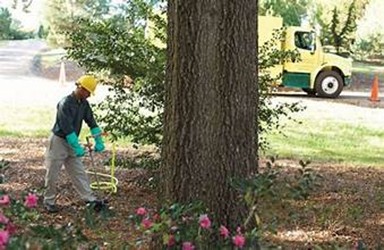
Here are seven essential tips for fertilizing trees correctly:
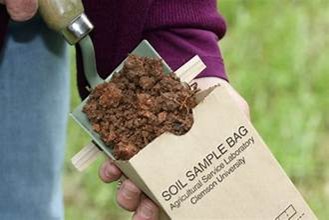
- Get a soil test first
The most critical step is understanding what your soil actually needs. A soil test from a local agricultural extension office or lab will help identify any specific nutrient deficiencies (e.g., nitrogen, iron, manganese), determine the soil pH, which affects how well a tree can absorb available nutrients, and prevent you from applying unneeded nutrients (like phosphorus).
(The University of Rhode Island will test soil for free. See this webpage for more information.) - Choose the right fertilizer type
Prioritize slow-release nitrogen (N) fertilizers. They feed the tree gradually over an extended period, minimizing “fertilizer burn” and excessive, weak shoot growth susceptible to pests and cold damage.
Since nitrogen is often deficient in the soil and critical for foliage growth, opt for a fertilizer with a high nitrogen ratio (like a 3-1-2 or 4-1-1 N-P-K ratio), generally recommended for established trees. - Fertilize the correct root zone
A tree’s fine, water- and nutrient-absorbing roots extend far beyond the canopy (dripline). So spread fertilizer across the entire area under the tree’s canopy, extending to the dripline and even slightly beyond. Keep fertilizer a few inches away from the base of the trunk to prevent injury to the bark and root crown. - Apply at the optimal time
For ideal root health, fertilize in mid-spring – after the leaves have emerged and grown to full size. At this stage of development, the plant has used up most of its stored energy and will benefit the most from fertilizer laden with nutrients to help create more energy. - Use the correct application method
Spread granular fertilizer evenly over the mulched area and water it thoroughly. Use an auger or punch bar to create 8–12-inch-deep holes, spaced 2–3 feet apart, throughout the target root zone.
Distribute the granular fertilizer evenly among these holes to get the nutrients below the grass roots. Professional arborists often inject a liquid solution directly into the soil under pressure, which can also help aerate compacted soil.
- Apply the correct rate
Over-fertilization can damage roots, create nutrient imbalances, and lead to weak, brittle growth. Always follow the rates specified in your soil test report. Use the correct type of fertilizer, at the proper rate, at the right time, and in the correct location.
For surface applications, rates are usually based on a measure of “actual nitrogen per 1,000 square feet.” Calculate the pounds of your specific product needed according to its N-P-K ratio. - Ensure adequate water and mulch
Fertilizer isn’t a substitute for basic tree care; trees can’t absorb or transport fertilizer without water. So, water the area immediately after applying fertilizer to help dissolve the granules and move the nutrients into the root zone.
Maintain a 2–4-inch layer of organic mulch (like wood chips) over the root zone, keeping it away from the trunk.
Fertilizing trees in urban areas is often a necessity. Fertilization issues often come from the altered nature of urban soil and the lack of natural nutrient cycling, resulting in the need for fertilization. So, watch for the signs, like yellowing leaves or premature leaf drop, that tell you your trees may need help.
Test your soil first, however, to pinpoint the issue. When fertilizing urban trees, defer to the rates specified in your soil test report. Applying the right kind of fertilizer, at the correct rate, at the right time, and in the right place will generate robust, healthy trees.
Do you have fertilization questions? Contact the experts at RI Tree. They’ll guide you through fertilization, saving you time and money.