

Transform Your Landscape: Discover Proactive Tree Solutions!
Are you taking a proactive approach to tree care? More and more homeowners and arborists are doing so and finding success. Proactive maintenance, for example, typically reduces overall tree management costs by 12% to 18%. Put simply, a proactive approach is consistently more successful across financial, safety, and property value metrics.
This shift isn’t just a preference—it’s a survival strategy driven by a challenging mix of critical factors. In the past, trees were often overlooked until a limb fell or leaves turned brown. Taking a proactive approach to tree care can cut costs, reduce liability, and improve safety for homeowners and arborists.
A key reason for this psychological shift is technology. It’s made the “invisible” visible. Previously, we couldn’t see what was happening inside a tree. By the time symptoms appeared, it was often too late. Tools like Arborsonic 3D Tomography and AI-powered multispectral imaging enable us to detect internal rot and nutrient stress before a tree appears sick.
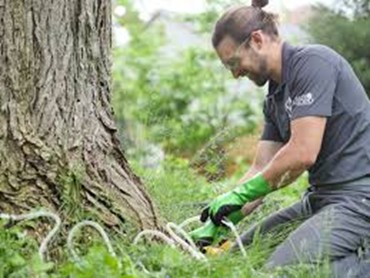
Benefits for Homeowners
While homeowners gain peace of mind and cost savings from proactive tree care, arborists are seeing a revolution in safety and operational precision. For the average property owner, high-
tech tree care takes the guesswork out of yard maintenance and protects their property values. A proactive approach:
· Creates an early warning system: AI diagnostic apps can detect “invisible” stress—like the early stages of Beech Leaf Disease or Dutch Elm Disease—weeks before a human eye would notice. This activity can mean the difference between a $200 treatment and a $5,000 removal.
· Reduces Liability & Safety: Using drones for post-storm inspections identifies “hangers” (detached branches) that pose a silent threat to roofs or family members.
· Boosts predictive landscaping: “Digital Twin” modeling lets homeowners see how a tree will grow over 20 years, helping prevent future issues with foundations, solar panels, or power lines.
· Generates transparency: Homeowners no longer have to “take the arborist’s word for it.” High-tech providers provide 3D LiDAR scans and thermal imagery as proof of decay or health.
Benefits for Arborists
For professionals, 2026 is the year when “dangerous climbs” are becoming a choice rather than a necessity: The benefits include:
· Enhances radical safety: Robotic “grapple saws” and remote-controlled cranes allow arborists to dismantle hazardous trees (like those killed by the Emerald Ash Borer) from the ground, keeping crews out of the “drop zone.”
· Boosts precision treatment: Drones equipped with multispectral cameras can spot nutrient deficiencies in a specific branch. Spray-drones can then apply targeted treatments to that area only, reducing chemical waste by up to 60%.
· Streamline Operations: AI routing software now syncs with weather sensors. If a deep freeze is predicted for a specific neighborhood, the system automatically reschedules to prioritize “anti-desiccant” applications for vulnerable evergreens in that zone.
· Generates data-driven sales: Providing a client with an AI-generated “Health Scorecard” makes it much easier to justify necessary pruning, leading to higher closing rates on estimates.
Mutual Benefits: The “Green” Impact
Beyond individual gains, the integration of technology in tree care in 2026 is helping the environment on a larger scale:
· Boosts carbon sequestration: Healthy, AI-monitored trees live longer, capturing significantly more carbon over their lifetimes than trees replaced every 15 years due to poor maintenance.
· Increase urban cooling: Cities are using AI to identify “canopy gaps” in heat-vulnerable neighborhoods, ensuring that robotic planting crews prioritize the areas that need shade the most.
Proactive Tree Care Trends in 2026
Here are the four trends in proactive tree care for homeowners this season:
- “Future-Proof” planting
Homeowners are no longer planting for today’s climate, but for the projected climate of 2050. Moving away from traditional favorites (like certain Maples or Birches that struggle with heat) toward “generalist giants.” Consult a “Climate-Shift” map before planting to ensure your tree can handle the predicted +2°C increase in your local zone.
- The “Living Soil” Movement
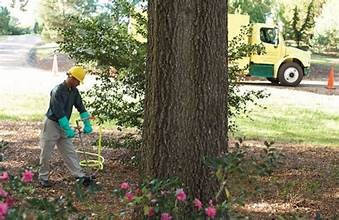
The focus has moved from the branches to the roots. Proactive owners are using this dormant winter season to “charge” the soil. Mixing biochar (a specialized charcoal that holds water and nutrients) with mycorrhizal fungi is the new gold standard. It creates a “social network” for roots that helps trees share resources and resist drought.
- AI-Driven Stress Forecasting
High-tech homeowners are using apps that use predictive analytics rather than just diagnosis. By scanning a tree with an app like PlantTrace AI, the software analyzes leaf vein patterns and bark texture to find “invisible stress” (low chlorophyll or early-stage boring insects) up to four weeks before the human eye can see it. The benefit: You can apply organic treatments early, saving the tree before the damage is permanent.
- Smart Hydration & “Deep Winter” Watering
Proactive watering is critical these days. Smart systems like the Rachio 3 or Senso now include “Winter Dormancy” modes. They monitor soil temperature and automatically deliver a “deep drink” on days when the ground isn’t frozen, preventing winter desiccation (the leading cause of evergreen death. Applying a waxy, organic spray to evergreens in late winter is trending as a way to “lock in” moisture against harsh winds.
These tips on proactive tree care can help you stay ahead of the game—whether you’re a homeowner or an arborist. Being proactive shrinks costs, reduces limb damage, and improves safety. It can help you transform your landscape.