

Three Methods of Removing Tree Stumps
Do you have an ugly tree stump in your yard? Stumps are more than eyesores; they’re serious and potentially costly hazards and should be removed quickly.
But removing them is often more difficult than felling the tree. Picking the proper removal method is critical to eliminating the stump and reclaiming your landscape.
Choosing a method for tree stump removal involves weighing several critical factors, including your:
- Time, budget, desired outcome, and
- Comfort level with the work.
- Immediate goal for the area.
- Plans for the spot where the stump is
- Size and type of stump
Hardwood trees (oaks and maples) are dense and hard to dig out or rot chemically. Stump grinding might be the best method here.
Methods for Removing a Stump
The most effective method for removing a tree stump depends on priorities like speed, completeness of removal, labor tolerance, and budget. Here are the most common removal methods, ranked generally by effectiveness and speed:
• Stump Grinding (most popular for speed and efficiency)
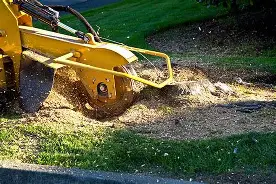
Stump grinding is the most common and fastest method for residential stump removal. A specialized stump grinder uses a high-speed rotating cutter disk with sharp teeth to shred the stump into wood chips. The process continues until the stump is several inches to a foot below the soil line. Stump grinding is effective and efficient. But it doesn’t remove all the roots, leaves a pile of wood chips, and creates a hole that needs to be backfilled.
• Manual Removal (Most effective for small stumps)
This method removes the entire stump and most of its primary roots. It involves digging around the stump to expose the roots, then using an axe, saw, or loppers to sever the exposed roots. Afterward, you can use a digging bar or a jack to pry the stump out once enough roots are severed, creating a clean area for new planting or construction. Labor-intensive and time-consuming, this method leaves a large hole to fill.
• Chemical Decomposition (least labor, most time)
This slow-acting method speeds up the natural decaying process. It involves drilling deep holes into the top and sides of the stump. Then, a chemical—usually a high-nitrogen fertilizer like potassium nitrate, rock salt, or Epsom salt—is poured into the holes, which are watered. The stump is then covered to keep moisture, encouraging wood-rotting fungi and bacteria growth.
For more information on stump removal, contact our experts at RI Tree. They’ll help you choose the best removal method for your project.