
Miyawaki Magic: Eight Powerful Benefits of Tiny Forests!
by John Campanini, Technical Director, RI Tree Council
This article is the second in a series on the Miyawaki reforestation method, developed by Japanese botanist Akira Miyawaki. This article explores the reasons for forest loss in Rhode Island and the benefits of the Miyawaki method.
New England is losing tree cover at an unprecedented rate. Recent reports indicate the area is losing30,000 acres of forest to human development annually. Over a decade, this totals 300,000 acres. Rhode Island is no exception among the New England states experiencing significant tree cover loss.
According to Global Forest Watch, the state lost about 10.5 thousand hectares (kha) of tree cover between 2001 and 2024, a 5.5% decrease from its 2000 tree cover area. This ongoing forest loss limits the tree cover’s ability to absorb carbon dioxide and provide other vital ecosystem services. The state’s need for reforestation has never been greater.

But traditional reforestation techniques can struggle to keep pace with tree loss. They lack natural forests’ resilience and ecological complexity, take decades to mature, and offer limited habitat for diverse wildlife. The sheer scale of the region’s degraded land emphasizes the need for reforestation methods that quickly establish thriving ecosystems.
In short, we need accelerated reforestation techniques that are both effective and efficient. They must be able to sequester carbon rapidly, foster instant biodiversity, rebuild soil health, and provide essential ecosystem services. The Miyawaki reforestation method does all that and more.
Gradual Loss of Forest Cover
Rhode Island forest cover loss is mainly due to expanding human development, with renewable energy projects like large-scale solar farms driving extensive tree loss. The solar factor is among the most significant factors impacting recent forest loss in Rhode Island, if not the most significant.
One report, for example, indicates that in the years leading up to 2022-2023, solar development accounted for a staggering 60-70% of all forest loss in the state, creating a paradox where a “green” energy solution was actively contributing to deforestation, raising significant environmental concerns.
Other infrastructure projects have increased forest loss by splitting larger areas into smaller, less ecologically sustainable patches. The state’s small size and high population density amplify the effects of even modest development efforts. This loss significantly impacts carbon storage, biodiversity, and the overall ecological health of the state.
Moreover, Rhode Island is not a major timber producer. As of 2019, its gross annual sales were only $11.6 million. In reality, most forest loss comes from land conversions for other uses rather than sustainable timber harvesting. Climate change also significantly affects deforestation, making the remaining forests even more vulnerable.
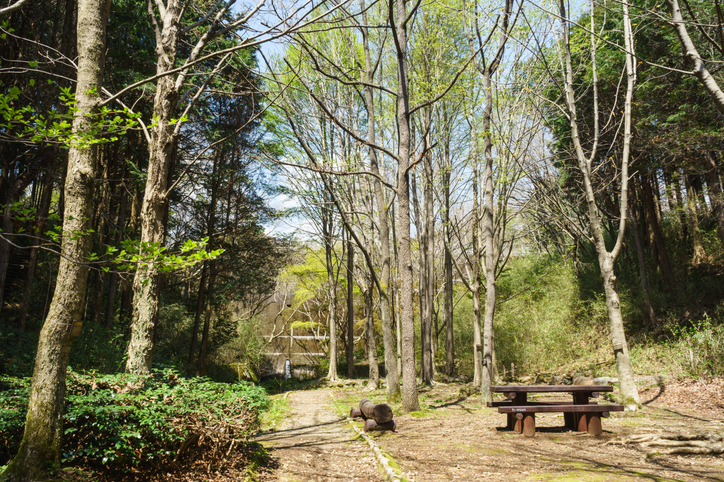
Benefits of the Miyawaki Reforestation Method:
The Miyawaki Method of reforestation allows for quick forest development and ecological restoration. In other words, the method “fast-tracks” the natural ecological succession process, rapidly creating complex, biodiverse, and resilient forests that mimic old-growth ecosystems in a much shorter time. Like any approach, Miyawaki has clear advantages and disadvantages.
In addition to rapid forest growth, the Miyawaki method:
- Enhances biodiversity: Miyawaki focuses on planting a wide variety of native species (30-50 or more), mimicking the complexity of natural forests. This effort creates a multi-layered ecosystem that offers diverse habitats for a broader range of local plants and animals, boosting overall biodiversity.
- Enhances ecological resilience: Their high diversity and density make these forests stronger and better able to withstand pests, diseases, and climate change impacts. A disease that affects one species is less likely to destroy the entire forest.
- Creates effective carbon sequestration: Due to rapid growth and high density, Miyawaki forests quickly become efficient carbon sinks, absorbing substantial amounts of atmospheric carbon dioxide, crucial for climate change mitigation.
- Enhances Ecosystem Services: These small forests rapidly improve air quality by absorbing pollutants, improve water management by reducing runoff and increasing groundwater recharge, and help combat the urban heat island effect.
- Boosts community engagement: Miyawaki projects often involve local communities in the planting and initial care, fostering environmental awareness, stewardship, and a sense of ownership over green spaces.
- Transforms small and degraded spaces: Miyawaki is especially effective at turning small, neglected, or urban sites into thriving green spaces, like abandoned lots, roadsides, and public parks.
- Requires little maintenance after establishment: After an intensive initial 2-3 years for watering and weeding, these forests’ dense, self-sustaining nature means they need minimal ongoing care.
Miyawaki forests grow 10 times faster than traditional monoculture plantations or natural forest regeneration processes. Due to this rapid growth, the benefits of a healthy forest—such as carbon sequestration, improved air and water quality, and habitat creation for biodiversity—are realized much sooner. Miyawaki forests can reach a comparable level of maturity and ecological stability in just 20 to 30 years. More importantly, they become self-sufficient in two to three years.
In the following article, we’ll review the downsides of the Miyawaki reforestation method and explore the challenges of implementing this method.