

Defend Your Trees: Master this Seven-Step Guide to Spotted Lanternfly Removal
The spotted lanternfly (Lycorma delicatula) is highly invasive. It feeds on plant sap and excretes a sugary substance called “honeydew,” which promotes sooty mold growth on plants, reduces photosynthesis, and weakens the plants. Spotted lanternflies don’t fly; they hitch rides on buses, cars, and other objects, which helps their spread. While they don’t hurt humans, they seriously threaten agriculture, including crops, trees, orchards, and vineyards. A recent study in Pennsylvania estimates that crop losses from this pest amount to about $50 million yearly.
Spotted lanternflies are mainly found in the north-central part of Rhode Island, but that’s changing. Evidence shows these pests are spreading throughout the entire state. Currently, RI DEM is focused on new infestations in the state, such as the recent discovery in Barrington. RI DEM is also working to limit the spread of lanternflies in the state’s agricultural areas, where these sap-sucking pests can damage crops. While RI DEM works hard to control this pest, homeowners can play a crucial role in slowing their spread.
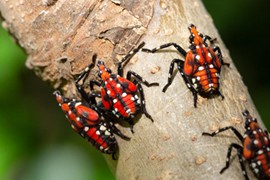
Here are seven steps you can take to help:
1. Destroy egg masses
Destroying the spotted lanternfly’s eggs is among the most effective ways to stop its spread. The females lay their eggs in clusters that look like light gray or brownish mud patches on nearly any hard surface, including trees, rocks, outdoor furniture, vehicles, and fences. The egg-laying season runs from September to December, with eggs hatching in late spring. So, inspect your trees regularly to look for these masses. Then scrape them into a container filled with rubbing alcohol or hand sanitizer to ensure the eggs are killed.
2. Use sticky bands on trees (with caution)
Another effective way to stop these pests from spreading is to put sticky bands around tree trunks. The sticky surface traps newborns from climbing the tree and reaching the upper canopy. However, use sticky bands carefully. They can also trap and harm other beneficial insects, birds, and small animals. So, use a narrower band, or more importantly, create a guard around the sticky surface using something like chicken wire or window screening to trap the lanternfly newborns. Check the bands regularly for bycatch and replace them as they become full.
3. Remove “Tree-of-Heaven”
The “tree-of-heaven” (Ailanthus altissima) is the primary host of the Spotted Lanternfly. While the lanternfly feeds on over 100 plant species, it thrives when this tree is present. Removing it from your property is an effective long-term management strategy. But simply cutting the tree down isn’t enough. The stump can re-sprout and grow stronger. Instead, use the “hack-and-squirt” technique to kill the tree. It applies a targeted herbicide directly to the tree’s vascular system. When done right, this technique kills the tree completely.

The important life stages of the Spotted Lanternfly: eggs, wingless nymphs and the adult with wings for flight.
5. Check vehicles and outdoor equipment
Spotted lanternflies are excellent “hitchhikers.” They do not travel great distances on their own, but they are very adept at latching onto vehicles and other objects. Inspect your vehicle or any outdoor things you take before traveling, especially if you live in or are leaving a known infested area. If you are moving firewood, outdoor furniture, grills, or any other equipment, thoroughly inspect both adult lanternflies and their egg masses. By taking a few moments to check for hitchhikers, you can prevent the unintentional spread of this invasive pest to new areas.
6. Use insecticides responsibly
Insecticides may be necessary if there’s a sudden infestation. You have several options for insecticides, including contact sprays and systemic treatments. Sprays kill insects on contact and can help effectively manage visible populations. Use insecticides responsibly and follow all label instructions. Systematic treatments to a specific tree or area are best applied by a professional. Consider the environmental impact and potential harm to non-target species before applying any chemical treatment.
7. Stay informed and report sightings
The fight against the spotted lanternfly is ongoing, and the best practices for management are constantly being refined. It’s critical to stay informed about the latest recommendations from your state’s agricultural extension office or department of agriculture. These resources provide up-to-date information on identification, management, and the current boundaries of the quarantine zones. You can always check the RI Tree for the latest news on the lanternflies or this RI DEM website.