Watering plants is the key to helping plants to survive and thrive. They need water for not only photosynthesis—the process by which they convert sunlight into energy—but also to transport nutrients throughout the plant.
Water also helps plants absorb critical nutrients. Without water, plants can’t dissolve the soil’s minerals and nutrients needed for growing and developing. Plus, water provides turgor pressure, which keeps plant cells rigid and upright. Lacking turbo pressure, plants will wilt and die.
Below are tips we suggest to people to keep your plants hydrated:
Research your plant’s water needs:
Cluster plants with similar water needs
Water deeply and infrequently:
Water early morning or late evening
Use a soaker hose or drip irrigation system
Mulching correctly
Check soil moisture
One caveat when it comes to watering plants: don’t over-water. It can lead to root rot—a deadly fungal disease. Also, make sure you adjust your schedule to the region’s weather. Water more during dry periods. Water less during cool, rainy periods. Finally, watch for water stress.
Plant dormancy is the resting phase of a plant’s annual life cycle. It typically occurs in response to environmental cues, such as shorter days or cooler temperatures. Dormancy is a survival strategy that allows plants to conserve energy and survive during harsh conditions. It’s characterized by a drop-off in energy use and primary plant functions—transpiration, photosynthesis, respiration, and so on.
The timing of plant dormancy varies depending on the plant species and the climate in which it is growing. Triggered by shortening day length and several deep frosts, plant dormancy in New England usually starts in late November and ends when plant buds swell in late March or early April—a stretch of about four months of relative calm for trees and shrubbery.
Benefits of Dormant Pruning
Absent important stressors, such as water shortages, insects, disease, and pests, this four-month period is an ideal time to prune plants. Some benefits of pruning during plant dormancy include:
Reduced stress on the plant — When a plant is dormant, it is not actively growing and is therefore less stressed by pruning.
Less sap loss — Dormant plants have less sap flowing through their systems, meaning there will be less sap loss when pruned.
Reduced risk of disease — Dormant plants are less susceptible to pests and diseases, so there is less risk of spreading disease when you prune them.
Better visibility of the plant structure — When a plant is dormant, it does not have any leaves, which makes it easier to see the plant’s structure and identify any problems that need to be addressed.
Set Specific Goals with Pruning
Setting goals for pruning, regardless of when you do it, is critical. In addition to the general benefits described above, pruning during dormancy can also be used to achieve specific things, such as controlling the size and shape of the plant, encouraging flowering and fruiting, improving air circulation and light penetration, and removing dead, diseased, or damaged branches.
Overall, pruning during dormancy is an excellent way to improve the health and look of your plants without causing them too much stress. Some examples of plants that you can prune during dormancy are deciduous trees and shrubs, fruit trees, rose vines, and ornamentals. Remember that some trees, such as maples and birches, can bleed sap if pruned in late winter or early spring. Prune these trees in the summer after their leaves have fallen.
Tips on Pruning Dormant Plants
Pruning dormant plants can be dicey. Make sure the tree is entirely dormant before pruning, meaning the leaves have fallen off and no new buds are forming. Also, make sure you cut just outside the branch collar. That’s the swollen area at the branch’s base where it meets the trunk or another branch. Cutting outside the collar helps the tree to seal the wound more quickly.
Below are additional pruning tips:
Identify and remove any dead, diseased, or damaged branches. They can be a hazard and can also harbor pests and diseases.
Prune to improve the tree’s structure and shape. This effort can involve removing crossing or rubbing branches, thinning out crowded branches, and raising the canopy.
Make clean, sharp cuts. These types of cuts help trees heal quickly.
Avoid pruning more than one-third of the tree’s crown at one time. Doing so can stress trees and make them more susceptible to pests and diseases.
Use sharp, clean pruning tools. That helps you make clean cuts and reduces the risk of disease.
Avoid pruning in wet weather. That can increase the risk of disease.
Pruning during dormancy is an excellent way to improve the health and look of your plants without causing them too much stress. But dormant pruning can be a challenge no matter when you do it. Following the pruning tips described above can help you beat this challenge. If you’re unsure whether or not a particular plant can be pruned during dormancy, consult a qualified arborist or horticulturist. You can also contact RITree for help with pruning your trees or shrubbery.
Are your young trees all set for winter? Winter in New England is hard on trees—especially young ones. So, late fall is the perfect time to start preparing young trees for the harshness of winter. This process includes protecting the bark of young trees. It often splits in the winter and can leave young trees vulnerable. Splitting is typically more severe on young trees’ south and west sides than on the north and east sides.
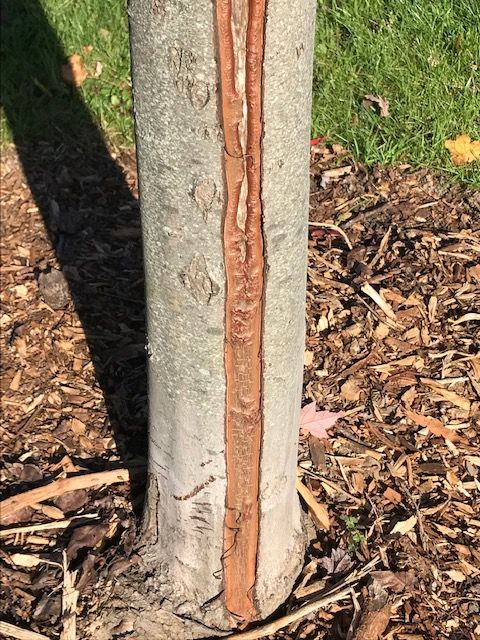
This splitting process is called sunscald. It occurs when the sun’s heat damages tree bark. That creates a temperature difference between internal sapwood under the bark (hot) and the external environment (cold). That, in turn, causes the sapwood to desiccate, shrink, and die. The bark eventually cracks along the dead sapwood’s fault line. Young, thin-barked ornamental and fruit trees. like birch, stewartia, red maple, London planetree, and beech are especially susceptible to sunscald.
This red maple is showing signs of sunscald, which can devastate a young tree in winter.
Sunscald occurs in summer and winter, but it is much more common in the winter. Hence, the need to start protecting young trees in the fall from this winter increases. Symptoms of sunscald include:
Dead or discolored bark
Vertical cracks in the bark
Bleeding from the affected area
Sapwood (the layer of wood just beneath the bark) that is exposed
Young trees can survive sunscald. But even if they survive it, sunscald can weaken young trees, making them more susceptible to other problems, such as pests and diseases.
Young Trees are More Susceptible
Cold weather, snow and ice, drought, salt spray, pests and diseases can severely damage trees. So, can sunscald. It can devastate them. Here are a few reasons why young trees are more vulnerable than older ones to sunscald:
Thinner bark: Young trees have thinner bark than older trees. That’s because the tree bark thickens over time as the tree grows and ages. Thinner bark is more susceptible to damage from the sun’s heat.
Less developed canopy: Young trees have less developed canopies than older trees. That means they have less foliage to shade the bark of the trunk. Less protection increases the chance of sunscald.
Less experience with sunlight: Young trees have less time to adapt to sunlight than older trees. That makes them more susceptible to damage from the sun, especially if they are suddenly exposed to more sunlight than usual.
More exposure to direct sunlight: Young trees are more susceptible to sun scald if planted in an area where they are exposed to direct sunlight for most of the day. That’s especially true in wintertime when the sun is lower in the sky than at other times, and the tree’s bark is more likely to be exposed to direct sunlight.
Protecting Young Trees from Sunscald
Tree owners can do a lot to prevent sun scald from occurring—even in the harshest New England weather. To protect young trees from sun scald, you can:
Wrap the young tree’s trunk with a white tree wrap or plastic tree guard during the winter. The wrap reflects the sun and keeps the bark at a more constant temperature.
Plant young trees where the elements protect them from the winter sun. The site could be in the shade of a building or another tree, or on your property’s north or northeast side.
Water young trees regularly, especially during the first few years after planting. Watering helps them to develop a robust root system and withstand winter stresses.
Mulch around the base of young trees. This step insulates the roots and protects them from the cold.
Prune your trees in the late fall or early winter. This action will help to remove any dead or diseased branches that could be more susceptible to sunscald.
Plant young trees in a location that protects them from the sun and wind, in the shade of a building or another tree, or on your property’s north or northeast side.
Look out for pests and diseases. If you see signs of them, contact a certified arborist or RI Tree for advice.
Following these tips on combating sun scald can help protect your young trees from this sunscald and ensure they thrive for many years.
For more information on sunscald or tree care contact RITree by e-mail at ritree@ritree.org.
Fall is incredible in New England. The leaves change from green to rich rusts, ruby reds, and glittering golds as summer gives way to fall. Many trees look their best at this time. The fall is a great time to prepare your trees for the ravages of winter. Giving your trees some TLC now before winter protects them from harsh winter weather and helps boost spring growth. Below are seven things you should do before winter sets in to help your trees continue to grow and thrive.
1. Soil care
Chances are good that the soil in your yard isn’t as rich as that in the forest. That’s because the forest’s fallen leaves and organic matter enhance the soil, enriching it with nutrients. But you can boost your soil’s richness by doing three things. Apply a slow-release fertilizer in the fall. Freshen up the mulch before the ground freezes. And reduce irrigation to avoid flooding the soil. Trees get a lot of moisture in the winter.
2. Prune your trees
Pruning is a wise annual practice. Prune dead, diseased, and unsafe branches from your trees. This strategy not only protects you and your home. It also influences a tree’s structure and shape. Trim lifeless branches. Cut cracked, loose, and diseased-looking trees near the trunk. And call an arborist for help with trimming large branches. Trim branches without leaving stubs and leave wounds exposed so they can heal.
3. Prepare for winter
Winter takes a toll on trees. So, you must prepare them in the fall for the winter’s snow, frost, ice, and cold temperatures. Start by Inspecting your trees for weak branches that may need added TLC to survive the winter. Cable and brace these limbs. Cabling and bracing trees support poor or weak branch unions and reduce the strain and stress damage from high winds, heavy ice, and snow build-up.
4. Water your evergreens
Give your evergreens a healthy gulp of water before winter. They’ll be well-hydrated throughout the cold winter. Harsh winter weather can cause water loss in an evergreen’s needles and freeze its roots. Water regularly throughout the fall. You want to moisten the soil, not saturate it. Weekly deep root watering with slow soaking is an ideal tree care strategy. It’s an efficient way to get your tree the right amount of water.
5. Inspect trees and shrubs
The fall is a good time to inspect your trees and shrubs. Look for pests and diseases that might have settled in. You don’t want them getting out of control. Conspicuous damage, early fall color, and other signs of stress could indicate a deeper underlying problem.
Start by identifying the disease or pest. Then, determine how to treat the pest or disease.
Identifying a pest or disease can be a challenge. So, if you’re unsure what the pest or disease is, consult a local arborist for help. Or, contact the Rhode Island Tree Council for help. They can provide a trained eye to help you identify the problem and suggest the best way of eliminating it. Consulting an expert saves you time and money.
6. Look out for Root Decay
Pay attention to the mushrooms growing at the base of your trees. They may appear for only a few days at a time. Some mushrooms can eat at and decay a tree’s roots, creating an unstable tree. Prevention is the best way to eliminate root decay.
So, don’t over water your trees, encourage healthy mycorrhizal fungi by enhancing soil organic matter and avoiding soil compaction, and protect trees from damage by mowers, trimmers, and construction, which can kill roots and weaken trees.
Fall is an excellent time of year in New England. The change in color of the leaves is something to look forward to every year. Some think it’s the best season of all. Fall is also a time to prepare your trees for winter.
The cold, snow, and ice can damage them beyond repair, so you should have a plan to protect your trees before winter comes. The six steps we suggest you do above are a good place to start. Implementing them will not only protect your trees but also promote greater tree health come next spring.
John Campanini is the technical director of the Rhode Island Tree Council (RITree). A graduate of the University of Rhode Island, he was city forester for Providence for more than twenty years before retiring.
Beech leaf disease is ravaging our forests. A recent article in the Providence Journal by Alex Kuffner describes just how bad an impact BLM is having on R.I. forests. First detected in Ohio in 2012, this plant disease is relentless. It interferes with chlorophyll production and starves beech trees to death.
The beach tree is a “foundational species” in New England forests. It produces a high-fat nut for black bears and other animals to eat, a place where woodpeckers can forage, and homes for
animals to nest and raise their young. A beech tree can live up to 400 years.
BLM is invisible to the naked eye. The only way to spot the plant disease, says Kuffner, is to cut the leaves open and then wet the area. Thousands of nematodes (worms) will exit the leaf. The nematodes winter over in the beech’s long, cigar-shaped buds and attack leaves as they emerge in the spring.
That effort interrupts the leaves’ ability to photosynthesize and produce food. No known cure for this disease exists. But research projects are underway to combat it. One problem confronting research scientists in this area is the lack of funds that could help tackle the issue.
Below are four other plant pests Rhode Islanders need to be alert to:
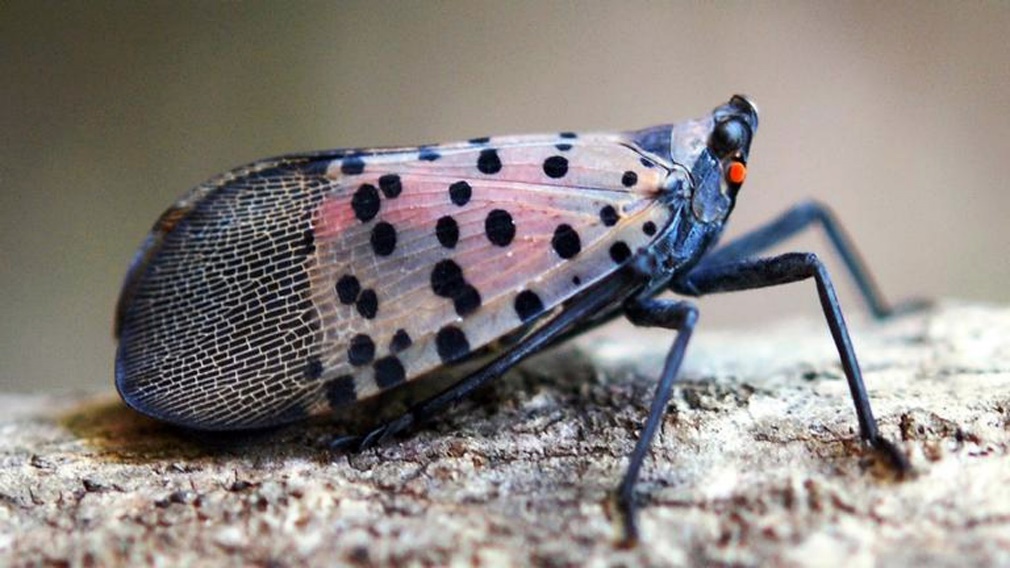
Spotted lantern fly — This pest attacks plants and trees. The adult fly features spotted patterning, scarlet underwings, and yellow markings on the abdomen. It also has semi-transparent forewings. Adults are an inch or so long and active from August until the first late hard freeze, which occurs around late October into November. While the SLF can survive independently, it mainly spreads through human movement. The SLF was first detected in Pennsylvania in 2014
SLF is invasive. It lays its inconspicuous egg masses on pallets, vehicles, and other goods. So, inspect any shipping materials you get and abide by travel restrictions when moving through areas quarantined for the SLF. If you go to states with SLF, check your gear and equipment thoroughly before leaving and scrape off any egg masses. If you spot one in RI, take a photo, squash the insect, and then make a report to RI DEM’s agricultural pest alerts website.
Emerald ash borer
Emerald ash borer beetle — EAB attacks American ash trees. Responsible for destroying millions of ashes in 30+ states, EAB is native to Asia. It arrived in the U.S. hidden in wood crates and wood packing materials. Scientists first identified the EMB in southern Michigan in 2002. Since then, it has spread throughout the country. While no cure exists for EMB, several treatment options are available for controlling EMB’s spread. Since pesticide regulations differ from state to state, homeowners should contact their state department of agriculture for the best option in their state.
Asian longhorned beetle
Asian longhorned beetle — This pest threatens hardwood trees. It can cause more damage than Dutch elm disease, gypsy moths, and chestnut blight combined. No cure exists for ALB, so early identification and eradication are critical. It infests New England, New York, and Ohio areas, threatening recreation and forest resources valued at billions. It’s destroyed millions of acres of this country’s hardwoods in national forests and backyard trees. These pests live in firewood, solid wood packing material, branches, logs, stumps, and wood debris and trimmings.
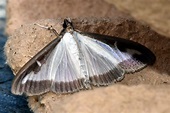
Box tree moth
Box tree moth — BTM is invasive. Thriving on boxwood trees as caterpillars, it originated in Asia, migrated to Europe, and now threatens the U.S. It was first spotted in North America in Canada in 2018. It decimates both wild and ornamental boxwoods. BTM caterpillars feed on the underside of leaves, giving them a “peeled” appearance from the top.
Mature caterpillars eat the whole leaf but not the midrib. It can lead to complete defoliation. BTM can web together leaves and construct silken retreats. BTM eggs appear pale yellow and aid in groups of 5 -20, overlapping like shingles. If the infestation is small, hand-picking the caterpillars and disposing of them in soapy water is effective. You can also knock them off with a strong jet of water, which eventually kills the pest.
Additional threats to R.I. forests include winter moth, Lymantria dispar (formerly known as gypsy moth), Southern pine beetle, oak gall wasps, and hemlock woolly adelgid.
If you spot one of these pests or think you’ve seen a pest not native to Rhode Island, let DEM know as soon as possible.
Are you thinking of planting a tree? Fall is the best time to do that. It gives the tree plenty of time to root itself. A tree starts growing the second it’s planted. It will continue to grow as long as the soil temperature stays above 40°F (4°C). By the time spring comes, the tree will be established and growing.
Another reason to plant in the Fall is the soil. It’s a better fit for digging plant holes than in the Spring. Plus, the summer’s warmth still lingers in the soil. That keeps the soil moist enough for digging, making it perfect for planting.
Some people worry that winter will kill a tree planted in the Fall. No so. Trees go dormant in the winter so they can withstand the cold. In other words, they “hibernate,” like animals do in the winter. So, if you plant a sapling early enough in the Fall, it will have plenty of time to establish itself before the winter.
The tree will also have two growing seasons before the summer heat arrives and a healthy enough perception to survive. Ideally, you want to plant a tree at least six weeks before freezing temperatures arrive. Use October as a deadline for planting a tree.
Spring is also a Good Time to Plant
Spring is also a good time to plant a tree. But doing so then is risky. It might be too rainy for the soil to become stable enough for the tree to grow. That could prevent the tree from establishing itself enough before the summer heat arrives. Intense summer heat can kill a tree.
Spring, however, has one significant advantage over the Fall when planting a tree. Many local nurseries stock up on inventory in the Spring. So, you have more trees to choose from in the Spring than in the Fall. You may also have a better-quality tree to choose from in the Spring.
The time of the year you plant your tree, however, will only matter if you plant it in the right spot. Location is as critical as the time you plant it. Make sure you don’t plant the tree too close to existing structures. You’ll also want to research how much sun, wind, and water the tree prefers.
Knowing that information means you’re better able to pick a spot compatible with those conditions. And remember to call the free 811 Service to ensure there aren’t any underground utilities where you plant the tree. The tree’s roots could become a real problem for the utilities in time.
Finally, give your tree plenty of water—roughly one gallon of water per inch of diameter on the trunk. Mulch will help keep the tree moist and happy. Use up to 4″ and keep space between the trunk and the mulch.
Crabapples: A Good Choice to Plant
Plenty of beautiful flowering trees are available when planting a tree. The Crabapple (Botanical name: Malus spp.) is an excellent choice if you are looking for a compact tree that brings year-round interest. Gorgeous spring buds, handsome summer foliage, and excellent fall color are among the Crabapple’s main draws. The Crabapple’s growth rate is moderate. It grows to about 15-20’, with a spread of about 15-20’.
The Crabapple blooms in mid-to-late Spring and features fragrant white, pink, magenta, or red blooms that typically last 1-2 weeks. Crabapple fruit ripens from late summer to mid-fall. Most cultivars have red fruit, but you can find yellow, maroon, and orange. Crabapples come in all shapes and sizes, including spreading, weeping, dwarf, vase-shaped, and columnar.
The tree’s flowers bloom at slightly different times depending on the cultivar. One design consideration with Crabapples is whether to plant multiple types of Crabapples that bloom for a more extended period or plant the same type that provides an explosion of fragrance and color simultaneously.
A Crabapples’ fruit, however, is more than just ornamental. It also provides much-needed wildlife value, but its fruit is too sour to enjoy. The fruit comes in various sizes and colors depending on the cultivar. Some cultivars, such as the Malus ‘Guinevere,’ shown below, provide winter interest with the fruit.
If you’re thinking of planting a tree in the Fall, visit the RI Tree website at www.ritree.orgto view small and medium-sized tree selections for residential landscapes. Or talk with a member of RITree’s staff.
So, you’ve just made the best decision of your life: to plant some trees! Maybe you’ve pick out the tree species and are just realizing wait – when should I plant this, where should I plant this… HOW should I plant this?! Well fear not, as the Rhode Island Tree Council has done this roughly 366,948 times and has some tips to share with you.
WHEN TO PLANT A TREE:
The two best seasons for tree planting are spring and fall. People are usually worried that a tree won’t make it through the winter, but trees go dormant then (akin to hibernation). The season that stresses tree out the most is typically summer, when a tree can dry out and overheat. Planting in the fall gives your tree 1. two growing seasons (fall and spring) which can really help roots take hold before summer and 2. a healthy level of precipitation. Make sure you have at least six weeks before freezing temperatures (so, early October is a good deadline).
Spring can be a good time to plant a tree as well. However, you risk it being 1. too rainy and therefore the soil not being stable enough and 2. not establishing itself strongly enough before the heatwave of the summer. However, one major bonus of spring is that many nurseries stock up during that time so there can be more to chose from.
WHERE TO PLANT A TREE:
The time of the year you plant your tree won’t matter if it ends up going in the wrong spot. Make sure it isn’t too close to existing structures. You’ll want to research how much sun, wind, water the tree prefers and pick a spot with those conditions. Lastly, you might want to call the free 811 service to make sure there aren’t any underground utilities that your tree’s roots will be disturbing.
HOW TO PLANT A TREE:
Trees will typically come in a container (generally plastic for temporary use), bare root (not grown in soil), or bagged and burlapped (B&B) (dug out of the ground and the roots and soil are being held together by burlap and wire). While they all have slight modifications of how to plant them, there are some general guidelines:
Plant your tree within a few days! And make sure to never let the roots completely dry out in the interim.
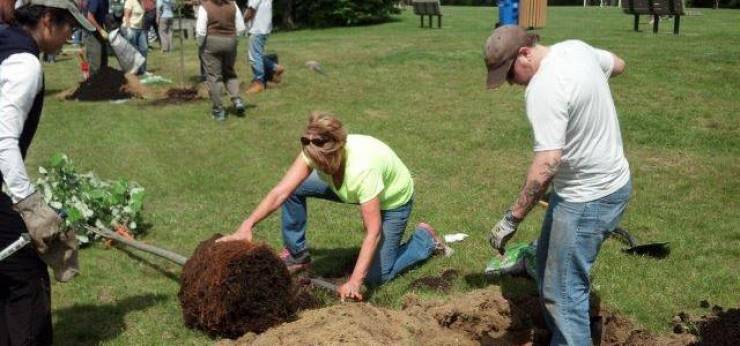
Dig your hole at least twice the size of the root ball/root mass.
The root collar (the area where the roots join the main stem) should be level or just above final grade after being planted.
Make sure the tree is straight! It will straighten out over time if slightly off, but best to start it off in the right direction.
Back-fill with existing moist soil.
Gently compact the soil.
A few things to note: if your tree came bare rooted it is especially advisable to stake the tree until the roots take hold. If your tree came in a container, make 4 vertical cuts in the cardinal directions by the roots. The roots most likely are too compacted from being confined to a container, by cutting them you not only stimulate root growth, but prevent girdling (when roots encircle other roots or the tree and choke it, causing injury or death). If your tree was B&B don’t remove the burlap until after the tree goes in the hole.
WATERING:
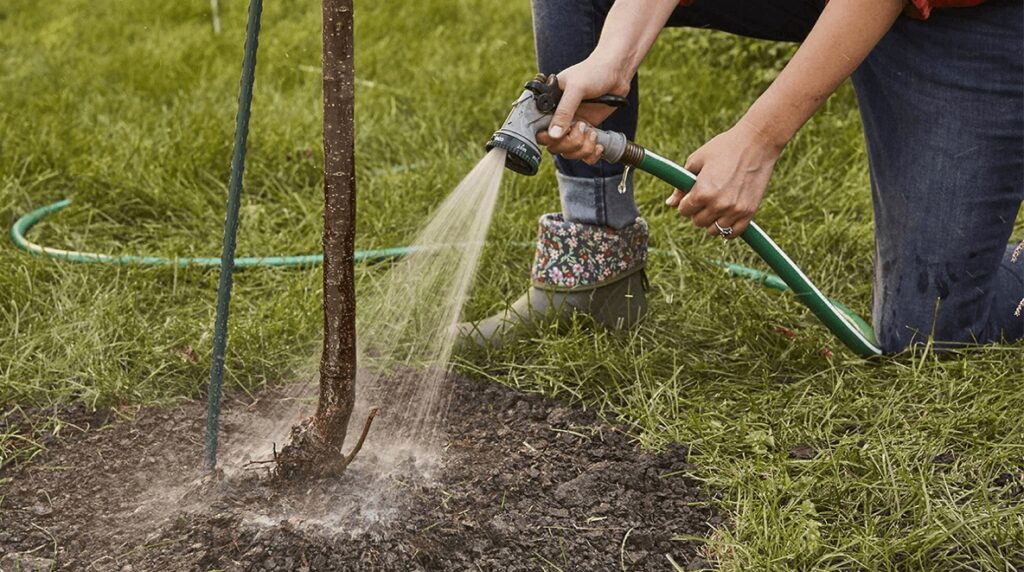
The tree will be in stress after being transplanted- the best thing to do is give it adequate water. Water directly at the base so the root’s directly take the water instead of nearby vegetation or evaporation. Roughly one gallon of water is needed per inch of diameter on the trunk.
MULCHING:
Mulch will help keep the tree moist and happy. Use up to 4” and keep space between the trunk and the mulch.
Below are some drawings that give extra information about how to plant your tree, be it on a hill or on flat ground.
Lastly, make sure to enjoy yourself! Planting a tree does SO MUCH for the surrounding area. It doesn’t just add beauty throughout the season, it provides shelter and food for wildlife, dampens the urban heat island effect, filters water, captures carbon, promotes healthy soil, prevents erosion and so much more. So step back, take a look at your tree and pat yourself on the back for doing something wonderful today.
Spring is a great time of the year. With life emerging from its long winter sleep, it’s among nature’s most active seasons. But spring is also a time when plant pests emerge. These pests can ravage your trees and kill them. Basically, you can divide tree pests into three broad categories—sap-sucking insects, wood borers, and defoliators.
Pests invade trees when they’re under great stress. Pests introduced from outside their native range can severely impact crops and natural tree populations, generating billions of dollars of economic and ecological damage. However, what insects you’ll need to watch out for this summer depends on your location.
Tree pests cause tremendous to natural and managed land annually. Most tree damage is caused by 20-22 common insect pests. These pests can devastate a tree if left untreated and cause extensive economic damage by destroying landscape trees that has to be removed and replaced. The impacts of pests are often made worse by climate change, which may allow additional pest life cycles per annum.
Not all pests are deadly, however. Some play critical roles in natural and managed systems, contributing to carbon cycling and forest regeneration. They may even contribute to shaping patterns of global tree diversity. Below are five pests to look out for and descriptions of telltale signs that they have invaded your trees:
1. Arborvitae leafminer
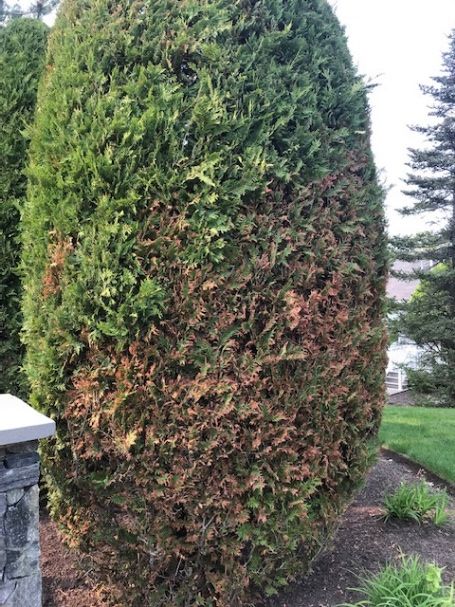
If you see brown foliage now on your “Green Giant” and “Emerald Green” cultivars, it’s a sign that these pests are feeding on your plant’s leaves. This leafminer pest is a small caterpillar, green or brownish, with a dark head and a spot just behind its head. Mature caterpillars generally appear between April and June. While this pest likes all arborvitae varieties, they prefer American pyramidal, globe, and golden arborvitae.
2. Cedar Rust
Cedar apple “rust” can affect the health and vigor of your apple trees by causing early defoliation and reducing fruit quality. They present as orange gelatinous spheres and indicate the presence of fungal spores from the Gymnosporangium family, which can later infect Malus species. Cedar rust is especially harmful to Junipers. Severe infections of this disease, which first appear on leaves as small greenish spots and then gradually enlarge and change color, can kill a tree.
3. Holly Leafminer
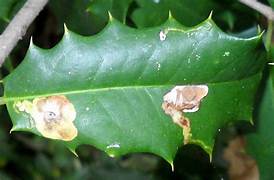
As the name suggests, it feeds on English, American, and Japanese hollies. If you see tiny green blisters on a lower leaf’s surface, chances are good the female of this pest has laid eggs there. The Holly leafminer “causes the presence of yellow, brown, or reddish mines on the leaves. In the beginning, the mines are narrow and winding. But they then become large blotches as the larvae overwinter in the leaf. The upper and lower surfaces of leaves remain after feeding and are easily separated. Larvae are yellowish and about 1/16″ long. The adult is a small black fly.
4. Boxwood Leafminer/Blight
These pests are among the most destructive—and deadly— of the boxwood insect pests. The larvae feed on the tissue between the leaves’ outer surfaces, producing blotch-shaped mines in the boxwood leaves. Circular leaf lesions are a crucial symptom of boxwood blight, as are leaf yellowing and leafminer injury blistering. Infested leaves appear blistered from late summer through the following spring. New leaves, however, don’t show signs of mining until deep into summer, when the larvae are larger. Premature leaf drops may result from heavy infestation by fall or early spring.
5. Pine Needle Blight
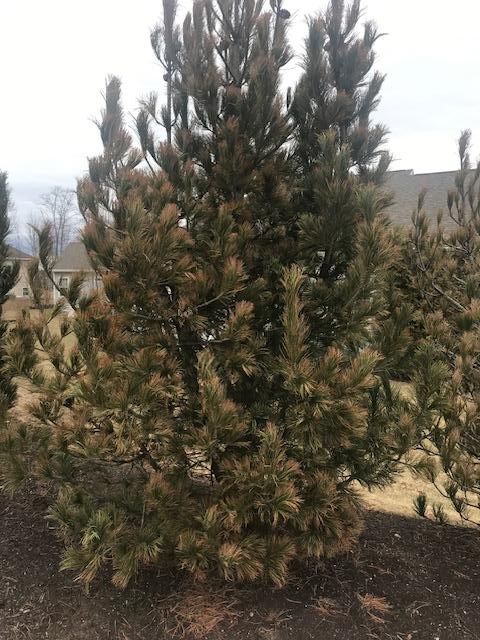
A common fungal disease among pines, especially mugho and Japanese white pines, pine needle blight attacks pine needles, causing spots, blights, and premature defoliation. Initially, spots emerge in summer or late fall. It’s a group of diseases. Cyclaneusma needle cast symptoms appear as light green to yellow spots on infected 2-year-old or older pine needles. Dothistroma needle blight causes yellow to tan spots in the fall. Lophodermium needle cast appears in late fall to early spring. It presents as brown spots with yellow margins on young needles. Brown bands form later.
These five pests are common in the Northeast. But don’t panic if you see one or more of them on a tree’s leaves or something foreign on its bark. Instead, get to work diagnosing the problem and deciding on the best treatment for the pest. Treatment for these pests, however, varies. So, if you need help treating them, contact the RI Tree Council as soon as possible. We’ll help you eliminate these pests and boost your tree’s health.
John Campanini is technical director of the Rhode Island Tree Council (RITree). A graduate of the University of Rhode Island, he was city forester for Providence for more than twenty years before retiring.
Mature trees provide numerous benefits for both you and your property. But caring for them is critical to ensuring they remain healthy enough to provide these benefits. You have even more incentive to maintain the tree’s health of the tree if the tree is historical. Generally speaking, mature trees require the same care as younger trees.
But older trees are much less tolerant of sudden changes—even positive ones. So, if you think an older tree is in trouble, don’t hesitate to call an arborist or the Rhode Island Tree Council for help. They can provide strategies that can help you save an older tree. In the meantime, this article provides proven tips on caring for and preserving mature trees.
Common Diseases Affecting Mature Trees
Mature trees can suffer from a variety of disease problems. Anthracnose, for instance, which causes unsightly dark, sunken lesions on leaves, stems, and flowers is common among mature deciduous trees, especially sycamore, ash, and oak. Tree diseases weaken trees and make them more vulnerable to severe storms. Common diseases affecting mature trees include root rot, fungal infections, and bark beetles.
Root rot is a deadly disease that can ravage trees. It can weaken a tree so much that it leans or breaks near the soil line. Wilting and discoloration, and dropping of a plant’s lower leaves are all signs your tree has this disease. Root rot types include phytophthora, armillaria, black, and cotton. All types of root rot are fatal. So, your best bet to preserve an older tree is to prevent this disease from occurring.
Tree fungus is common among trees. Once fungus spores contact a tree, they grow, enter, and feed on it. But not all tree fungi are bad. Some even benefit trees. If you see mushrooms or other fungi growing around or on a tree, chances are good your tree has a fungus. Other fungi, however, are hidden below ground. Then there are those funguses that look different than expected. The loss of vigor or the discoloration of leaves is a sure sign that your tree has a fungus.
Bark beetles breed between the bark and wood of a tree. Some species attack living trees. But most feed on weakened, dying, or dead trees. Bark beetles tend to attack one part of a tree. Some species of bark beetles speed the decomposition of wood and forest renewal. Other species can invade and kill a tree. Trees attack bark beetles by releasing their pitch or sap, which appears as reddish-brown or white blobs on the tree. If the blob is white, the tree has successfully defended itself.
If you think your older tree has any of these common problems, you need to eliminate the threats as quickly as possible. Letting them linger can kill an older tree.
Pruning Older Trees to Enhance Growth
Pruning an older tree is essential to maintaining its health. Pruning enhances the tree’s beauty, promotes its growth and development, and improves its shape and structure. Pruning also reduces the risk of disease and pests invading a tree while improving air circulation and supporting its longevity by encouraging new growth.
But you need to prune wisely and at the right time. If done incorrectly or at the wrong time, pruning can harm older trees or, at the very least, inhibit their growth. So, when is the best time to prune an older tree? The best time to prune older trees is when you see dead branches. Cut them away carefully so you don’t cause a more critical wound. But be careful when pruning branches. You don’t want them to fall and injure someone or harm your property.
Boosting Soil Health Protects Mature Trees
Enhancing soil health for older trees is another way to protect older trees from pests, insects, and diseases. Using natural fertilizers like compost, manure, and bone meal to enrich the soil with essential nutrients, for example, can boost soil health. Applying the proper soil preparation, irrigation, and fertilization techniques boost your tree’s health and make it robust enough to withstand common insect and pest infestations.
Watering Older Trees Helps Them Thrive
Watering the appropriate amount for your tree type can also help mature trees thrive. Minus a soaking rain, water regular monthly deep watering is recommended. You may also want to remove competing plants near a tree. Removing built-up soil from around the root crown also helps. It can hide defects, create areas of decay, or trap moisture from around the root crown, creating the perfect environment for fungus.
Mature trees are an essential part of our environment, providing many benefits to people and the environment. They can provide shade, cut air pollution, reduce stormwater runoff, and act as a habitat for wildlife. Older trees can also be treasures with great sentimental value. They often have much history attached to them—especially if you live in a house you were born and raised in. But you must take care of them to keep them healthy and strong. So, don’t hesitate to call an arborist or the Rhode Island Tree Council if your older tree needs help.
John Campanini is technical director of the Rhode Island Tree Council (RITree). A graduate of the University of Rhode Island, he was city forester for Providence for more than twenty years before retiring.
Spring is a great time to plant new trees. The cool weather enables trees to establish roots before the summer heat stimulates new top growth. While you can plant healthy balled and burlapped (or container) trees throughout the growing season, you must provide good care for them to take root and grow. Make sure you have enough water to help them grow and, make that you locate all underground utilities before digging.
How well a new tree grows after planting, however, depends primarily on four things:
Type of tree selected
Planting location
Care provided during planting
Follow-up care after planting
Attending to these factors conscientiously eliminates plant stress. You may need to prune a new tree after planting, however. If you do, prune sparingly. You can do corrective pruning after the tree experiences a full year’s growth.
The International Society of Arboriculture recommends the following nine steps when planting a new tree:
Identify the trunk flare at the bottom of the tree’s base. Make sure it’s visible after planting.
Dig a shallow broad planting hole about two times larger than the root ball.
Remove the containers or cut away the wire basket.
Place the tree at the proper height. Lift the tree by the root ball when placing it in the hole.
Straighten the tree in the hole. Once planted, a tree is difficult to reposition.
Fill the hole gently but firmly. Water periodically by backfilling, and avoid fertilization at this time.
Stake the tree only when planting bare root stock or when planting at windy sites. Remove after a year of growth.
Mulch the tree’s base. Mulch helps holds moisture, moderates soil temperature extremes, and reduces grass and weed competition. Avoid filling in mulch to the tree’s base.
Provide follow-up care. Keep the soil moist but not water-logged. Water once a week, barring rain. Water more frequently during hot, windy weather.
Best Spring Flowering Trees to Plant
Below are four of the best spring-flowering trees to plant in Rhode Island.
· Flowering Cherry
These trees come in a wide variety of shapes and sizes. Many varieties bloom in springtime and last for several weeks. Cherry trees work well in residential gardens because they require minimal care. All are beautiful. Distinguishing characteristics include the number of petals, the color of the blossoms, and their fragrances, leaves, and blooming season. Flowering cherry trees perform best in full sun in moist, relatively well-drained soils. Watch for caterpillars, leaf-mining moths, bacterial cancer, and blossom wilt.
· Magnolias
Like the cherry tree, the magnolia tree is best known for its flowers. Among the first trees to bloom in the spring, magnolia trees have large flowers and a sweet, heady fragrance. Their tulip- or star-shaped flowers are often as large as saucers when fully opened. The tree’s foliage and fruit are also attractive. Magnolia trees come in several varieties, are long-lived, and are easy to plant. The best time to plant them from seeds is in the spring. These hardy trees need suitable soil, light, water, and feeding to thrive.
· Dogwood
These woodland trees appear in various forms around the U.S., giving us a beautiful and elegant spring spectacle. A good choice in New England, where it’s cooler, is the Pagoda Dogwood. These trees have wide graceful branches growing horizontally into layers, each featuring white flowers in late spring. In partially-shaded gardens, the dogwood’s whiteness makes a stunning show. Unfortunately, a severe disease affecting all types of dogwood is anthracnose. A fungus known as Discular Destructiva is also a severe threat.
· Crabapple
The flowering crabapple tree is among the most prized of all spring-flowering trees. They’re a staple of landscape gardening. Known for their spectacular display of magnificent blossoms and colorful fruit in the fall, these trees bloom for four-to-five weeks in mid-spring. The combination of rich red buds opening to pure white blossoms pumps up a floral display’s beauty. Unfortunately, crabapple trees in New England are susceptible to four significant diseases—apple scab, fireblight, cedar-apple rust, and powdery mildew.
Buying a new tree and planting it is a good investment. It offers a wide range of benefits, including boosting the value of your property by about 7%. In affluent areas, trees can boost the value of a home by as much as 10-15%. However, how well a tree does depends on the tree selected, where you plant it, the care you provide during planting, and the follow-up care you offer.
Contact RI Tree for more tips on planting a new tree or for a copy of the International Society of Arboriculture’s brochure on New Tree Planting.
John Campanini is the technical director of the Rhode Island Tree Council (RI Tree). A University of Rhode Island graduate, he was City Forester for Providence for over twenty years before retiring.