
Achieve Perfect Landscaping: Seven Critical Mid-winter Tree Care Hacks!

by: John Campanini Jr., Technical Director, RI Tree

Winter in New England is hard on trees. Unlike regions with a steady deep freeze, our coastal influence and frequent “January Thaws” create a cycle of freezing and thawing that’s often more damaging than the cold itself. Additional challenges for winter tree care in New England, are the use of road salt, winter burn, heavy snow and ice loading, animal girdling and feeding, winter-active invasive pests, and mechanical damage from plowing the region’s roads

Beating these challenges isn’t easy. Arborists and homeowners need to stay abreast of what’s happening in the region to help trees survive. Misconceptions about winter tree care, however, can lead to “passive damage”—harm that isn’t immediately visible until the following spring or summer. When we act on poor advice, we often disrupt the tree’s internal “plumbing” or its natural defense mechanisms. Put another way, misconceptions about how trees handle the cold often lead to avoidable damage.
Below are seven common mid-winter tree care tips that can physically and biologically hurt your trees:

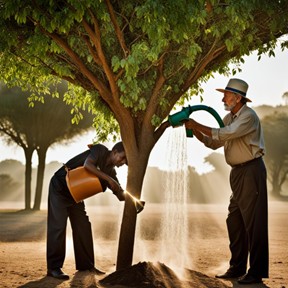
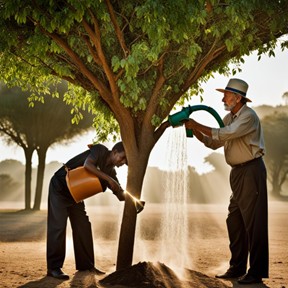
1.      Watering prevents mid-winter desiccation

When a tree (especially an evergreen) goes months without water because the homeowner assumes it is “asleep,” it often suffers from physiological drought. In other words, it can lead to desiccation. Even in the mildest of winters, New England winds pull moisture out of needles and bark. If the roots are in dry soil, they can’t replace the water they’ve lost. This causes the cells to collapse and die, leading to “winter burn.” By spring, you aren’t looking at a sick tree—you’re looking at a tree that partially dehydrated to death.

2.      Shaking snow can cause vascular snap

Trying to save a bending branch by shaking it can lead to vascular snap—an internal fracturing of water-conducting tissues caused by shaking brittle, frozen branches, which disrupts sap flow even if the wood appears physically intact. Shaking or beating a branch doesn’t just risk a clean break; it can cause microscopic cracks in the xylemand phloem (the tree’s circulatory system). Even if the branch doesn’t fall off, it may never “plumb” water again, causing it to die slowly over the next two years.

3.      Overfertilizing can cause a cellular explosion

Applying nitrogen-heavy fertilizer in mid-winter can trigger a hormonal “wake up” call at the worst times. Nitrogen encourages the tree to produce new, tender cells. If a “January Thaw” is followed by a typical New England deep freeze, the water inside those new, un-hardened cells freezes, expands, and literally explodes the cell walls. This leaves the tree with blackened “dieback” and a depleted energy reserve.

 4.      Wound paint creates a fungal incubator

Using tar or paint to “seal” a pruning cut traps moisture against the wood. Trees don’t heal; they compartmentalize (seal off) wounds using a process called CODIT. By painting the wound, you are essentially building a “greenhouse” for anaerobic bacteria and wood-decay fungi. This greenhouse prevents the tree from forming its own natural “callus wood” and encourages rot to spread deep into the trunk.

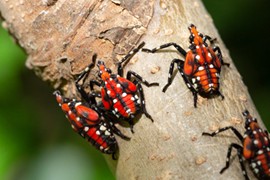
Assuming that a night in Providence killed the pests leads to a scouting vacuum. Invasives like the Hemlock Woolly Adelgid have evolved a form of “biological antifreeze” in their systems. If you don’t treat them with dormant oils or mechanical scraping in the winter, their populations will explode unchecked the moment the first leaf appears, often overwhelming a tree that is already stressed by winter weather.
6.     Sap flow is a sign of positive root pressure

If a homeowner panics because a Maple is “bleeding” sap after a winter prune, they might apply harmful chemicals or sealants to “stop the leak.” Sap flow is actually a sign of positive root pressure and health. Attempting to stop it is like trying to stop a healthy person from sweating. The “bleeding” actually helps flush the wound of potential pathogens. Using sealants alone interferes with this natural cleansing process.

7.      Bark is living tree tissue

Thinking bark is an “inert shield” leads people to ignore the south-facing side of young trees. Bark is living tissue. On a sunny 35°F Day in Rhode Island, the dark bark on the south side can reach 60°F, “waking up” the cambium layer. When the sun drops, that tissue flash-freezes. This creates a sunscald wound—a massive vertical strip of dead bark that can girdle and kill a young tree within a single season.

Use the tips above to prevent passive damage to trees—damage that can’t be seen until spring or summer. This activity wrecks a tree’s “internal plumbing” or its natural defenses. So, if you live in New England, address those mid-winter problems right away when it comes to tree care. It will save you time and money.

Questions about winter tree care? Contact experts at RITree. Or call (401) 764-5885. They’ll help you steer clear of winter tree care myths and boost the health of your trees.
Seven Critical Mid-winter Tree Care Hacks!

Misconceptions about winter tree care can lead to “passive damage”—harm that isn’t immediately visible until the following spring or summer. That’s especially true if you live in New England.

Below are seven common mid-winter tree care tips that can physically and biologically hurt trees:

1.      Watering prevents mid-winter desiccation

When trees go months without water, it can lead to desiccation and winter burn—even with Evergreens. Even in mild winters, New England winds can drain needles and bark. If the roots are in dry soil, they can’t replace the water they’ve lost. 

2.      Shaking snow can cause a vascular snap

Shaking or beating a branch with snow can cause vascular snap as well as microscopic cracks in the xylemand phloem (the tree’s circulatory system). To treat snow on branches, gently remove heavy, wet snow using an upward, sweeping motion with a broom to prevent breakage.

3.      Overfertilizing can cause a cellular explosion

Applying nitrogen-heavy fertilizer in mid-winter encourages the tree to produce new, tender cells. A “January thaw” followed by a New England deep freeze can cause the water in those new cells to harden. This activity leaves trees with blackened “dieback” and a depleted energy reserve.

4.      Wound paint creates a fungal incubator

Trees don’t heal; they compartmentalize (seal off) wounds using a process called CODIT. By painting the wound, you are essentially building a “greenhouse” for anaerobic bacteria and wood-decay fungi. Treating trees with dormant oils stops infestation.

5.      Treating trees with dormant oils stops infestation

Some invasive pests, like the Hemlock Woolly Adelgid, have evolved a form of “biological antifreeze” in their systems. If you don’t treat them with dormant oils or mechanical scraping in the winter, their populations will explode.  

6.      Sap flow is a sign of positive root pressure

Trying to stop it is like trying to stop a healthy person from sweating. The “bleeding” helps flush potential pathogens from the wound. Using sealants alone interferes with this natural cleansing process.

7.      Bark is living tree tissue

When the sun drops, bark can flash-freeze, creating a sunscald wound—a massive vertical strip of dead bark that can girdle and kill a young tree. Prevent sunscald damage by wrapping young trunks with white tree guards or burlap.

Questions about winter tree care? Contact experts at RITree. Or call (401) 764-5885. They’ll help you steer clear of winter tree care myths and boost the health of your trees.
Dormant Oils: An Eco-friendly Strike Against Pests

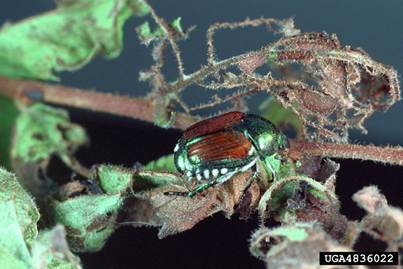
Oils are often recommended as a “clean slate” treatment for professional arborists and eco-conscious homeowners. Oils are highly refined petroleum or plant-based products (such as mineral, canola, or soybean oil) used as non-toxic insecticides and miticides.

Applied to trees and shrubs during late winter to early spring, these oils are exceptionally effective against pests that “hide” in the bark over winter, such as aphids, mites, caterpillars, and scale insects. 

Timing is critical with dormant oils. So is the weather. If you apply them too early, the pests aren’t active enough to be smothered; too late, and you can “burn” new leaves.

  • Temperature: Apply when the air temperature is between40°F and 70°F.
  • The 24-Hour Rule: Ensure temperatures will stay above freezing for at least 24 hours after application.
  • Dryness: Apply on a clear, non-windy day when rain is not expected for 24–48 hours to ensure the oil dries and sticks properly.

Not all trees tolerate oil well, however. Before spraying, check the label for these specific sensitivities:

  • Aesthetic Damage: BlueSpruce and Blue Junipers will lose their signature blue color and turn green. The oil dissolves the waxy “bloom” on the needles that creates the blue hue (it takes 1–2 years for new growth to restore the color).
  • Phytotoxicity (Tissue Burn): Maples (especially Japanese and Red), Black Walnut, Hickory, Beech, and Redbud are notoriously sensitive to oil and can suffer branch dieback if the concentration is too high or timing is off.
  • Chemical Conflicts: Never apply dormant oil within 30 days of a sulfur-based treatment, as the combination is highly toxic to plants.

Dormant oils protect trees from destructive pests by suffocating insects and their eggs before they hatch. Oils clog the breathing pores of pests like scale insects, mites, and aphids, stopping infestations in their tracks.

Applying them during the dormant season reduces the need for synthetic chemicals later on, safeguarding pollinators and beneficial insects inactive during winter. But they need to apply at the right time and the right amount.

See our blog post for more information on dominant oils.

Dominate Your Landscape: Use Biocontrol to Defeat Deadly Pests

by John Campanini, Technical Directors, RITree

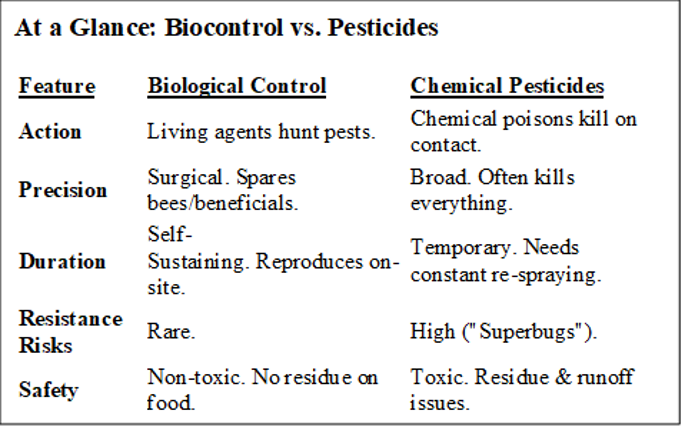
For years, the standard response to a pest infestation was a “scorched earth” policy. If a pest was killing your trees, you sprayed a chemical cocktail to kill it—and, inadvertently, everything else in the vicinity.

But as our environmental awareness grew and chemical resistance turned “superbugs” into a reality, things changed. Looking for a more surgical solution, homeowners, scientists, and farmers began turning to nature’s “hired guns”: biological control.

What’s biological control? Biological control, or biocontrol, is the practice of using living organisms—predators, parasites, and pathogens—to manage pest populations. It’s not a new concept. In fact, it’s rather old.

Chinese citrus growers used predatory ants to defend their trees against caterpillars as early as 324 BC. Over the years, biocontrol has gained popularity, especially in tree care. Today, it’s a cornerstone of sustainable agriculture and tree care, proven time and time again.

Benefits of Biocontrol

For long-lived organisms like trees—whether in a vast forest or a suburban backyard—this approach provides unique advantages that chemical treatments can’t match:

  • Long-term, self-sustaining protection
  • Surgical precision (target specificity)
  • High return on investment
  • Reach the unreachable pests.
  • Environmental and public health safety

In urban areas and parks, chemical drift poses a significant liability. Biological control removes the risk of toxic exposure to humans, pets, and local water tables. Below, we take a look at three key players in biocontrol.

Predators: Free-Living Hunters

Predators are the front-line combatants in this battle. These are the insect world’s generalists, actively hunting and consuming prey. Predators don’t just kill; they establish a presence. In a healthy ecosystem, a resident population of predators acts as a permanent security detail, keeping pest numbers below the “economic threshold” where they cause significant damage.

Two critical predators are:

  • Ladybugs (Coccinellidae): Perhaps the most famous biocontrol agent, a single ladybug can consume up to 5,000 aphids in its lifetime. They are the “infantry” of the garden, providing a visible and effective defense against soft-bodied pests.
  • Green Lacewings: Often called “aphid lions” in their larval stage, these voracious hunters use hooked mandibles to seize prey and inject paralyzing venom.

Other predators critical in this battle include ground beetles (Carabids), mealybug destroyers, rove beetles, minute pirate bugs, and hoverfly larvae (Syrphids).

Parasitoids: Surgical Strikes

If predators are the infantry, parasitoids are their special forces. Most parasitoids are tiny wasps or flies that have a more gruesome, yet highly effective, method of operation. A female parasitoid wasp, such as the Trichogramma, will locate a host (often a caterpillar or an egg) and use a needle-like organ called an ovipositor to inject its own eggs inside the victim.

As the wasp larvae hatch, they consume the host from the inside out, eventually emerging as adults to repeat the cycle. This method is targeted. Unlike broad-spectrum pesticides, for example, a specific wasp species usually targets only one pest, leaving bees, butterflies, and other beneficial insects unharmed.

Pathogens: Microscopic Hitmen

The smallest hired guns are invisible to the naked eye. These are the bacteria, fungi, and viruses known as microbial biocontrol agents. The most famous of these is Bacillus thuringiensis, or Bt. This naturally occurring soil bacterium produces proteins toxic to specific insect larvae. When a caterpillar eats a leaf treated with Bt, the protein binds to its gut lining, causing it to stop feeding and die within days.

Other microscopic agents include:

  • Entomopathogenic Fungi: Species like Beauveria bassiana act like a “living mold” that grows through the insect’s exoskeleton, eventually mummifying the pest.
  • Nematodes: Microscopic roundworms that hunt soil-dwelling pests like grubs, entering their bodies and releasing lethal bacteria.

Biocontrol: Successes and Failures

The history of biocontrol is a tale of spectacular wins and cautionary disasters:

  • The Prickly Pear Victory

In the early 1900s, the Prickly Pear cactus (an invasive species) overran 60 million acres of Australian land. The solution? Introducing the Cactoblastis moth from South America. Its larvae bored into the cacti so efficiently that, within a decade, the “Green Desert” was reclaimed for agriculture. It remains one of the greatest successes in ecological history.

  • The Cane Toad Disaster

Conversely, the 1935 introduction of the Cane Toad to Australia to control cane beetles is the ultimate warning against “unhinged” biocontrol. The toads didn’t eat the beetles (which lived high on the stalks), but they did eat almost everything else. Lacking natural predators and being highly toxic, they became a massive invasive threat themselves.

What’s the takeaway here? Modern biocontrol requires years of rigorous quarantine and host-specificity testing before a new agent is ever released into the wild.

The Future of the “Hired Gun”

As we approach 2030, the demand for “pesticide-free” and “residue-free” food is fueling a boom in the biocontrol industry. We are transitioning from a philosophy of eradication to one of management, with maintaining a balance as a primary goal. By using nature’s hired guns, we’re not just protecting trees and crops; we’re restoring the intricate web of checks and balances that kept the world green long before the first chemical factory was built.

Educational materials on biological control are widely accessible through agricultural extension services and conservation organizations, such as RI Tree. These materials— ranging from “Quick Tips” for home gardeners to technical guides for farmers and more—are often called “Field Guides” or “Pest Notes.”

Discover the Green Secrets: 7 Ways to Responsibly Dipose of Your Artificial Christmas Tree

By John Campanini, Technical Director

Did you buy an artificial Christmas tree this year? Many did. Most artificial trees are made from PVC and metal. While this combination of materials boosts the trees’ durability, it prevents them from breaking down in landfills, where they can remain largely unchanged for hundreds of years. Ideally, you want to keep an artificial tree for 10 to 20 years to offset its carbon footprint from manufacturing and shipping.

However, if you discard the tree after 6 or 7 years (its average lifespan), you incur a significant net environmental loss compared to a real tree that can be mulched or composted. More importantly, the artificial trees can remain in landfills for hundreds, or even thousands, of years, locking in their environmental impact, leaching toxic additives into the ground, and shedding microplastics.

If you’re at all environmentally conscious, disposing of artificial trees in landfills isn’t an option. Neither is recycling them. They’re “composite” products that can’t be separated into their individual materials. However, their durability makes them outstanding candidates for donation, resale, or creative upcycling.

Below are seven practical things you can do with your artificial tree after the holidays:

1. Donate it to local organizations

If your tree is still in good condition, many non-profits would love to have it for next year. This is a great way to spread holiday cheer to those who might not have the budget for a tree. Nursing homes, hospitals, local schools, or small community churches are all places you could donate your tree to after Christmas. Organizations like Goodwill or The Salvation Army will accept artificial trees in their original boxes.

2. Transform it into wreaths and garlands

If the tree is starting to look “bald” or the stand is broken, don’t throw it out. The individual branches are perfectly usable for smaller decor. Use wire cutters to snip branches and wrap them around a wire frame. You can also twist several branches together to create a lush green runner for your mantel or staircase.

3. Convert it into a “winter” or Valentine’s tree

You don’t have to pack the tree away immediately. Many people “winterize” their trees to keep the cozy vibe through January, which you can do by removing the red and green; replace them with white lights, pinecones, and faux snowflakes. You can also spray-paint the tips of the tree pink or red and decorate it with hearts for a February conversation piece.

4. Sell it on Online Marketplaces

Artificial trees can be expensive, so there is a high demand for used ones in good condition. Use Facebook Marketplace, Nextdoor, or Craigslist to promote your tree’s availability. If you sell it in January, you might get a lower price, but it clears up your storage space immediately.

5. Dismantle for scrap metal recycling

While the PVC “needles” are rarely recyclable, the internal frame of an artificial tree is usually made of high-quality steel or aluminum, which you can recycle. Use pliers to strip the plastic branches away from the central metal pole. Then, take the metal pole and the metal branch centers to a local scrap metal recycler. They may even pay you something for the weight!

6. Contribute to school art projects

Art teachers and community centers often seek textured materials for crafts. Branch tips from your tree, for example, can be used for “evergreen” dioramas, architectural models, or even as stamps for textured painting. This approach has two benefits: It keeps plastic out of the landfill while supporting local education.

7. Organize a proper bulk pickup

If the tree is truly at the end of its life and cannot be reused, do not put it in your standard recycling bin—it could jam the machines. Instead, add it to a bulk pickup pile. Most cities, however, require you to schedule a “Bulk Item” pickup. Of course, you may need to break the tree down into its 3–4 main sections and place them in a specific box or bag as per your local waste management guidelines. Always follow these guidelines. They save time and money.

Donation Centers in Rhode Island

For damaged or no longer usable trees, Rhode Island residents can dispose of them through the city’s bulky waste program. Other donation centers include:

  • Savers—This organization is a convenient option in the North Providence area for those who want to donate household seasonal items. It generally accepts boxed artificial trees that include all their parts. 
  • Goodwill, Providence, RI, Attended Donation Center—It serves as a primary drop-off point for those wishing to support Goodwill’s mission. This location is part of their larger Rhode Island campus and is dedicated to receiving public donations.
  • Salvation Army Thrift Store & Donation Center—Located on Pitman Street, this non-profit is a well-known charity hub in the East Side of Providence. They accept various holiday items, including artificial trees, to stock their thrift store, with proceeds benefiting their adult rehabilitation programs.
  • Rhode Island Resource Recovery / Central Landfill—Many artificial trees have heavy-duty metal frames. If you are willing to strip away the plastic needles, the metal center can be recycled as scrap metal at the landfill in Johnston or through a local private scrap yard.

If you live in Providence, you can schedule a free pickup for up to 3 bulky items per week. Artificial trees are considered bulky waste. You must call Waste Management at 800-972-4545 or use their online portal to schedule an appointment before putting the tree at the curb.

Discover 7 Secrets to Hiring a Certified Arborist that Fits Your Needs

by John Campanini, Technical Director, RI Tree

There are three main reasons why you might need an arborist. A large tree has visible dead limbs or significant cracks, and you need to hire an arborist to do a safety inspection and remove any hazards. A mature tree has broken limbs hanging dangerously after a storm with high winds, and you need an arborist for emergency stabilization or tree removal. Or, a valuable tree appears sickly, has discolored leaves, or shows signs of pests or diseases, and you need an arborist to diagnose the problem and provide proper, long-term treatment. In Rhode Island, certified arborists must meet two requirements: (1) they must obtain a Rhode Island Arborist License, and (2) they must fulfill the requirements for the ISA Certified Arborist credential (or an approved equivalent), which is typically used to qualify for the state license. To qualify for the ISA Certified Arborist exam, you typically need a minimum of three years of full-time, eligible, practical work experience in arboriculture OR a combination of education (like a degree in arboriculture, forestry, or horticulture) and practical experience.

Benefits of Hiring a Certified Arborist

Hiring a certified arborist provides a wide range of benefits that go far beyond simple tree trimming or mulching. Specialists in the art and science of tree care, arborists can:

  • Ensure your trees are healthy and thriving
  • Conduct professional tree risk assessments
  • Provide insurance protection on risks
  • Increase property values by maintaining trees
  • Proactively maintain trees and identify hazards
  • Save you the high cost of tree removal
  • Provide proper pruning and planting advice
  • Safely execute dangerous work

Put simply, a certified arborist provides the specialized knowledge, proper techniques, and necessary insurance that a non-certified general service provider cannot guarantee, turning your trees into a lasting, valuable, and safe part of your landscape.

Keys Hiring Certified Arborist Rhode Island’s unique coastal environment, with its strong winds, humid summers, and potential for winter salt damage, makes expert tree care essential. When hiring an arborist in the Ocean State, do so carefully.

Here are seven hacks for hiring a certified arborist in Rhode Island:

  1. Verify RI arborist license: Ask to see the arborist’s license, then check the RI DEM’s database of licensed arborists to ensure they’re legally compliant to work in the state. Rhode Island arborists must be licensed by the Rhode Island Department of Environmental Management (RI DEM).
  2. Confirm ISA certification: Beyond the required state license, look for the ISA (International Society of Arboriculture) Certified Arborist credential. This voluntary certification confirms the individual has passed a rigorous exam and maintains high standards of knowledge in tree biology, diagnosis, and proper care.
  3. Insist on local insurance verification: Tree work is high-risk. Demand a Certificate of Insurance showing they have General Liability and Worker’s Compensation coverage. Call the insurance company to confirm the policies are current and cover tree-related work in Rhode Island. If an uninsured worker is injured on your property, you could be liable.
  4. Research pruning standards and local pests: Ask what pruning standard the arborist follows. Ideally, it should be ANSI A300. He or she should also be familiar with local threats, like the spotted lanternfly, and gypsy moth (spongy moth), and how to manage trees susceptible to salt damage near the coast
  1. Talk with at least three arborists: Obtain detailed, written estimates from at least three different certified, licensed arborists. Ensure the bids specify exactly what work will be performed (e.g., pruning specific limbs vs. complete removal) and what clean-up is included. Hire the one you’re most comfortable with.
  2. Avoid harmful practices (especially topping): A knowledgeable arborist will never recommend “topping” (the indiscriminate cutting of large branches to stubs), as this severely damages trees and creates hazardous regrowth. Reject any company that suggests this practice.
  3. Check for municipal permit requirements: If the work involves a street tree (on or near the town right-of-way) or requires work on your town’s public land, you may need a permit from the local tree warden (who must also be a licensed arborist). Check with your local city or town hall, as this is a common requirement in RI municipalities like Providence and South Kingstown.

Choose an Arborist that Fits Your Needs

Use these seven tips above to help you choose an experienced arborist who fits your specific needs and budget. Obtain multiple bids for the job and don’t always hire the lowest bidder. Also, verify their credentials and ensure they comply with local regulations. That’s critical in Rhode Island. New England’s unique coastal environment—with its strong winds, humid summers, and potential for winter salt damage—makes expert tree care essential.

Revolutionize Your Landscaping: 7 Proven Pest Management Strategies

Are you looking to protect your trees from pests and diseases? Trees and plants often become weak due to factors such as climate change, drought, or poor soil conditions. This vulnerability enables secondary invaders, like the Emerald Ash Borer or Asian Longhorned Beetle, to thrive. Additional hurdles in controlling pest populations include difficulties in identifying specific pests or diseases, the rapid spread of intruders, the decreasing effectiveness of chemical treatments, and the high costs of specialized or systemic solutions.

Combating tree and plant pests, however, is no picnic. Integrated Pest Management (IPM) is a sustainable approach to pest control that makes sense. IPM isn’t just about eliminating pests. Based on scientific evidence and environmental considerations, this strategy utilizes a combination of biological, cultural, physical, and chemical methods to reduce pest risks. By emphasizing prevention, monitoring, and applying control measures, when necessary, IPM offers significant benefits that can protect your trees and revitalize your landscape.

Multifaceted Benefits for Urban Landscapes

IPM is proactive and effective. It’s used in cities, parks, street trees, public gardens, school grounds, and residential properties, offering a unique set of advantages. The urban landscape is a complex ecosystem where human activity and natural processes frequently intersect. IPM’s main strength is its ability to minimize disruption to this delicate balance.

1. Reduces chemical load dramatically

Using pesticides carefully is IPM’s key environmental benefit, especially in areas with high population density, where the risks from chemical runoff and drift can be significant. IPM emphasizes cultural controls like proper watering, pruning, and improving soil health, along with physical controls like hand removal or traps. This means fewer synthetic chemicals contaminate the soil, air, and storm drains.

2. Preservation of urban biodiversity and pollinators

Broad-spectrum pesticides, often used in traditional pest control, kill both harmful pests and beneficial organisms. In contrast, IPM protects and encourages these natural enemies—such as ladybugs, lacewings, and predatory wasps—along with pollinators. IPM creates a self-regulating ecosystem where natural predators control pest populations. By targeting specific pests only when treatment is needed, using spot treatments or highly selective materials, IPM ensures that pollinators can survive.

3. Enhanced tree and plant resilience

The key principle of IPM is prevention through promoting host health. Urban plants, particularly trees, face constant stress from compacted soil, limited root space, air pollution, and changing microclimates. Stressed plants are more vulnerable to pests and diseases. IPM practices proactive Plant Health Care (PHC) by emphasizing proper species selection for the area, improving soil through mulching and fertilizing, and ensuring correct pruning. IPM provides considerable benefits by reducing human exposure to harmful materials while managing health-related pests.

4. Safety in sensitive environments

IPM is the best choice for pest management in public and sensitive urban areas, including schools, playgrounds, hospitals, and parks. By prioritizing non-chemical methods like sealing cracks to keep pests out, ensuring cleanliness, and trapping, IPM helps keep these places safe for children, pets, and vulnerable populations. Preventing pesticide drift is crucial for protecting children, who are more sensitive to the potential effects of pesticide exposure.

5. Effective management of public health pests

While IPM is commonly linked to plants, it is also very effective against urban pests that pose direct health risks to humans, such as rodents, cockroaches, and mosquitoes. Strategies for these pests could involve improving sanitation, properly storing trash, and eliminating standing water for mosquitoes. This approach not only cuts down pest populations but also takes care of the root causes of problems, leading to lasting control and a decrease in allergens and disease carriers.

  1. Increased public trust and transparency
    IPM is transparent and based on science. Municipalities and property managers that adopt IPM show their dedication to environmental stewardship and public safety. By monitoring pest populations and only treating when they exceed a specific “Action Threshold,” IPM practitioners can back up their actions with data. This helps ease public concern about unnecessary or harmful chemical use. This data-driven method builds community support for urban greening initiatives and park management.
  2. Long-term cost savings
    While monitoring and cultural practices need specialized labor, IPM often results in significant long-term cost savings:
    • Fewer chemical purchases: A reduced reliance on synthetic pesticides lowers costs for maintaining chemical inventory.
    • Reduced labor for re-treatment: IPM focuses on the root causes of infestations. Since it helps prevent pesticide resistance in pests, there is less need for repeated, costly chemical applications.
    • Asset protection: By keeping high-value urban assets like mature street trees and specialty garden plantings healthy, IPM helps avoid the much higher costs of removing and replacing dead or heavily damaged plants.
    The initial belief that IPM is more expensive is often overturned by its long-term cost-effectiveness and role in promoting economic stability. Integrated Pest Management (IPM) applies well to fruit trees, using various methods such as monitoring, cultural controls, and selective sprays to manage pests and reduce risks sustainably.

Real or Fake? Transform Your Holiday by Choosing the Perfect Christmas Tree

What kind of Christmas tree are you buying this year—real or artificial? Choosing a tree can make or break a holiday, so you need to get it right. That’s easier said than done. Consider the full lifecycle of each option before buying your tree helps. But even with that, picking the right Christmas tree can be challenging. Cost, appearance, and convenience in a Christmas tree are obviously critical.

You also need to consider the tree’s environmental impact, which can be significant. A Christmas tree impacts the planet in ways we probably never think of, such as our carbon footprint, climate change, waste and landfill use, resource depletion, and ecosystem quality. From an ecological standpoint, the most critical factors in picking a Christmas tree are reuse and end-of-life disposal.

Below is a quick overview of the impact of Christmas trees on our ecosystem and what you should keep in mind if you want to make an eco-friendly choice.

Real Trees: The More Natural Choice

Buying a real Christmas tree seems like the natural choice. Most trees come from dedicated tree farms rather than wild forests. These farms grow millions of trees each year across North America and Europe, planting anywhere from one to three new seedlings for every tree they harvest. During their 7–12-year growth period at the farm, the trees do a lot of good, including absorbing carbon dioxide, producing oxygen, and stabilizing soil. 

Real trees have several advantages. Their root systems, for example, help reduce erosion, and the land they occupy can serve as habitat for local wildlife. A real tree’s most critical advantage comes at the end of its life cycle. When composted, mulched, or used in habitat restoration projects—common in many communities—real trees break down naturally, returning nutrients to the soil. Even when sent to landfills, they decompose over time.

Many tree farms, however, use chemical fertilizers and pesticides to boost tree health and appearance. These regulated agricultural chemicals can have a negative environmental impact, similar to those in other kinds of farming. Pesticides and fertilizers can pollute soil and water, harming biodiversity and organisms like pollinators. Transporting trees—sometimes hundreds of miles—also produces emissions.

Tree Farms in Rhode Island

Consumers can further lower the environmental impact of real trees by purchasing locally grown varieties and ensuring proper disposal. The most environmentally friendly real tree is one that’s sourced nearby and given a second life through recycling programs.

Below are some places where Rhode Islanders can buy real trees:

  • Big John Leyden’s Tree Farm, West Greenwich
  • Pachet Brook Tree Farm, Tiverton
  • The Farmer’s Daughter, South Kingston
  • Rossi’s Tree Farm, Cranston
  • Bedrock Tree Farm, South Kingstown
  • Riverside Christmas Tree Farm, Charlestown
  • Sweet Berry Farm, Middletown.

These are just a few of the Christmas tree farms you can target when buying a real tree this year. If you live near the state’s borders, Massachusetts and Connecticut also have local tree farms you can buy from.

Unlock Juicier Harvests: Master 6 Simple Fruit Tree Pruning Secrets!

by John Campanini, Technical Director, RI Tree

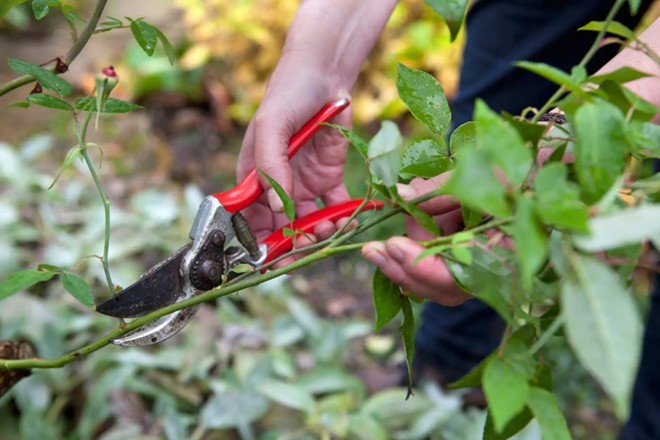
The best time to prune trees is when they’re dormant. That’s typically in late fall, winter, or early spring (before new growth begins). These times are ideal for pruning because trees are resting. This minimizes tree stress and sets the stage for vigorous growth during the season.

Pruning mature shade trees is straightforward. If you have fruit trees, however, pruning goals and techniques differ from those for mature shade trees. Pruning fruit trees isn’t just about keeping them healthy; it’s a powerful management tool ensuring a consistent, high-quality, easy-to-harvest crop.

Prune During Dormant Seasons

Pruning fruit trees, especially during the dormant season, is a critical yearly practice with three crucial objectives:

• Maximize fruit production and quality
• Improve light and air flow
• Maintain structural integrity and the tree’s lifespan.
Pruning removes excess flower buds and branches that could produce fruit. By reducing the amount of fruit the tree produces, the remaining fruit can access more of the tree’s stored energy and nutrients, resulting in larger, better-tasting, and more uniform fruit.

Pome Fruit Pruning versus Stone Fruit Pruning
Pome fruit trees (apples, pears) produce fruit on spurs—short, permanent structures on wood two years or older. Pruning focuses on training a central leader to encourage sunlight penetration and preserve these long-lived spurs.
Stone fruit trees (peaches, plums) produce fruit on mostly one-year-old wood. Pruning must stimulate vigorous new growth annually and maintain an open vase shape. This approach delivers maximum sun into the tree’s center and all new branches.
Essential Fruit Tree Pruning Tips
Here are six essential hacks for pruning your fruit trees in winter:

  1. Master the timing: late winter is best
    Prune when the tree is fully dormant, after all the leaves have fallen but before the buds start to swell. This task is typically performed in winter, from December to March, in most temperate regions. Pruning cuts made too early in winter can be vulnerable to frost damage.
    Cutting closer to spring allows the wound to heal almost immediately when the tree breaks dormancy, reducing the chance of disease. Always prune on sunny, dry days. Moisture can help spread disease pathogens into the fresh cuts.
  2. Start with branches
    Eliminate problem branches first. This step gives you a clearer view of the remaining structure: Remove any wood that’s clearly dead, shows signs of disease (like cankers), or is broken. This cut is crucial for tree health.
    Prune branches growing straight up, known as “water sprouts” (they rarely bear fruit), or any branches growing inward toward the tree’s center. They can overcrowd the canopy. You should also prune branches that cross over or rub against each other, which can create wounds that serve as easy entry points for pests and diseases.
  3. Open the canopy for sunlight and air
    The main goal of winter pruning is to create an open structure that lets sunlight and air reach inside the tree. Form a “vase” or Christmas tree shape for peach, plum, and cherry trees by removing the central upright leader to develop an open bowl shape.
    On the other hand, creating a central leader is critical for apple and pear trees. Maintain a main vertical trunk (leader), but ensure upper branches are shorter than lower branches to create a pyramid or Christmas tree shape that prevents shading.
  4. Use correct cutting techniques
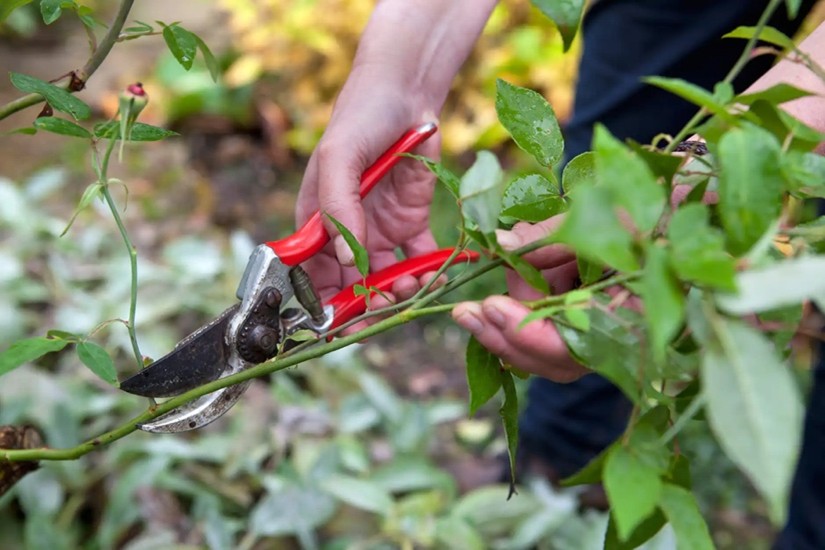
    Making proper cuts ensures the tree heals quickly. When removing an entire branch, cut just outside the branch’s collar (the slightly swollen ring of bark tissue at the branch’s base). It contains the specialized cells the tree uses to seal the wound. Don’t leave a stub or cut flush to the trunk. When shortening a branch, cut just above an outward-facing bud. This cut directs the new growth away from the tree’s center, helping to open the canopy.
  1. Prune to control vigor
    Heavy winter pruning encourages vigorous new growth in spring. If your tree is healthy and growing quickly, limit cuts to 10-20% of the wood. If the tree is older and has minimal new growth, a more severe prune (up to 30-50% for stone fruits) can promote the growth of new, productive fruiting wood. As a general rule, however, never remove more than one-third (33%) of the tree’s overall canopy in a year to prevent severe stress.
  2. Use Sharp, Clean Tools
    Sterilize your tools before starting and between trees. Clean your hand pruners, loppers, and pruning saws with diluted bleach or rubbing alcohol to prevent the spread of pathogens between trees. Also, keep tools sharp. Sharp tools make clean cuts, which heal faster. Dull tools crush and tear the wood, leaving ragged wounds that invite disease.
    Clean Up Immediately
    Remove debris immediately after pruning. Rake up and dispose of all the pruning branches, especially any diseased material. Leaving diseased branches or leaves on the ground allows pests and fungal spores to overwinter and re-infect the tree the following spring.
    (Unsure about pruning your fruit trees. Contact the experts at RITree for help on how to proceed. They’ll steer you through the process.)

The RI Tree Council offers an annual Fruit Tree Growing Course emphasizing a reliable, economical, and eco-friendly way to grow backyard fruit. The next class starts in March 2026. For more details, click www.ritree.org.

Master These 6 Simple Fruit Tree Pruning Secrets!

Pruning fruit trees differs from pruning mature shade trees. Pruning fruit trees is a powerful management tool that ensures a consistent, high-quality, easy-to-harvest crop. It also maximizes fruit production and quality, improves light and air flow, and maintains the tree’s structural integrity and lifespan.

Here are six essential hacks for pruning fruit trees in winter:

1. Master the timing: late winter is best

Pruning cuts made too early in winter can create frost damage. Cutting closer to spring allows the wound to heal almost immediately when the tree breaks dormancy, reducing the chance of disease.

2. Start with pruning deadwood

Remove all deadwood and branches that show signs of disease or are broken. Also, prune branches that cross or rub against each other. They can create wounds that provide easy entry points for pests and diseases.

3. Open the canopy for sunlight and air

The primary goal of winter pruning is to create an open structure that allows sunlight and air to reach the tree’s interior. Create a “vase” or Christmas tree shape for peach, plum, and cherry trees by removing the central upright leader; create a central leader for apple and pear trees.

4. Use correct cutting techniques

Cut just outside the branch’s collar when removing a branch. When shortening a branch, cut just above an outward-facing bud, which directs the new growth away from the tree’s center, helping to open the canopy.

5. Prune to control vigor  

Limit cuts to 10-20% of the wood if your tree is healthy and growing. If the tree is older and has minimal new growth, a more severe prune (up to 30-50% for stone fruits) can promote the growth of new, productive fruiting wood. 

6. Use Sharp, Clean Tools

Sterilize your tools before pruning. Clean your hand pruners, loppers, and pruning saws with diluted bleach or rubbing alcohol to prevent the spread of pathogens between trees. Also, keep tools sharp. 

Clean Up Immediately

Never remove more than one-third (33%) of the tree’s overall canopy in a year to prevent severe stress. Rake up and dispose of all the pruned branches and any diseased material. Leaving diseased branches or leaves on the ground allows pests and fungal spores to re-infect the tree the following spring.

The RI Tree Council offers an annual Fruit Tree Growing Course emphasizing a reliable, economical, and eco-friendly way to grow backyard fruit. The next class starts in March 2026. For more details, click www.ritree.org